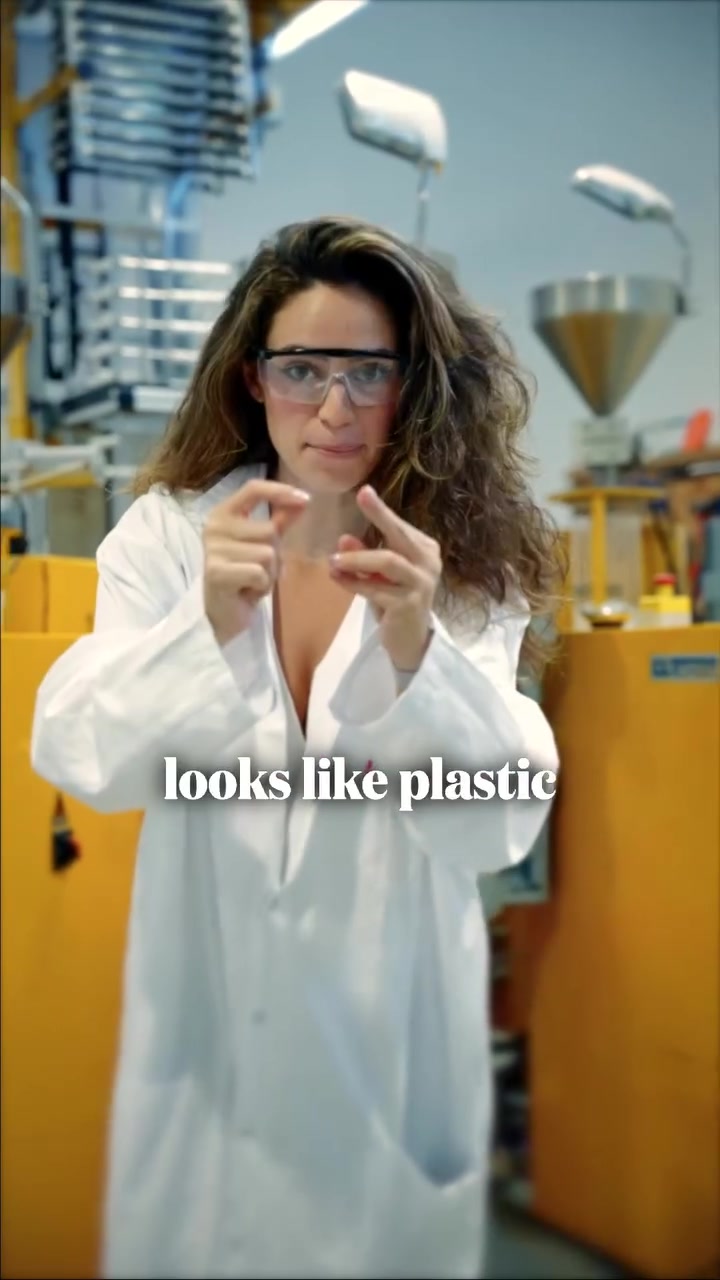
Sharon Barak has engineered a plastic alternative that biodegrades in water without leaving behind microplastics, tackling the pervasive problem of plastic waste in the environment, an issue that has long plagued the trillion-dollar plastics industry. This innovation is a material that behaves like plastic but decomposes rapidly, a monumental shift in the field.
The Liquid Breakthrough
Sharon Barak's solution is a biopolymer material designed to degrade quickly when exposed to water. The plastic-lookalike behaves and functions identically to conventional plastic during its useful life — maintaining its durability and versatility. Biodegradable polymer sheets, or bioplastics, can be manufactured like plastic and used in the same way. This makes the material practical for existing packaging lines and a viable alternative in the marketplace. However, the revolutionary aspect of this material comes from its engineered design to biodegrade. Unlike traditional plastics that break down into persisten microplastics, this material disintegrates into harmless components when discarded, leaving no trace of microplastic pollution. Microplastics are a ubiquitous problem today. Polypropylene, polyethylene, and other common plastics are everywhere. From shopping bags to food packaging. Plastic production has surged because plastics are cheap, versatile, and durable. Cheap and durable, they are designed not to break down they to last indefinitely, even breaking down into ever-smaller pieces. These tiny fragments contaminate ecosystems, entering food chains, and damaging wildlife.
The Plastic Dilemma
Plastics are ubiquitous across consumer products. But the cost of this convenience is evident — landfills overflowing and environments polluted with discarded plastic. Millions of tons of plastic bags are discarded daily, but traditional plastics do not biodegrade. Sharon Barak's work addresses the pressing need to reduce this waste by creating a recyclable, biodegradable alternative to conventional plastics. It's designed to break down in the environment. The material can be engineered to biodegrade within weeks, unlike traditional plastics that persist for hundreds of years. This breakthrough is crucial for industries utilizing plastic packaging. Each year millions of tons of plastic bags are thrown away, exacerbating the pollution crisis already causing environmental degradation. This alternative material can dramatically reduce the volume of waste entering landfills and oceans, mitigating the environmental impact of our plastic consumption.
How to Tackle the Industry Problem
Adapting to Existing Manufacturing Infrastructure
Innovating a plastic substitute isn't as simple as inventing a new material. The plastics industry is a mammoth market worth trillions. It's penciled into the margins of soda and cereal production lines, store displays and shopping bags. Existing packaging equipment and manufacturing lines were all designed for traditional plastics. Plastic is the cheapest and most useful material, but it comes with a major disadvantage. It is designed to last. Replace and they have a massive scalability problem. So Sharon Barak's material was engineered to work with existing machines and equipment. Widely adopted equipment can't be reconfigured for new materials overnight. Instead of reconfiguring, Barak focused on making adjustments. The material can be engineered to work on current plastic manufacturing machines, making it accessible for immediate adoption by manufacturers. This importance extends beyond equipment compatibility. Ensuring viability for the subcontractors will transition to green options and the new material. The engineering behind the plastic alternative involves tailoring the material to integrate seamlessly with existing processes. Sharon Barak has partnered with leading packaging manufacturers to adapt the material within their infrastructure.
The Testing Phase
The actual premise is easy. But it needs to work in the real world. Sharon Barak's journey into the plastics industry began with a simple question: Why can't we make plastic that disappears when we're done with it? Her quest involved experimenting with polymers for years to create a material that can be manufactured like plastic, used like plastic, but biodegradable. Sharon’s persistent effort led to a groundbreaking solution: A biodegradable material that can be used in various applications, from packaging to other sustainable materials. The material isn't just for plastic bags. It can be engineered to biodegrade and can be applied to other materials as well. Regular waste can be made more sustainable through integration. However, the material is designed to degrade without leaving any trace of microplastics, making it an ideal solution for industries struggling with the environmental impact of plastic waste. The impact of Sharon Barak’s solution extends across multiple industries. Its application in food packaging can reduce the volume of waste entering landfills, mitigating the environmental impact of plastic consumption. The ability to integrate the material in existing industrial settings makes it a practical and scalable solution for reducing plastic waste. Sharon Barak’s journey began with a clear question. Her final product stands to revolutionize multiple industries. The material has been engineered to work on packaging machines. This means that it can be quickly adopted by manufacturers without the need for new machinery. Sharon Barak's approach highlights the need for innovative solutions that can seamlessly integrate into existing frameworks, making the transition to more sustainable practices more accessible and efficient.
Batch of experience
Barak isn't solely focused on biodegradable plastic. She's aiming to ensure the rubbish we end up throwing out doesn't wind up lingering for centuries. This material is biodegradable, setting the standard for alternative materials across food packaging and more. It means that we can continue to use all sorts of plastic without harming the environment as much. Upon realizing that plastic bags, while convenient, last for centuries, Sharon Barak asked a critical question: Why can't plastic disappear? The answer to her question is a solution with a different ending. Sharon's journey led her to a material that can be engineered for various applications, ensuring its biodegradability and sustainability. The problem of plastic waste cannot be addressed with a single solution. Sharon's material doesn't just help to solve the problem of plastic bags. It extends beyond that.
Practical Plastic Solutions
She's trying to solve the problem is more than just a plastic substitute. There are several ways to incorporate Sharon Barak's biodegradable material into everyday life:
- Environmentally-Friendly Packaging: Use biodegradable packaging for products, reducing the amount of plastic waste. This is an excellent step for any business aiming for a more sustainable future.
- Shopping Bags: Replace traditional plastic shopping bags with biodegradable versions to reduce waste.
- Food Containers: Opting for biodegradable food containers and packaging can make a difference in reducing plastic waste. The material's ability to be applied to diverse materials, like making sustainable packaging, extends to multiple sectors. The development of biodegradable materials can significantly reduce the amount of plastic waste entering landfills and water bodies, mitigating the environmental impact of plastic consumption. Its applicability in various industries and its ability to integrate with existing manufacturing processes make it a viable and practical solution for reducing plastic waste. Sharon Barak's innovative material holds promise for a more sustainable future, where plastic waste is a thing of the past.
Sharing Life's Resources
The material doesn't just impact the way we dispose of plastics. It fundamentally challenges the way we think about sustainability in packaging. The emphasis on designing materials to biodegrade after use fosters a mindset of responsible consumption and disposal. With Sharon Barak's work, the narrative around plastic waste shifts from a problem to a solution. The design of biodegradable materials offers a pathway for industries to reduce their environmental footprint, contributing to a more sustainable and eco-friendly future. The solution not only addresses the environmental impact of plastic waste but also offers a promising approach to sustainable packaging.
Watch the Reel
Questions readers ask
What is the primary advantage of Sharon Barak's biodegradable plastic?
The primary advantage is that it biodegrades in water without leaving behind harmful microplastics, unlike traditional plastics. This means it doesn't contribute to the growing problem of microplastic pollution in our ecosystems.
How does Sharon Barak's material compare to traditional plastics in terms of durability and functionality?
During its useful life, Sharon Barak's material behaves and functions identically to conventional plastic. It maintains the same durability and versatility, making it a practical alternative for existing packaging lines and a viable substitute in the marketplace.
Can this biodegradable material be used in existing manufacturing processes?
Yes, it can. Sharon Barak's material can be manufactured like traditional plastic and used in the same way, making it compatible with existing packaging lines and manufacturing infrastructure.
How quickly does Sharon Barak's biodegradable plastic break down?
Sharon Barak's material can be engineered to biodegrade within weeks, which is a significant improvement over traditional plastics that can take hundreds of years to break down. This rapid degradation is crucial for reducing the volume of waste entering landfills and oceans.
What makes Sharon Barak's material a significant breakthrough in the plastics industry?
The material's ability to biodegrade without leaving behind microplastic residue is a monumental shift in the field. While plastics have been a staple in the trillion-dollar industry due to their durability and versatility, their environmental impact is catastrophic. Sharon Barak's innovation addresses this issue by creating a recyclable, biodegradable alternative that can significantly reduce plastic waste.
Recent articles
Fresh deep dives from the latest Reels we unpacked.




Comments
Be the first to comment.