Gas Density Demonstration
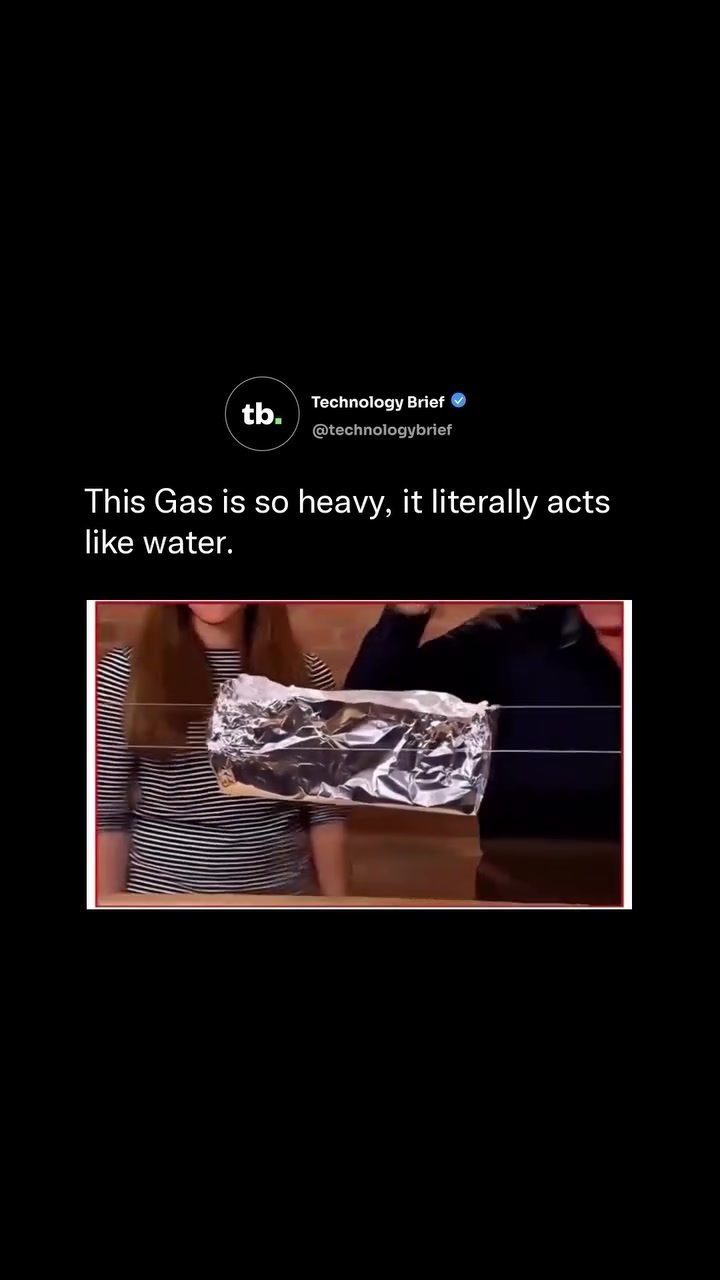
Sulfur hexafluoride (SF6) is a gas that defies many expectations. This colorless, odorless gas is about six times heavier than air, making it incredibly dense. This density allows it to sink to the bottom of a tank and behave almost like a liquid. One of the most fascinating demonstrations of this property is how a lightweight aluminum foil container can float on top of it, much like a boat on water. This phenomenon highlights the unique physical properties of SF6 and its practical applications, as well as its environmental impact.
Why This Matters
Understanding the properties of SF6 is crucial for several reasons. Its high density and non-toxicity make it valuable in various industrial and medical applications. However, its environmental downside is equally significant. SF6 is the most potent greenhouse gas ever measured, roughly 23,500 times more effective at trapping heat than CO2, and it can persist in the atmosphere for over 1,000 years. This makes it a critical focus for environmental scientists and policymakers.
Main Discussion
The Science Behind SF6
SF6 is a non-toxic, colorless, and odorless gas that is about six times denser than air. This high density is due to its molecular weight, which is much higher than that of common atmospheric gases like nitrogen and oxygen. The molecular structure of SF6, with its six fluorine atoms surrounding a central sulfur atom, contributes to its stability and inertness.
Demonstrating SF6's Density
One of the most striking demonstrations of SF6's density involves using an aluminum foil container. When the container is placed on top of a layer of SF6, it floats effortlessly, just like a boat on water. This is because the gas is so dense that it provides enough buoyancy to support the lightweight container. The demonstration becomes even more dramatic when more SF6 is poured into the container. The added weight overcomes the gas's ability to support it, causing the container to sink through the invisible layer to the bottom of the tank.
Practical Applications
Despite its environmental drawbacks, SF6 has several practical applications. It is commonly used in electrical insulation due to its non-reactive nature and excellent insulating properties. In the medical field, SF6 is used in retinal surgery for its ability to tamponade (compress) the retina. Its non-toxic and non-reactive properties make it a safe choice for such sensitive procedures.
Environmental Concerns
While SF6 has valuable applications, its environmental impact is a significant concern. As a potent greenhouse gas, SF6 traps heat 23,500 times more effectively than CO2. This means that even small amounts of SF6 can have a substantial impact on the Earth's climate. Additionally, SF6 can persist in the atmosphere for over 1,000 years, making its environmental impact long-lasting. This persistence means that any SF6 released into the atmosphere will continue to contribute to global warming for centuries.
Practical Tips
If you're conducting experiments or demonstrations with SF6, here are some practical tips:
-
Safety First: Always handle SF6 in a well-ventilated area to avoid the risk of asphyxiation, even though it's non-toxic.
-
Use Suitable Containers: Ensure that the containers used for handling SF6 are tightly sealed to prevent any leaks.
-
Environmental Considerations: Be mindful of the environmental impact and try to minimize the amount of SF6 released into the atmosphere.
-
Disposal: Properly dispose of any SF6 according to local regulations to minimize its environmental impact.
Important Takeaways
The unique properties of SF6 make it a fascinating subject for scientific demonstrations and a valuable tool in various industries. However, its environmental impact cannot be overlooked. Understanding both the benefits and the drawbacks of SF6 is essential for anyone working with this remarkable gas.
Conclusion
SF6's ability to behave like a liquid and support objects like a boat on water is a testament to its unique properties. While these properties make it valuable in various applications, its environmental impact is a significant concern. By understanding the science behind SF6 and taking practical steps to minimize its environmental footprint, we can harness its benefits while mitigating its drawbacks.
Watch the Reel
Related deep dives
Similar reads based on topic and creator.



Recent articles
Fresh deep dives from the latest Reels we unpacked.




Comments
Be the first to comment.