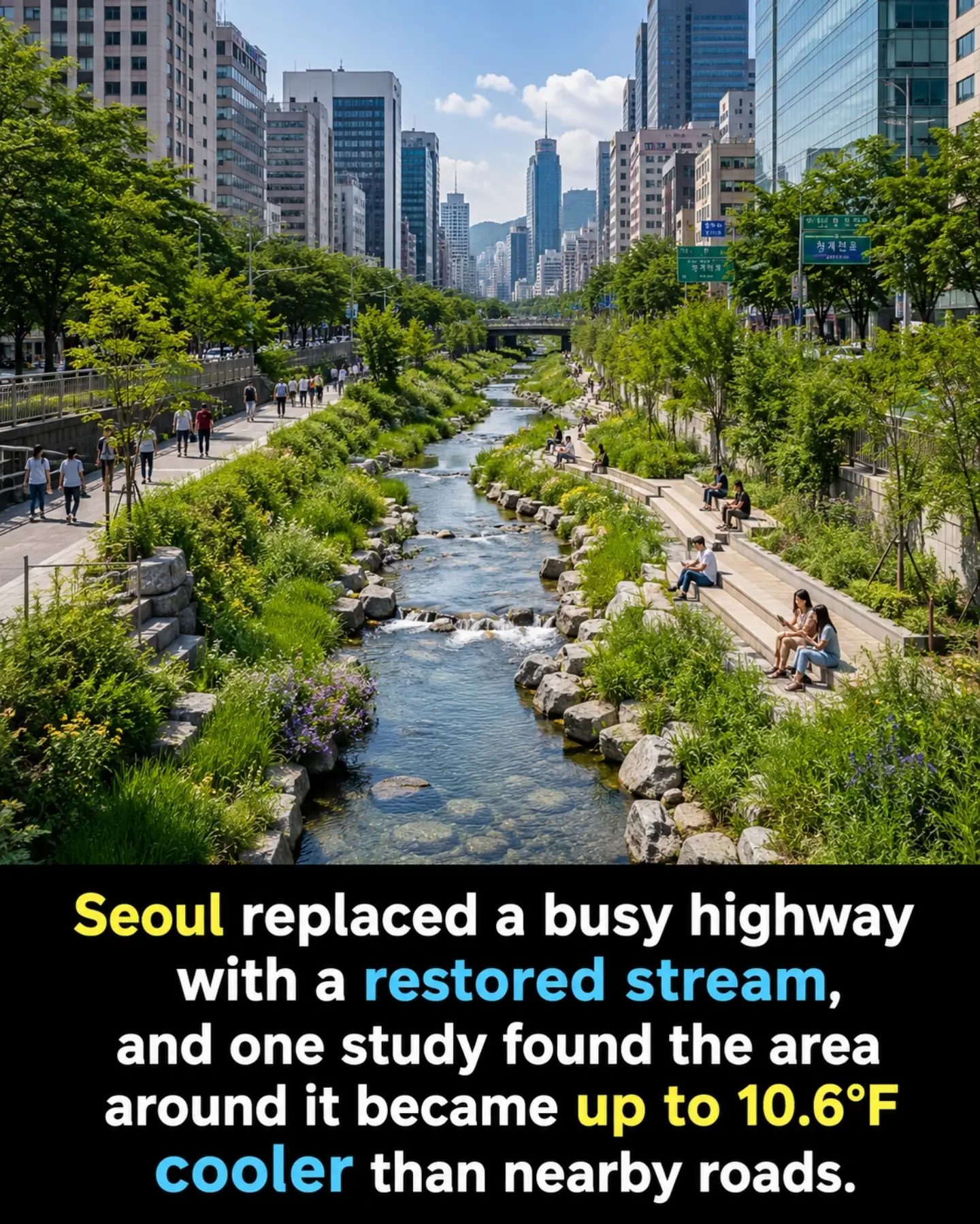
Urban Restoration in Seoul: Transforming Highways into Green Spaces
Urban restoration projects are becoming increasingly popular as cities seek to create more livable and sustainable environments. One notable example is the transformation of a busy highway in Seoul, South Korea, into a restored stream. This initiative not only improved the aesthetic appeal of the area but also had significant environmental benefits, including a noticeable decrease in temperature.
Why This Matters
Urban restoration efforts are crucial for enhancing the quality of life in urban areas. By transforming concrete jungles into green spaces, cities can mitigate the urban heat island effect, reduce traffic congestion, and provide residents with more areas for recreation and relaxation. The restoration of a highway in Seoul serves as a compelling case study for urban planners and environmentalists around the world.
The Transformation of a Highway into a Stream
The Restoration Project
The Seoul restoration project involved replacing a busy highway with a lush, green area featuring a restored stream. This transformation was not just an aesthetic overhaul but a comprehensive environmental initiative. The project aimed to reduce heat island effects, improve air quality, and create a more inviting urban landscape.
Environmental Benefits
One of the most significant benefits of the restoration project was the reduction in temperature. According to a study, the area around the restored stream became up to 10.6°F cooler than nearby roads. This cooling effect is attributed to the increased greenery and the presence of water, which naturally regulates temperature. The greenery helps in absorbing heat and reducing the urban heat island effect, while the stream provides a cooling influence, making the area more comfortable for residents and visitors.
Visualizing the Impact
The transformation can be seen as a model for future urban restoration projects. The scene of people relaxing by the water in a vibrant urban green space illustrates the positive impact of such initiatives. The restored area not only provides a pleasant environment for leisure but also serves as a habitat for local flora and fauna, contributing to biodiversity in an urban setting.
Practical Tips for Urban Restoration
Community Engagement
Engaging the local community is essential for the success of any urban restoration project. Residents can provide valuable insights and support during the planning and implementation phases. Community involvement ensures that the project meets the needs and desires of the people who will use and benefit from the restored area.
Sustainable Planning
Sustainable planning is crucial for the long-term success of urban restoration projects. This involves using environmentally friendly materials, ensuring that the restoration is energy-efficient, and promoting biodiversity. Sustainable planning also means considering the future maintenance and upkeep of the restored area to ensure its longevity.
Monitoring and Evaluation
Regular monitoring and evaluation are necessary to assess the effectiveness of urban restoration projects. This includes tracking environmental indicators such as temperature, air quality, and biodiversity. Collecting and analyzing data over time helps in understanding the long-term impacts of the restoration and making necessary adjustments for future improvements.
Important Takeaways
Urban restoration projects, such as the transformation of a highway into a restored stream in Seoul, offer numerous benefits to cities and their residents. The project has not only improved the aesthetic appeal of the area but also provided significant environmental benefits, including a noticeable decrease in temperature. The success of this initiative highlights the importance of sustainable urban planning and community engagement in creating livable and sustainable urban environments.
Conclusion
The restoration of a highway into a green space in Seoul serves as a model for urban restoration projects worldwide. It demonstrates the potential for transforming urban landscapes into more livable and sustainable environments. By focusing on community engagement, sustainable planning, and regular monitoring, cities can achieve similar successes, creating spaces that are not only beautiful but also environmentally beneficial.
Watch the Reel
Questions readers ask
What was the primary goal of Seoul's highway to stream conversion project?
The primary goal of Seoul's highway to stream conversion project was to revitalize an urban area by replacing a busy highway with a restored stream. This transformation aimed to enhance the local environment, reduce local temperatures, and create more appealing green spaces for residents.
How does converting a highway into a green space benefit the local environment?
Converting a highway into a green space benefits the local environment by mitigating the urban heat island effect, which helps to cool local temperatures. Additionally, it reduces traffic congestion and enhances biodiversity, creating a more sustainable urban ecosystem.
What are some of the environmental benefits of Seoul's green revitalization project?
Seoul's green revitalization project has led to significant environmental benefits, including a noticeable decrease in local temperatures, improved air quality, and the restoration of natural habitats. These changes contribute to a more sustainable and livable urban environment.
How does the transformation of urban spaces from highways to green spaces contribute to the quality of life for residents?
The transformation of urban spaces from highways to green spaces contributes to the quality of life for residents by providing more areas for recreation and relaxation. This initiative also reduces traffic congestion and noise pollution, making the urban environment more enjoyable and healthier for residents.
What other cities can learn from Seoul's highway to stream conversion project?
Other cities can learn from Seoul's highway to stream conversion project by understanding the benefits of transforming concrete infrastructure into green spaces. This approach can help mitigate the urban heat island effect, reduce traffic congestion, and create more livable and sustainable urban environments.
What specific changes did Seoul's urban restoration project achieve?
Seoul's urban restoration project achieved several specific changes, including the restoration of a natural stream, a decrease in local temperatures, improved air quality, and the creation of new green spaces for residents to enjoy. These changes have made the urban environment more sustainable and appealing.
What urban sustainability benefits come from replacing highways with green infrastructure?
Replacing highways with green infrastructure offers numerous urban sustainability benefits, such as cooling urban temperatures, reducing traffic congestion, and providing more areas for recreation and relaxation. These changes create a more livable and environmentally friendly urban landscape.
Related deep dives
Similar reads based on topic and creator.




Recent articles
Fresh deep dives from the latest Reels we unpacked.




Comments
Be the first to comment.