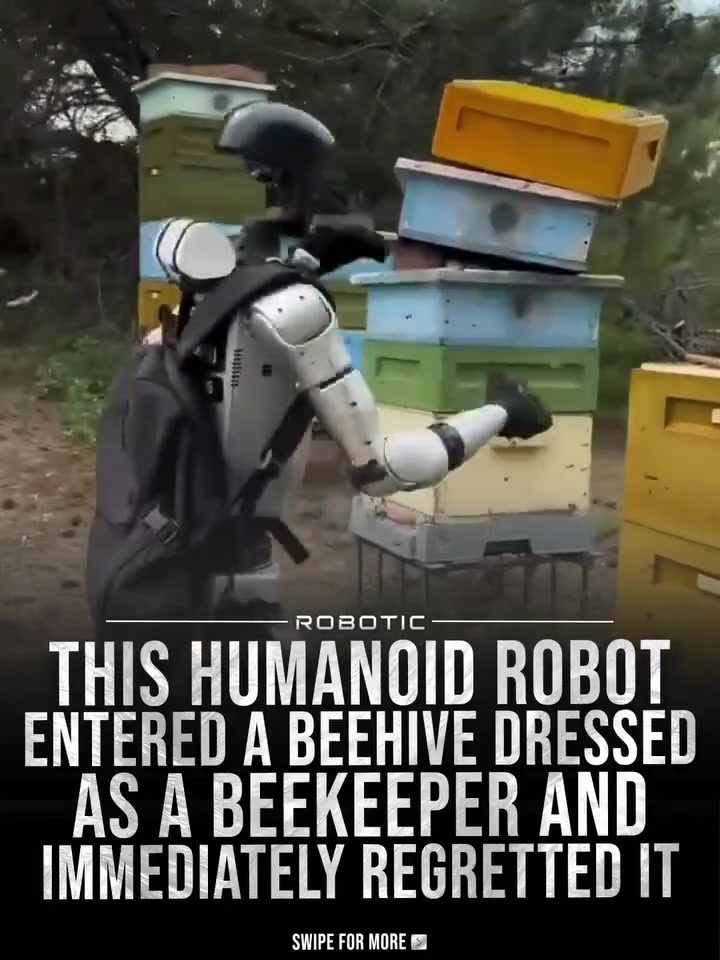
Humanoid Robots in Beekeeping: Lessons Learned
Humanoid robots have made remarkable strides in various industries, from manufacturing to logistics. However, their interactions with unpredictable natural environments, such as beehives, reveal significant challenges that these advanced machines still face.
Context: Why This Matters
The demonstration involving the humanoid robot Edward Warchocki from Poland highlights the complexities of integrating robots into natural settings. This robot, designed to mimic human actions, attempted to perform a task typically carried out by human beekeepers. The experience underscores the intricate balance between technological advancement and the unpredictability of nature.
The Demonstration: Robot vs. Beehive
Edward Warchocki, dressed in full beekeeping attire, approached a beehive with the intent to inspect it. The robot, however, did not proceed as smoothly as planned. Instead of a calm and controlled inspection, the robot stumbled, bumped into the hive, and struggled to maintain balance. This sequence of events highlights the robot's difficulty in navigating the unpredictable environment of a beehive.
Why Robots Struggle with Natural Environments
Robots, particularly humanoid ones, are designed to perform tasks in controlled and predictable environments. Industrial settings, for example, are meticulously planned and organized, making it easier for robots to execute their functions efficiently. However, natural environments like beehives are inherently unpredictable. Bees move erratically, and the hive's structure can change, making it challenging for robots to adapt.
The Challenges of Beekeeping for Robots
Beekeeping requires a delicate touch and a keen understanding of bees' behavior. Robots, which rely on predefined programming and sensors, struggle with the nuanced interactions necessary for successful beekeeping. Here are some of the key challenges:
Sensory Overload: Beehives are filled with sensory inputs—sounds, movements, and scents—that overwhelm a robot's sensors. Robots are not equipped to filter out irrelevant information, leading to confusion and inefficiency.
Unpredictable Movements: Bees move in unpredictable patterns, making it difficult for robots to anticipate and respond to their actions. The sudden and erratic movements of bees can disrupt a robot's programmed tasks.
Environmental Adaptation: Beehives are dynamic environments that change over time. Robots, which are programmed to follow specific routines, find it challenging to adapt to these changes.
Practical Tips for Robotics in Natural Settings
While the demonstration with Edward Warchocki was lighthearted, it offers valuable insights into the future of robotics in natural settings. Here are some practical tips for improving robot performance in unpredictable environments:
Advanced Sensor Technology: Equipping robots with advanced sensors that can detect and interpret complex sensory inputs can enhance their performance. Sensors that can distinguish between relevant and irrelevant information are particularly useful.
Machine Learning: Incorporating machine learning algorithms can help robots adapt to changing environments. By learning from past experiences, robots can improve their decision-making processes and respond more effectively to unpredictable situations.
Human-Robot Collaboration: Combining the strengths of humans and robots can lead to better outcomes. Humans can provide the nuanced understanding and adaptability needed for tasks like beekeeping, while robots can handle the repetitive and physically demanding aspects.
Important Takeaways
The attempt by Edward Warchocki to interact with a beehive offers several important takeaways:
- Unpredictable Environments Challenge Robots: Natural settings like beehives present significant challenges for robots due to their unpredictability.
- Sensory Overload is a Key Issue: Robots struggle with the complex sensory inputs found in natural environments.
- Humanoid Robots Still Need Development: Despite their advancements, humanoid robots are still in the early stages of adapting to natural environments.
- Machine Learning Can Help: Incorporating machine learning algorithms can improve a robot's ability to adapt and respond to changing conditions.
Conclusion
The demonstration involving the humanoid robot Edward Warchocki highlights the current limitations of robotics in natural environments. While robots have made significant progress in controlled settings, their ability to navigate unpredictable environments like beehives remains a significant challenge. By addressing the key issues identified and implementing practical solutions, the future of robotics in natural settings looks promising. As technology continues to advance, robots will become more adept at handling the complexities of natural environments, potentially revolutionizing tasks like beekeeping.
Watch the Reel
Questions readers ask
What are the main challenges humanoid robots face in natural environments like beehives?
Humanoid robots like Edward Warchocki struggle with erratic movements of bees and the ever-changing structure of hives. These unpredictable natural environments pose significant hurdles for robots designed for controlled settings.
Why is beekeeping a complex challenge for robots?
Beekeeping requires dealing with live bees and constantly changing hive structures, which are difficult for robots to navigate. The tasks involve precise movements and adaptations that robots find challenging in unpredictable settings.
What tasks do beekeepers typically perform that robots struggle with?
Beekeepers handle tasks such as inspecting hives, extracting honey, and managing bee health, all of which require delicate and adaptable interactions with bees and hive structures. Robots find these tasks difficult due to the unpredictable nature of bees and hives.
How did the humanoid robot Edward Warchocki perform in beekeeping tasks?
Edward Warchocki showcased some capabilities in mimicking human actions but faced significant challenges in handling the unpredictable environment of a beehive. The demonstration highlighted the complexities of integrating robots into natural settings.
What can we learn from the attempt of a robot beekeeper like Edward Warchocki?
The attempt reveals the need for more advanced sensor technologies and adaptive algorithms for robots operating in natural environments. It underscores the intricate balance between technological advancement and the unpredictability of nature.
What are the differences between robot performance in controlled vs natural environments?
Robots excel in controlled environments where variables are predictable and tasks are well-defined. In natural environments, like beehives, robots struggle with unpredictability, making tasks more complex and less efficient.
How do bees' movements affect robot beekeeping?
Bees' erratic movements can confuse and mislead robots designed for structured environments. Robots need advanced capabilities to interpret and respond to unpredictable bee behaviors, which is a significant hurdle in beekeeping tasks.
Related deep dives
Similar reads based on topic and creator.




Recent articles
Fresh deep dives from the latest Reels we unpacked.




Comments
Be the first to comment.