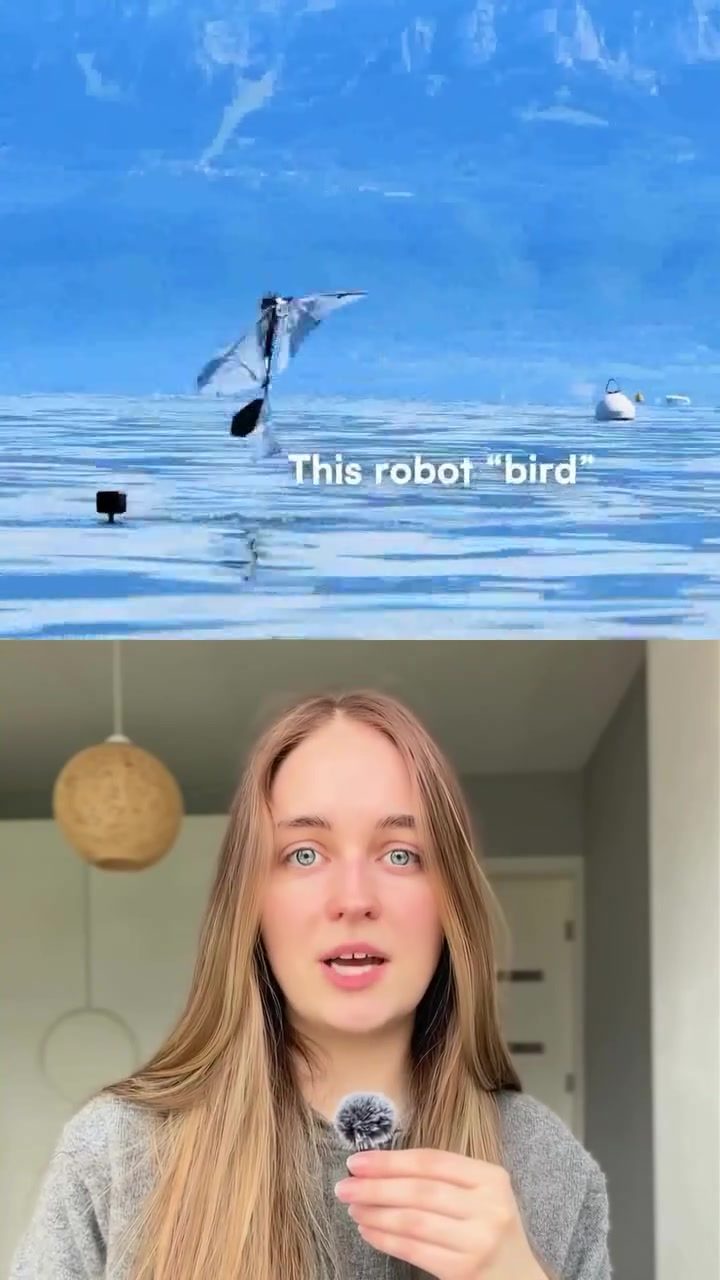
The Versatile Robot Bird: An Innovation in Monitoring Ocean Ecosystems
Engineers at MIT and EPFL have developed an innovative robot bird that can navigate both underwater and airborne environments with remarkable efficiency. This biomechanical marvel can swim underwater, burst through the surface, and take flight in under a second, mimicking the behavior of diving birds like the Atlantic Puffin. The robot's design addresses the fundamental challenge of operating in environments with vastly different densities—water is nearly a thousand times denser than air.
A key feature of this robot bird is its flexible wings, crafted from carbon and nylon. These wings are designed to bend under pressure, allowing the robot to adapt its flapping motion for both water and air. Unlike traditional designs that might fold or retract wings, this dynamic approach ensures optimal performance in both aquatic and aerial environments. The robot's ability to transition smoothly between these environments is a testament to the advanced mechanical engineering behind its design.
Why This Matters
The versatility of this robot bird has significant implications for ocean monitoring and environmental research. By seamlessly transitioning between swimming and flying, this robot can cover a wide range of environments and collect valuable data. Its potential applications range from monitoring coral reefs to conducting surveys of marine life, all while being able to fly its data back to shore.
Environmental Monitoring
One of the most exciting prospects for this technology is its potential to revolutionize ocean monitoring. Traditional methods of monitoring ocean ecosystems often involve costly and labor-intensive efforts. Robots like this could dramatically reduce the cost and complexity of these operations. By launching from shore, these robots can swim out to sample coral reefs and other underwater environments, then fly back to base to deliver their data. This capability opens up new avenues for continuous and comprehensive monitoring of ocean health.
Coral Reef Monitoring
Coral reefs are vital ecosystems that support a diverse range of marine life. However, they are under increasing threat from climate change, pollution, and other environmental factors. The robot bird's ability to swim and fly allows it to access these delicate environments without causing significant disturbance. By collecting data on coral health, water quality, and temperature, researchers can gain a better understanding of the threats these ecosystems face and develop effective conservation strategies.
Data Collection and Transmission
The robot bird's design ensures that it can stay airborne for extended periods, allowing it to cover large distances. On a single charge, it can fly almost four miles or swim just over a mile. This range is crucial for conducting surveys over vast ocean areas. The robot's ability to fly back to shore with its collected data means that researchers can access real-time information without the need for expensive underwater monitoring equipment.
Main Discussion
The Engineering Behind the Robot Bird
The engineering principles behind this robot bird are both sophisticated and innovative. The robot's wings, made from flexible carbon and nylon, are designed to bend under pressure, allowing it to adapt its flapping motion for both water and air. This design is inspired by the biomechanics of diving birds, which have evolved to navigate both aquatic and aerial environments with ease.
Flexible Wings
The flexible wings are a critical component of the robot's design. Unlike traditional fixed-wing or folding-wing designs, the flexible wings allow the robot to adjust its flapping motion dynamically. In water, the wings bend under pressure to create a more efficient thrust, while in air, they return to a more rigid form to generate lift. This adaptability is key to the robot's ability to transition smoothly between swimming and flying.
Precision in Motion
The robot's ability to escape the water is another engineering marvel. To burst through the surface, it tilts to a precise 70-degree angle and flaps its wings at 10 beats per second. This high-frequency flapping generates enough force to break through the water's surface tension in just 8 to 10 strokes. This precision in motion is essential for the robot's ability to operate effectively in both underwater and airborne environments.
The Role of Biomimicry
Biomimicry, the design and production of materials, structures, and systems that are modeled on biological entities and processes, plays a crucial role in the development of this robot bird. By studying the behavior of diving birds like the Atlantic Puffin, engineers have been able to design a robot that can navigate both water and air with remarkable efficiency. This approach not only improves the robot's performance but also inspires new ways of thinking about mechanical design.
Learning from Nature
The Atlantic Puffin and other diving birds have evolved over millions of years to thrive in both aquatic and aerial environments. Their wings are designed to provide efficient propulsion in water and lift in air. By mimicking these natural designs, engineers have been able to create a robot that can perform similar feats. This approach to design is not only effective but also sustainable, as it draws on the wisdom of nature.
Practical Tips
For researchers and engineers interested in developing similar robots, several practical tips can be gleaned from the design of this robot bird:
1. Material Selection
Choosing the right materials is crucial for the performance of a versatile robot. The use of flexible carbon and nylon in the wings of this robot bird allows it to adapt its flapping motion for both water and air. When designing similar robots, consider materials that can bend under pressure and return to their original shape.
2. Precision Engineering
Precision in motion is key to the robot's ability to transition between swimming and flying. Engineers should focus on developing mechanisms that allow for precise control of movement, such as the 70-degree tilt and 10 beats per second flapping required for the robot to escape the water.
3. Biomimicry
By studying the behavior of animals that thrive in both aquatic and aerial environments, engineers can gain valuable insights into the design of versatile robots. Biomimicry provides a wealth of inspiration for mechanical design, offering solutions that are both effective and sustainable.
4. Efficient Power Management
The robot bird's ability to fly almost four miles and swim over a mile on a single charge is a testament to its efficient power management. When designing similar robots, consider ways to optimize energy use, allowing for extended operation and data collection.
Important Takeaways
The development of this versatile robot bird represents a significant advancement in the field of mechanical engineering and environmental monitoring. Its ability to navigate both underwater and airborne environments with ease opens up new possibilities for studying and protecting ocean ecosystems. By drawing on the principles of biomimicry and precision engineering, researchers have created a robot that could revolutionize the way we monitor our oceans.
The Future of Ocean Monitoring
As researchers continue to refine and develop this technology, the potential applications for monitoring ocean ecosystems will only grow. Robots like this could one day be deployed in large numbers, providing continuous and comprehensive data on the health of our oceans. This information will be invaluable for developing effective conservation strategies and protecting marine life.
Inspiring Further Innovation
The innovative design of this robot bird serves as a testament to the power of biomimicry and precision engineering. By studying the behavior of diving birds and adapting these principles to mechanical design, engineers have created a robot that performs remarkable feats. This approach to innovation has the potential to inspire further advancements in robotics and environmental monitoring.
Conclusion
The robot bird developed by engineers at MIT and EPFL is more than just a technological marvel; it is a testament to the power of innovation and the potential of biomechanical engineering. Its ability to navigate both underwater and airborne environments makes it a valuable tool for monitoring ocean ecosystems and protecting marine life. As this technology continues to evolve, it will undoubtedly play a crucial role in our efforts to understand and preserve the oceans.
Watch the Reel
Questions readers ask
What makes the robot bird developed by MIT and EPFL unique compared to other robots?
The robot bird stands out due to its ability to operate efficiently in both underwater and airborne environments, mimicking the behavior of diving birds. Its design allows it to transition seamlessly between swimming and flying, addressing the challenge of vastly different densities in water and air.
How does the robot bird's wing design contribute to its versatility?
The robot bird's wings are made from a flexible combination of carbon and nylon, which enables them to bend under pressure. This adaptability allows the robot to modify its flapping motion for both water and air, making it a versatile tool for environmental monitoring.
What is the significance of the robot bird's ability to transition between water and air in under a second?
This rapid transition capability allows the robot bird to quickly switch between underwater exploration and aerial observation, enhancing its efficiency in monitoring ocean ecosystems and providing real-time data across different environments.
What are the benefits of using a robot bird for ocean monitoring?
The robot bird's ability to navigate both underwater and airborne environments allows for comprehensive data collection in various marine settings. It can collect data on water quality, marine life, and environmental changes, making it an ideal tool for research and environmental assessments.
What is the inspiration behind the robot bird's design?
The robot bird was inspired by diving birds like the Atlantic Puffin, which naturally navigate both underwater and airborne environments. By mimicking these birds, the robot can efficiently transition between different densities, making it a practical solution for monitoring ocean ecosystems.
What kind of research can be conducted using the robot bird?
The robot bird can be used for a variety of research purposes, including studying marine life behavior, tracking environmental changes, and assessing water quality. Its adaptability makes it a valuable tool for scientists and researchers focusing on ocean monitoring and environmental assessments.
How does the collaboration between MIT and EPFL contribute to the robot bird's development?
The collaboration between MIT and EPFL brings together expertise from two renowned institutions, allowing for innovative solutions to complex engineering challenges. This partnership has led to the development of a robot bird capable of navigating both underwater and airborne environments, advancing the field of environmental research.
Related deep dives
Similar reads based on topic and creator.



Recent articles
Fresh deep dives from the latest Reels we unpacked.


Comments
Be the first to comment.