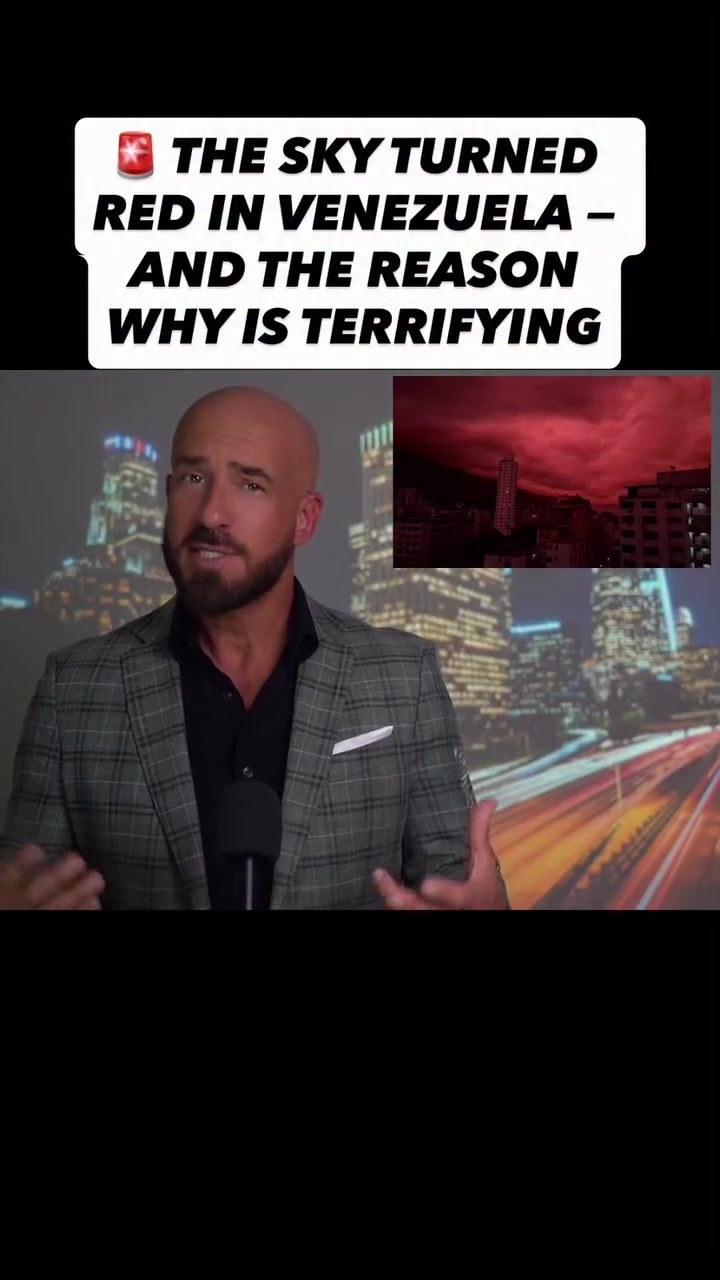
The Venezuela Red Sky Phenomenon
The skies over Venezuela turned an eerie blood red following devastating twin earthquakes, sparking both scientific and conspiratorial discussions. This rare atmospheric event has drawn attention to various theories and technologies, including High-Frequency Active Auroral Research Program (HAARP).
Venezuela's Red Sky: What Happened?
The red sky phenomenon in Venezuela occurred after the country experienced a series of extreme events. First, twin earthquakes struck, causing widespread devastation and chaos. In the aftermath, footage of the blood-red skies went viral on social media, captivating viewers worldwide. Officials attributed the unusual sky color to atmospheric conditions and Saharan dust. However, the internet buzzed with alternative explanations, including theories about HAARP, weather modification, and atmospheric experiments.
What is HAARP?
HAARP is a research program initiated by the U.S. Department of Defense to study the Earth's upper atmosphere and ionosphere. The program involves a powerful high-frequency radio transmitter designed to inject energy into the ionosphere, effectively controlling it. This technology has been used for various scientific research purposes, including studying the effects of solar activity on the atmosphere and developing communication systems.
The Role of Saharan Dust
Saharan dust is a common occurrence in the atmosphere, particularly during certain times of the year. Dust storms originating from the Sahara Desert can travel thousands of miles, affecting weather patterns and air quality in various regions, including the Caribbean and parts of South America. While Saharan dust can contribute to unusual sky colors, the rapid and dramatic change in Venezuela's sky has led some to question whether natural phenomena alone can account for the phenomenon.
Atmospheric Experiments and Weather Modification
The discussion around Venezuela's red sky has also brought attention to atmospheric experiments and weather modification technologies. Governments and research institutions have long explored ways to manipulate the Earth's atmosphere for various purposes, including mitigating natural disasters, enhancing agriculture, and improving communication systems. Technologies like HAARP have been at the center of these discussions, with some speculating about their potential use in influencing weather patterns and atmospheric phenomena.
Ionospheric Manipulation
The ionosphere, the layer of the Earth's atmosphere that contains ions and free electrons, plays a crucial role in radio communications and satellite operations. Researchers have developed technologies to manipulate the ionosphere, injecting energy to control its properties. These technologies, including HAARP, have been used for various scientific research purposes, but their potential applications in weather modification and other fields remain a subject of debate.
Connecting the Dots: Disasters, Missing Children, and the Red Sky
The narrative surrounding Venezuela's red sky event extends beyond atmospheric science, touching on other unsettling occurrences. Some argue that the sequence of events—earthquakes, missing children, and the red sky—suggests a more sinister explanation. This perspective points to the growing number of government programs studying ways to influence and manipulate the Earth's upper atmosphere, raising questions about the potential for intentional manipulation.
Practical Tips for Understanding Atmospheric Phenomena
- Stay Informed: Keep up with credible scientific sources and research on atmospheric phenomena. Understanding the science behind these events can help dispel myths and misinformation.
- Question Sources: Be cautious of unverified information and conspiracy theories. Always verify information from multiple credible sources.
- Observe Safely: If you witness unusual atmospheric phenomena, document it safely and share your observations with scientific communities or local authorities.
- Engage in Discussion: Participate in informed discussions about atmospheric science and technology to foster a better understanding of these complex topics.
Important Takeaways
The red sky phenomenon in Venezuela has sparked a wide range of discussions, from scientific explanations to conspiratorial theories. While Saharan dust and atmospheric conditions are commonly cited as causes, the rapid and dramatic change in the sky's color has led to speculation about weather modification technologies and atmospheric experiments. Technologies like HAARP, designed to inject energy into the ionosphere, have been at the center of these discussions, raising questions about their potential use in manipulating the Earth's upper atmosphere.
Conclusion
The red sky phenomenon in Venezuela serves as a reminder of the complex and often unpredictable nature of our planet's atmosphere. Whether driven by natural phenomena or advanced technologies, understanding these events requires a balanced approach that considers scientific evidence and critical thinking. As research and technology continue to evolve, it is essential to stay informed and engage in thoughtful discussions about the potential impacts on our environment.
Watch the Reel
Questions readers ask
What caused the red sky in Venezuela?
The red sky in Venezuela was primarily caused by a combination of Saharan dust and specific atmospheric conditions. The dust, blown from the Sahara Desert, mixed with the atmosphere, creating the eerie red hue. Additionally, the unusual atmospheric conditions, possibly influenced by the twin earthquakes, contributed to the phenomenon.
How do atmospheric conditions lead to a red sky?
Atmospheric conditions can lead to a red sky through a process called scattering. When particles in the atmosphere, such as dust or pollutants, scatter sunlight, shorter wavelengths of light (like blue and green) are dispersed more widely, while longer wavelengths (like red) are scattered less and reach our eyes, making the sky appear red.
What is the HAARP program, and how is it connected to the red sky in Venezuela?
The High-Frequency Active Auroral Research Program (HAARP) is a scientific endeavor that involves studying the Earth's ionosphere. Some online theories suggest that HAARP's activities could have contributed to the red sky in Venezuela, though there is limited scientific evidence to support this. Official explanations point to natural causes, such as atmospheric conditions and Saharan dust.
Were there any other unusual atmospheric events in Venezuela around the same time?
Yes, the red sky in Venezuela occurred after the country experienced twin earthquakes, which caused widespread devastation. These earthquakes themselves were unusual events, and their aftermath led to the atmospheric conditions that contributed to the red sky phenomenon.
How did Saharan dust contribute to the red sky in Venezuela?
Saharan dust contributed to the red sky in Venezuela by being blown into the atmosphere from the Sahara Desert and mixing with other particles. This dust, combined with specific atmospheric conditions, caused the scattering of sunlight in a way that resulted in the eerie blood-red color observed in the skies.
What are some of the online theories about the red sky in Venezuela?
Online theories about the red sky in Venezuela range from the plausible to the far-fetched. Some theories suggest weather modification, while others propose atmospheric experimentation or even more conspiratorial ideas. Official sources, however, attribute the phenomenon to natural causes.
How did the earthquake red sky phenomena in Venezuela gain worldwide attention?
The red sky phenomenon in Venezuela gained worldwide attention through social media, where footage of the blood-red skies went viral. The dramatic images captivated viewers worldwide and sparked both scientific and conspiratorial discussions, leading to widespread interest and speculation about the causes of the event.
Related deep dives
Similar reads based on topic and creator.



Recent articles
Fresh deep dives from the latest Reels we unpacked.

Comments
Be the first to comment.