Global Temperature Rise
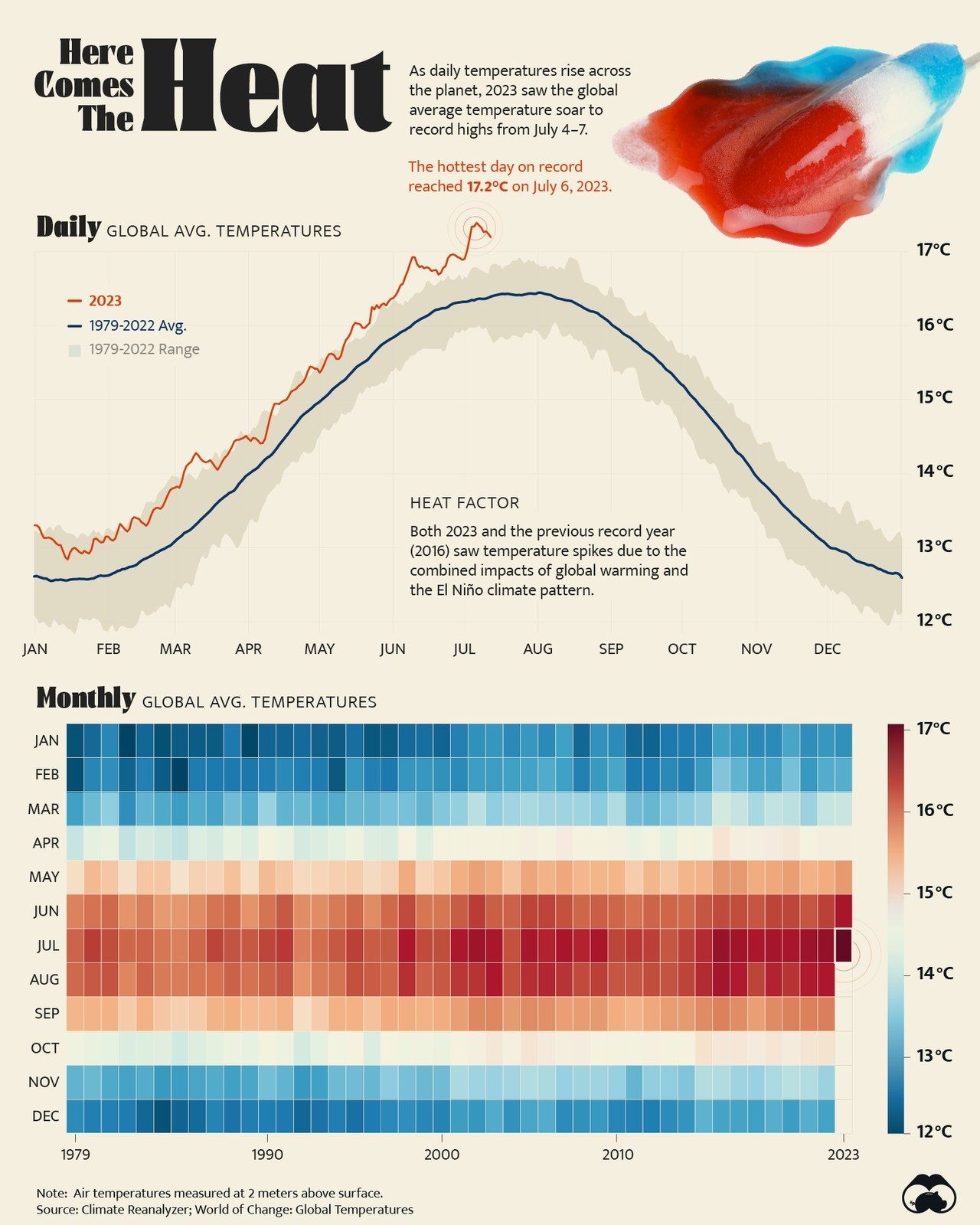
The global average temperature reached an unprecedented high in July 2023, soaring to 17.2°C (62.9°F). This marked a significant milestone, as the four hottest days on record occurred from July 4 to July 7, 2023, surpassing the previous record of 16.9°C (62.4°F) set in mid-August 2016. These temperature spikes are part of a broader trend of rising global temperatures, which have been monitored and analyzed over the past several decades.
Why This Matters
Understanding the rise in global temperatures is crucial for several reasons. These temperature increases have far-reaching implications for weather patterns, ecosystems, and human populations worldwide. The data from the U.S. National Oceanic and Atmospheric Administration (NOAA) and other sources highlight the urgency of addressing climate change and its impacts. The combination of global warming and climate patterns like El Niño has contributed to the record-breaking temperatures observed in recent years.
Historical Context
The infographic illustrates the trend in global average temperatures from 1799 to 2023. This long-term view provides a comprehensive understanding of how temperatures have fluctuated over the centuries. The line graph shows a clear upward trend, with notable spikes in recent years. The data points from 2023 and 2016 stand out as record highs, indicating a significant departure from the average temperatures recorded between 1799 and 2022.
Key Milestones
- 2016 Temperature Spike: The previous record was set in mid-August 2016, with an average temperature of 16.9°C (62.4°F). This year was marked by a combination of global warming and the El Niño climate pattern, which contributed to the unusually high temperatures.
- 2023 Temperature Spike: July 2023 saw even higher temperatures, with the global average reaching 17.2°C (62.9°F). This record-breaking period from July 4 to July 7 highlights the accelerating trend of global warming.
Factors Contributing to Temperature Rise
Several factors contribute to the observed rise in global temperatures. Understanding these factors is essential for developing strategies to mitigate their effects.
Global Warming
Global warming refers to the long-term rise in the average temperature of the Earth's climate system. This phenomenon is primarily driven by human activities that increase greenhouse gas concentrations in the atmosphere. The burning of fossil fuels, deforestation, and industrial processes all contribute to the buildup of greenhouse gases, which trap heat and warm the planet.
El Niño Climate Pattern
The El Niño climate pattern is a natural phenomenon characterized by warmer-than-average sea surface temperatures in the central and eastern tropical Pacific Ocean. This pattern can significantly influence global weather patterns, leading to warmer temperatures in many regions. The combined effects of global warming and El Niño can result in extreme temperature spikes, as seen in 2016 and 2023.
Industrial and Urban Heat
The growth of industrial and urban areas also contributes to the rise in global temperatures. Urban heat islands, areas where urban development has led to significantly higher temperatures compared to surrounding rural areas, exacerbate the effects of global warming. Industrial activities and the release of heat from buildings and vehicles in densely populated areas further contribute to local and global temperature increases.
Practical Tips
While the rise in global temperatures is a complex issue, there are practical steps individuals and communities can take to mitigate its effects and adapt to a changing climate.
Reduce Carbon Footprint
Individuals can reduce their carbon footprint by adopting energy-efficient practices. This includes using energy-efficient appliances, driving less, and choosing renewable energy sources. Simple actions like turning off lights when not in use, using public transportation, and carpooling can make a significant difference.
Promote Sustainable Agriculture
Sustainable agriculture practices can help reduce greenhouse gas emissions and improve soil health. Techniques such as crop rotation, reduced tillage, and the use of cover crops can enhance soil carbon sequestration, thereby mitigating the effects of global warming. Supporting local farmers and choosing sustainably produced food can also help reduce the carbon footprint associated with food production and transportation.
Adapt Urban Infrastructure
Cities can adapt to rising temperatures by implementing green infrastructure solutions. Green roofs, urban gardens, and increased tree cover can help mitigate urban heat islands. Implementing energy-efficient building designs and promoting the use of renewable energy sources can also reduce the environmental impact of urban areas.
Important Takeaways
The rise in global temperatures is a complex issue influenced by various factors, including global warming, El Niño, and urban heat. Understanding these factors and their interactions is crucial for developing effective strategies to mitigate their effects and adapt to a changing climate.
Climate Action
Individuals, communities, and governments must work together to address the challenges posed by rising temperatures. This includes reducing greenhouse gas emissions, promoting sustainable practices, and adapting urban infrastructure to mitigate the effects of global warming.
Data-Driven Decisions
Using data from sources like the U.S. National Oceanic and Atmospheric Administration (NOAA) and other climate monitoring agencies can inform policy decisions and guide efforts to address climate change. Accurate and up-to-date information is essential for developing effective strategies to mitigate the impacts of rising temperatures.
Conclusion
The unprecedented temperature rise in July 2023 highlights the urgent need to address global warming and its impacts. By understanding the factors contributing to rising temperatures and taking practical steps to mitigate their effects, individuals and communities can play a crucial role in addressing this global challenge. The data from recent years serves as a reminder of the importance of climate action and the need for continued efforts to protect the planet for future generations.
Watch the Reel
Questions readers ask
What was the highest global average temperature recorded in July 2023?
July 2023 reached an all-time record global average temperature of 17.2°C (62.9°F) during the July 4-7 heatwave, which surpassed the previous record of 16.9°C (62.4°F) set in 2016.
What is the significance of the July 2023 heatwave?
The July 2023 heatwave is significant because it marked four of the hottest days ever recorded globally. This event underscores the increasing trend in global temperatures and the accelerating pace of climate change.
How do the temperatures from July 2023 compare to previous records?
The temperatures recorded in July 2023 exceeded the previous global temperature records set in August 2016. The highest temperatures from July 2023 indicate a worrying acceleration in global warming trends.
Why is monitoring global temperature trends important?
Monitoring global temperature trends is important because it helps to understand and predict changes in weather patterns, ecosystems, and the effects on human populations worldwide. This data can inform climate policies and preparedness measures.
Which organisations monitor and analyse global temperature trends?
Organisations such as the U.S. National Oceanic and Atmospheric Administration (NOAA) and other global climate research institutes monitor and analyse global temperature trends. They provide valuable data to understand the impact of climate change.
What is the broader trend indicated by the July 2023 temperature records?
The July 2023 temperature records are part of a broader trend of rising global temperatures. This trend has been consistently monitored over several decades, indicating a long-term increase in global warming.
How can the public stay informed about global temperature changes and their impacts?
The public can stay informed about global temperature changes and their impacts by following reports from reliable sources such as NOAA, and by staying updated with the latest climate research and news articles.
Related deep dives
Similar reads based on topic and creator.


Recent articles
Fresh deep dives from the latest Reels we unpacked.




Comments
Be the first to comment.