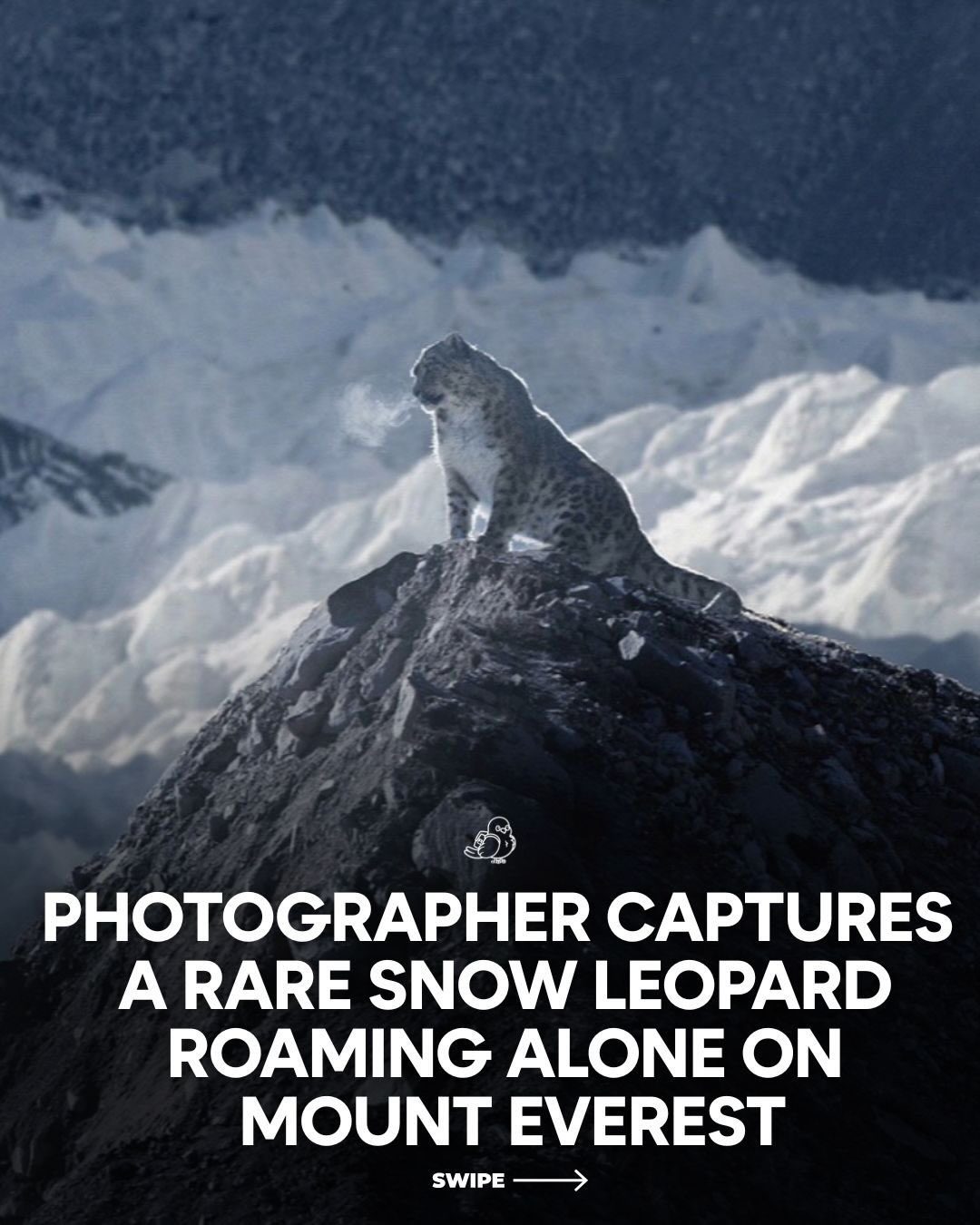
Snow Leopard on Mount Everest: A Rare Encounter
Mount Everest, the world’s highest peak, is a place of extreme beauty and harshness. It is also home to one of the most elusive big cats in the world: the snow leopard. Known as the "ghost of the mountains", these majestic creatures are rarely seen, and capturing one on camera is even rarer. Recently, a photographer managed to snap an incredible photo of a snow leopard roaming alone at an astonishing altitude of 5,486 meters on Mount Everest.
Context: The Elusiveness of Snow Leopards
Snow leopards are renowned for their mastery of camouflage. Their fur, which blends seamlessly with the rocky and icy terrain, makes them nearly invisible to the untrained eye. This adaptability allows them to thrive in some of the most challenging environments on Earth, including the steep slopes of the Himalayas.
The Significance of This Sighting
The Harness of the Himalayas
Mount Everest is one of the most inhospitable places on the planet. The thin air, extreme cold, and treacherous terrain make it a dangerous place for both humans and animals. Yet, the snow leopard has adapted to these conditions, making it a true marvel of nature. Seeing one at such a high altitude—where oxygen levels are critically low—is a testament to their incredible resilience and adaptability.
Conservation and Research
Snow leopards are classified as endangered. Their elusive nature makes it difficult for researchers to study them, and conservation efforts often rely on sporadic sightings and rare photographic evidence. This recent sighting is not only a remarkable moment for wildlife enthusiasts but also a valuable data point for researchers studying these enigmatic creatures.
The "Ghost of the Mountains"
The term "ghost of the mountains" refers to the snow leopard's elusive and mysterious nature. They are known to roam vast territories, often covering hundreds of square kilometers in search of prey. Their solitary lifestyle and ability to blend into their surroundings make them one of the most elusive big cats in the world.
The Journey to the Summit
Capturing the Moment
Capturing a snow leopard on Mount Everest is a feat that requires not only skill but also a great deal of luck. The photographer, @kittiya_pawlowski, managed to capture this once-in-a-lifetime moment, documenting the elusive big cat roaming alone in one of the harshest places on Earth. The image showcases the snow leopard’s habitat, highlighting the rugged beauty of the Himalayan landscape.
The Harsh Reality
The high altitudes of Mount Everest present significant challenges. The air is thin, temperatures are frigid, and the terrain is treacherous. Yet, these conditions do not deter the snow leopard, which has evolved to thrive in such environments. This adaptability is a testament to the animal’s remarkable survival skills.
Practical Tips for Wildlife Photographers
Preparation and Patience
Wildlife photography, especially in harsh conditions, requires meticulous preparation. Photographers need to be well-equipped with the right gear, including high-quality cameras and lenses that can handle extreme conditions. Patience is key; waiting for the right moment to capture a perfect shot can take hours or even days.
Understanding the Subject
Knowing the behavior and habits of the subject is crucial. Snow leopards are known for their elusive nature, so understanding their patterns and preferred habitats can increase the chances of a successful sighting.
Respect for Nature
While capturing stunning images, it is essential to remember the importance of conservation and minimizing disturbance to the wildlife and their habitats. Photographers should follow ethical guidelines to ensure that their presence does not negatively impact the animals they are photographing.
Important Takeaways
Snow leopards are masters of camouflage and adaptation, thriving in some of the harshest environments on Earth. Capturing one on camera at an altitude of 5,486 meters on Mount Everest is a rare and significant event. This sighting not only highlights the beauty and resilience of these elusive creatures but also underscores the importance of conservation efforts to protect them.
Conclusion
The sighting of a snow leopard on Mount Everest is a reminder of the incredible diversity and resilience of wildlife. It also highlights the challenges faced by researchers and conservationists in studying and protecting these elusive creatures. As we continue to explore and appreciate the natural world, it is essential to remember the importance of conservation and the need to preserve the habitats that support these remarkable animals.
Watch the Reel
Questions readers ask
How high up on Mount Everest was the snow leopard spotted?
The snow leopard was spotted at an astonishing altitude of 5,486 meters on Mount Everest. This height is particularly remarkable given the extreme conditions at such elevations.
What makes spotting a snow leopard on Mount Everest so remarkable?
Snow leopards are already rare to spot due to their exceptional camouflage. The harsh conditions of Mount Everest make sightings even more extraordinary, highlighting the animal's remarkable adaptability.
Why is the snow leopard known as the 'ghost of the mountains'?
The snow leopard is called the 'ghost of the mountains' because of its elusive nature and excellent camouflage, which makes it nearly invisible against the rocky and icy terrain of its habitat.
What benefits do these rare sightings provide for wildlife research?
Rare sightings of snow leopards at high altitudes offer researchers valuable opportunities to study these elusive cats. They provide insights into the species' behavior, adaptability, and the environmental conditions they can endure.
What challenges does a snow leopard face at high altitudes?
At high altitudes, snow leopards face extreme cold, low oxygen levels, and harsh terrain. Their ability to thrive in these conditions showcases their remarkable resilience and adaptability.
Related deep dives
Similar reads based on topic and creator.

Recent articles
Fresh deep dives from the latest Reels we unpacked.



Comments
Be the first to comment.