Commodity Supply Life: A Critical Analysis
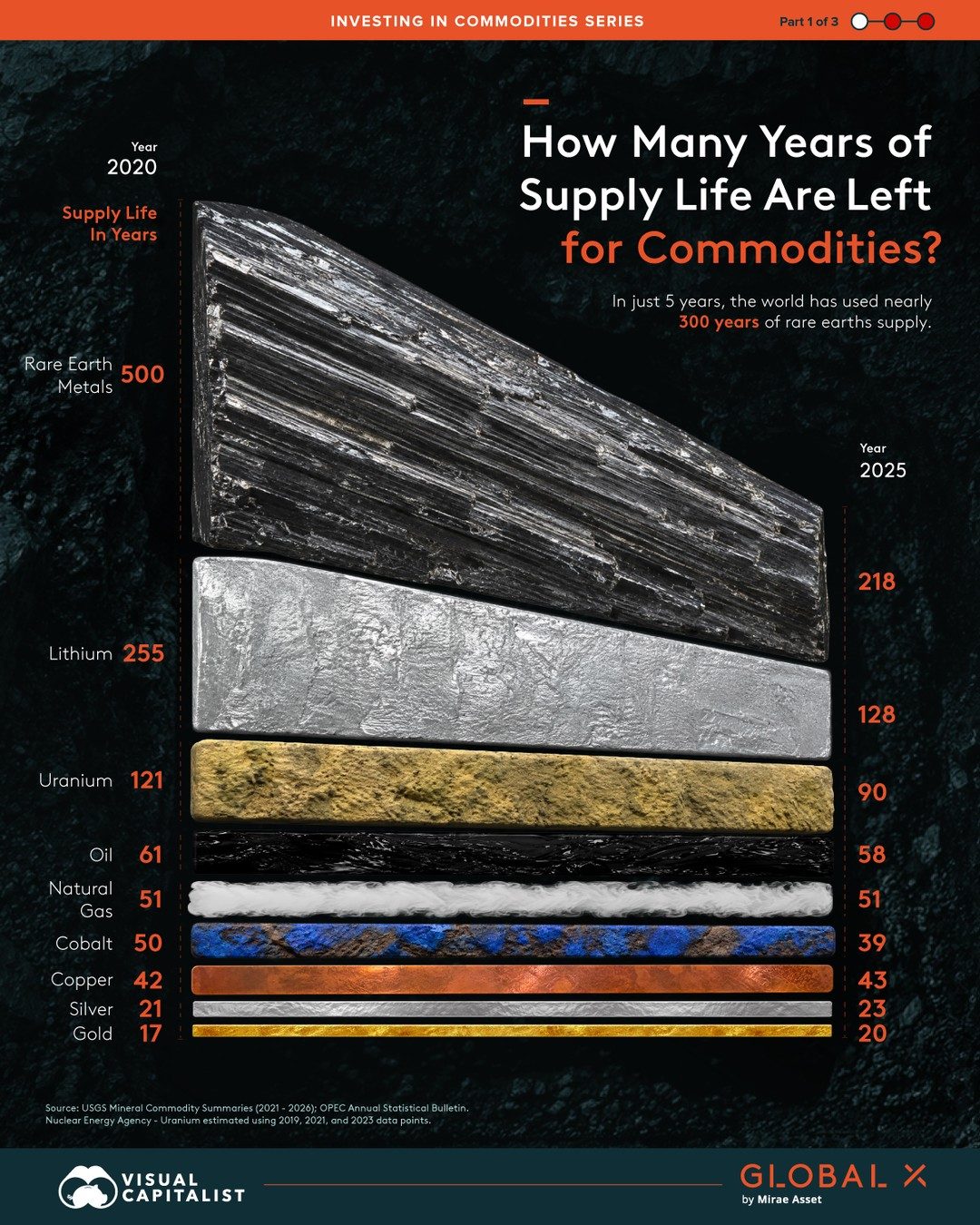
Commodity supply life — the estimated duration for which current reserves can meet global demand — is a critical metric for investors and policymakers. The steep decline in the supply life of rare earth metals, losing nearly 300 years between 2020 and 2025, underscores the urgent need to understand and address the challenges facing various commodities.
Why This Matters
The supply life of commodities is a barometer of global resource sustainability. It influences investment decisions, geopolitical strategies, and environmental policies. Understanding the trends in supply life helps in anticipating market fluctuations, planning for future resource needs, and developing strategies to mitigate risks associated with depletion.
Main Discussion
Rare Earth Metals: The Steepest Decline
Rare earth metals, essential for modern technologies, have seen a dramatic reduction in their estimated supply life. From 500 years in 2020, the supply life plummeted to 218 years by 2025. This significant decline is largely due to increased demand from sectors such as electronics, renewable energy, and defense. The finite nature of these resources highlights the need for recycling initiatives and the development of alternative materials.
Oil and Natural Gas: Stable but Declining
Oil and natural gas, critical for energy production, have shown a more gradual but steady decline in supply life. Oil, with an estimated 61 years of supply in 2020, is projected to have 51 years by 2025. Natural gas, which had 51 years of supply in 2020, is expected to drop to 43 years by 2025. These trends reflect the ongoing consumption of fossil fuels and the need for transitioning to renewable energy sources.
Metals: Varying Trends
Cobalt
Cobalt, crucial for batteries and alloys, had a supply life of 50 years in 2020, decreasing to 39 years by 2025. The decline is driven by the growing demand for electric vehicles and other high-tech applications.
Copper
Copper, used extensively in construction and electronics, had a supply life of 42 years in 2020, dropping to 20 years by 2025. The significant decrease indicates a high demand and limited new reserves, necessitating innovative mining techniques and recycling efforts.
Silver and Gold
Silver and gold, both precious and industrial metals, show varying supply life trends. Silver, with a supply life of 27 years in 2020, is projected to drop to 17 years by 2025. Gold, which had 17 years of supply in 2020, is expected to remain relatively stable at 12 years by 2025. These metals are influenced by both industrial demand and their status as safe-haven investments.
Lithium and Uranium: A Mixed Picture
Lithium, essential for batteries, had a supply life of 255 years in 2020 and is projected to have 218 years by 2025. This relatively stable trend reflects ongoing exploration and extraction efforts. Uranium, critical for nuclear energy, had a supply life of 121 years in 2020, decreasing to 90 years by 2025. The decline in uranium supply life underscores the need for advanced nuclear technologies and sustainable fuel cycles.
Gas and Uranium: Critical for Energy
Natural gas, a versatile energy source, had a supply life of 51 years in 2020, projected to drop to 39 years by 2025. Uranium, crucial for nuclear power, had a supply life of 121 years in 2020, decreasing to 90 years by 2025. These trends highlight the importance of diversifying energy sources and enhancing nuclear safety and efficiency.
Practical Tips
Diversifying Investment Portfolios
Investors should consider diversifying their portfolios to include a mix of commodities with varying supply life trends. This approach can help mitigate risks associated with depletion and market volatility.
Supporting Technological Innovations
Supporting research and development in alternative materials, recycling technologies, and renewable energy sources can help extend the supply life of critical commodities and reduce reliance on finite resources.
Advocating for Sustainable Practices
Advocating for sustainable mining practices, recycling initiatives, and efficient resource management can help conserve critical commodities and reduce environmental impact.
Important Takeaways
Rapid Depletion of Rare Earth Metals
The rapid depletion of rare earth metals highlights the urgent need for sustainable practices and the development of alternative materials. These metals are crucial for modern technologies, and their finite supply underscores the importance of recycling and efficient resource management.
Gradual Decline in Oil and Natural Gas Supply
The gradual but steady decline in the supply life of oil and natural gas emphasizes the need for transitioning to renewable energy sources. This shift is essential for long-term energy sustainability and reducing dependence on finite resources.
Mixed Trends in Metal Supply
The varying supply life trends of metals such as cobalt, copper, silver, and gold reflect the diverse demand and supply dynamics. Investors and policymakers should consider these trends when planning for future resource needs and developing sustainable strategies.
Stability in Lithium Supply
The relatively stable supply life of lithium highlights the ongoing exploration and extraction efforts in the industry. This stability is crucial for meeting the growing demand for batteries and other high-tech applications.
Declining Uranium Supply
The declining supply life of uranium underscores the need for advanced nuclear technologies and sustainable fuel cycles. Enhancing nuclear safety and efficiency can help extend the supply life and ensure a reliable energy source.
Conclusion
Understanding the trends in commodity supply life is crucial for investors, policymakers, and the public. The significant decline in the supply life of rare earth metals, along with varying trends in other commodities, highlights the need for sustainable practices, technological innovations, and diversified investment strategies. By taking proactive measures, we can address the challenges of resource depletion and ensure a sustainable future.
Watch the Reel
Questions readers ask
What are rare earth metals and why are they crucial for modern technologies?
Rare earth metals are a group of 17 chemically similar elements, including lanthanides and scandium and yttrium. They are crucial for modern technologies due to their unique magnetic, luminescent, and electrochemical properties, making them indispensable in electronics, clean energy technologies, and defense systems.
Why has the supply life of rare earth metals seen such a dramatic decrease in recent years?
The supply life of rare earth metals has decreased due to increased global demand, particularly from clean energy and technology sectors. Additionally, production has slowed due to environmental regulations and geopolitical issues, further impacting the available supply.
How can recycling and alternative materials help address the declining supply life of rare earth metals?
Recycling can recover rare earth metals from end-of-life products, extending the supply life. Exploiting alternative materials like ferrite magnets or improving the efficiency of metal extraction can also reduce reliance on these metals.
What role do oil and gas supply trends play in the context of rare earth metals?
While oil and gas are not direct substitutes for rare earth metals, their supply trends can influence the overall energy landscape. A stable oil and gas supply can support the production and processing of rare earth metals, but fluctuations in energy costs can affect their extraction and refining processes.
What are the key geopolitical implications of the declining supply life of rare earth metals?
The declining supply life of rare earth metals can lead to geopolitical tensions, as countries vie for control over limited resources. This can affect global supply chains, trade policies, and international relations, especially given that China currently dominates the rare earth metals market.
What are some alternatives to rare earth metals that are currently being explored?
Researchers and industries are exploring several alternatives, including recycled materials, metal substitution, and synthetic materials. For instance, cobalt and iron can be used as alternatives in magnets, and advancements in materials science are leading to the development of new, less resource-intensive materials.
What steps can governments and industries take to mitigate the risks associated with rare earth metal depletion?
Governments and industries can take steps such as investing in recycling and waste recovery, exploring alternative materials, enhancing resource efficiency, and promoting sustainable mining practices. Developing diverse and secure supply chains can also help mitigate risks and ensure long-term availability.
Related deep dives
Similar reads based on topic and creator.


Recent articles
Fresh deep dives from the latest Reels we unpacked.




Comments
Be the first to comment.