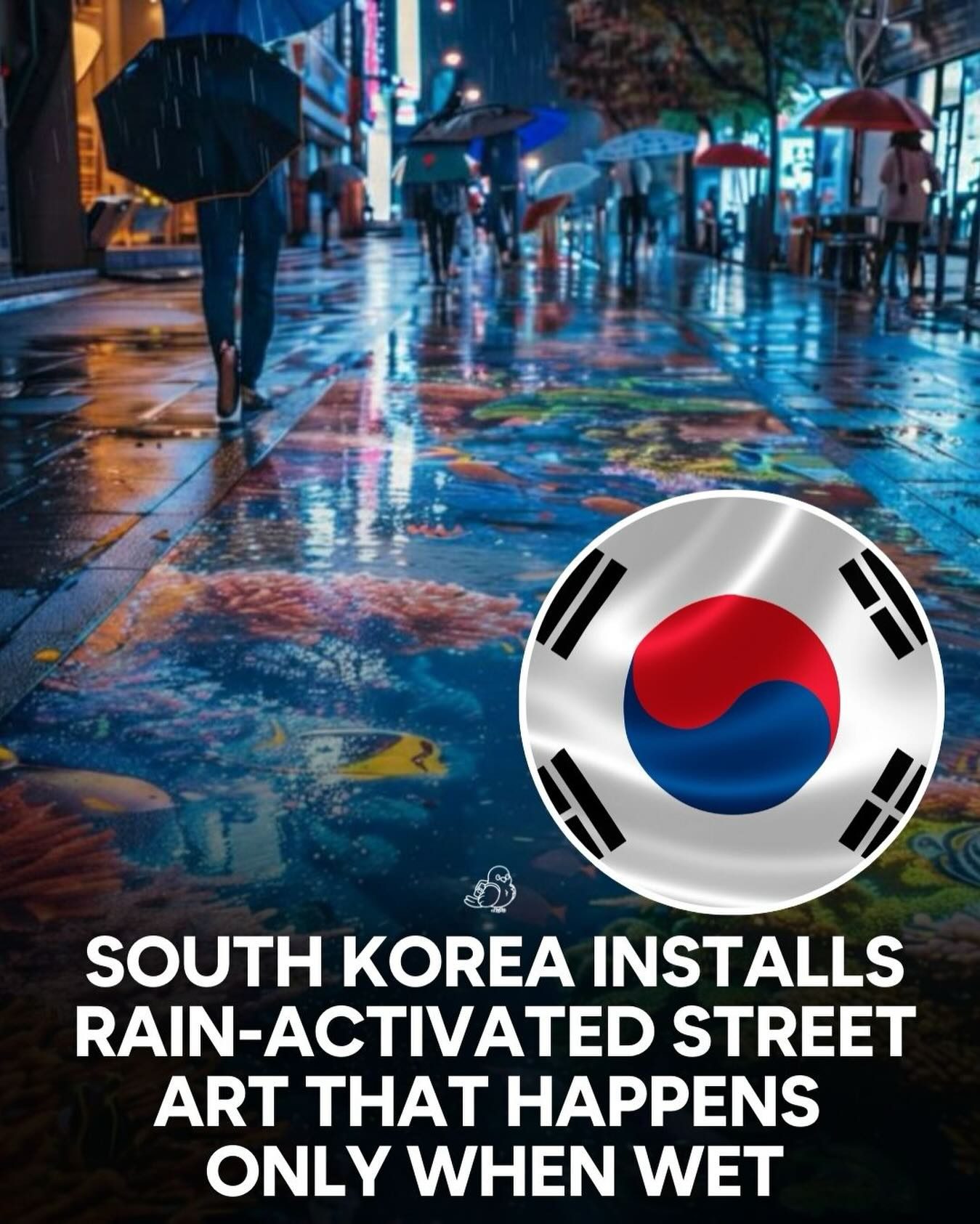
South Korea's Rain-Activated Street Art
South Korea has pioneered an innovative approach to street art with the installation of rain-activated murals. Known as Project Monsoon, this initiative transforms ordinary streets into vibrant canvases during rainy days, using water-reactive paint to create stunning visuals that only appear when wet.
Context / Why This Matters
The intersection of art and weather is a unique concept that has captured global attention. By integrating rain into the creative process, South Korean artists have developed a dynamic and interactive form of public art. These installations not only beautify urban landscapes but also engage the community in a unique, weather-dependent experience. In a world where cities are often dominated by concrete and steel, this project adds a touch of color and cultural expression to urban environments, making the streets more exciting and memorable.
Main Discussion
The Magic of Water-Reactive Paint
The heart of Project Monsoon lies in the use of water-reactive paint. This specialized paint is designed to change color or reveal underlying designs when it gets wet. The effect is striking: as rain falls, the ordinarily dull streets suddenly burst into life, displaying intricate patterns and vibrant hues. The paint is durable and long-lasting, ensuring that the artwork can withstand the elements and remain visible during each rainy season.
Cultural Inspiration
The murals in Project Monsoon draw heavily from marine life and Korean cultural imagery. The designs often incorporate elements like waves, fish, and the iconic South Korean flag. These motifs are seamlessly integrated into larger, abstract patterns, creating a harmonious blend of traditional and modern aesthetics. For example, one notable installation features a large circle with the South Korean flag design, which becomes vividly apparent when the street is wet.
This cultural aspect adds a layer of meaning to the art. It allows passersby to connect with their heritage in a novel way, making the experience both visually and emotionally compelling.
The Role of Weather
The weather plays a crucial role in this artistic initiative. Traditionally, rainy days are often seen as gloomy and inconvenient. However, Project Monsoon turns these days into opportunities for artistic expression. The project shows how something as mundane as rain can be transformed into a creative force, making rainy days a time to appreciate art rather than avoid it.
Practical Tips
Creating Your Own Rain-Activated Art
For those inspired by this concept, creating your own rain-activated art can be a rewarding project. Here are a few practical tips to get you started:
-
Choose the Right Paint: Use water-reactive paint specifically designed for this purpose. This type of paint is available from specialty art suppliers.
-
Design with Care: Plan your design carefully. Consider incorporating familiar or culturally significant elements. Themes related to nature, seasons, or local culture can make the art more relatable and engaging.
-
Select the Right Surface: Choose a surface that is frequently exposed to rain, such as sidewalks, walls, or patios. Ensure the surface is clean and free of debris before applying the paint.
-
Test the Effect: Apply a small test area to see how the paint reacts to water. Adjust your design or technique as needed to achieve the desired effect.
Encouraging Community Engagement
To make the most of your rain-activated art, consider involving the community. Engage local artists, schools, or community groups to participate in the creation and enjoyment of the art. Host events or workshops to educate people about the process and its significance, fostering a sense of collective ownership and pride.
Important Takeaways
- Art can be dynamic and interactive: By using water-reactive paint, artists create murals that are not static but change with the weather, making them a dynamic and engaging form of public art.
- Weather can enhance creativity: The integration of rain into the art process shows how natural elements can be harnessed to create unique, weather-dependent experiences.
- Cultural expression adds depth: Incorporating local cultural imagery and heritage enriches the artwork, making it more meaningful and relatable to the community.
Conclusion
South Korea's rain-activated street art is a testament to the power of innovation and creativity. By blending art with the natural elements, Project Monsoon transforms ordinary streets into captivating displays of color and culture. This initiative not only beautifies urban spaces but also invites the community to experience art in a unique and interactive way. Whether you're an artist looking for inspiration or a resident seeking a fresh perspective, this creative approach to public art offers a wealth of possibilities.
Watch the Reel
Questions readers ask
What is Project Monsoon and how does it work?
Project Monsoon is an innovative street art initiative in South Korea that uses water-reactive paint to create murals that only reveal themselves when it rains. The paint is specially formulated to change color or become visible when wet, transforming ordinary streets into vibrant canvases during rainy days.
Where can I find these rain-activated murals in South Korea?
Rain-activated murals in South Korea can be found in various urban locations, particularly in cities where Project Monsoon installations have been set up. These murals are strategically placed in public spaces to maximize their visibility and impact during rainy weather.
What kinds of designs and themes are featured in South Korea's rain-activated street art?
The designs and themes in South Korea's rain-activated street art are deeply rooted in Korean art and culture. They often showcase vibrant, culturally-inspired murals that celebrate the rich heritage and artistic traditions of South Korea, offering a unique and immersive experience.
Is the water-reactive paint used in Project Monsoon safe for the environment?
The water-reactive paint used in Project Monsoon is designed to be safe for the environment. It is formulated to be non-toxic and does not cause harm to the surrounding ecosystem, ensuring that the artistic installations do not compromise environmental safety.
How has the community responded to these weather-driven art installations?
The community response to South Korea's rain-activated street art has been overwhelmingly positive. These installations have not only beautified urban landscapes but also fostered a sense of engagement and excitement among locals and visitors alike, encouraging people to interact with their environment in a new way.
Can visitors participate in creating these rain-activated murals?
As of now, the creation of these murals is typically handled by professional artists involved in Project Monsoon. However, community involvement in other aspects of the project, such as public events and exhibitions, is often encouraged, allowing visitors to experience and appreciate the art in different ways.
Related deep dives
Similar reads based on topic and creator.




Recent articles
Fresh deep dives from the latest Reels we unpacked.


Comments
Be the first to comment.