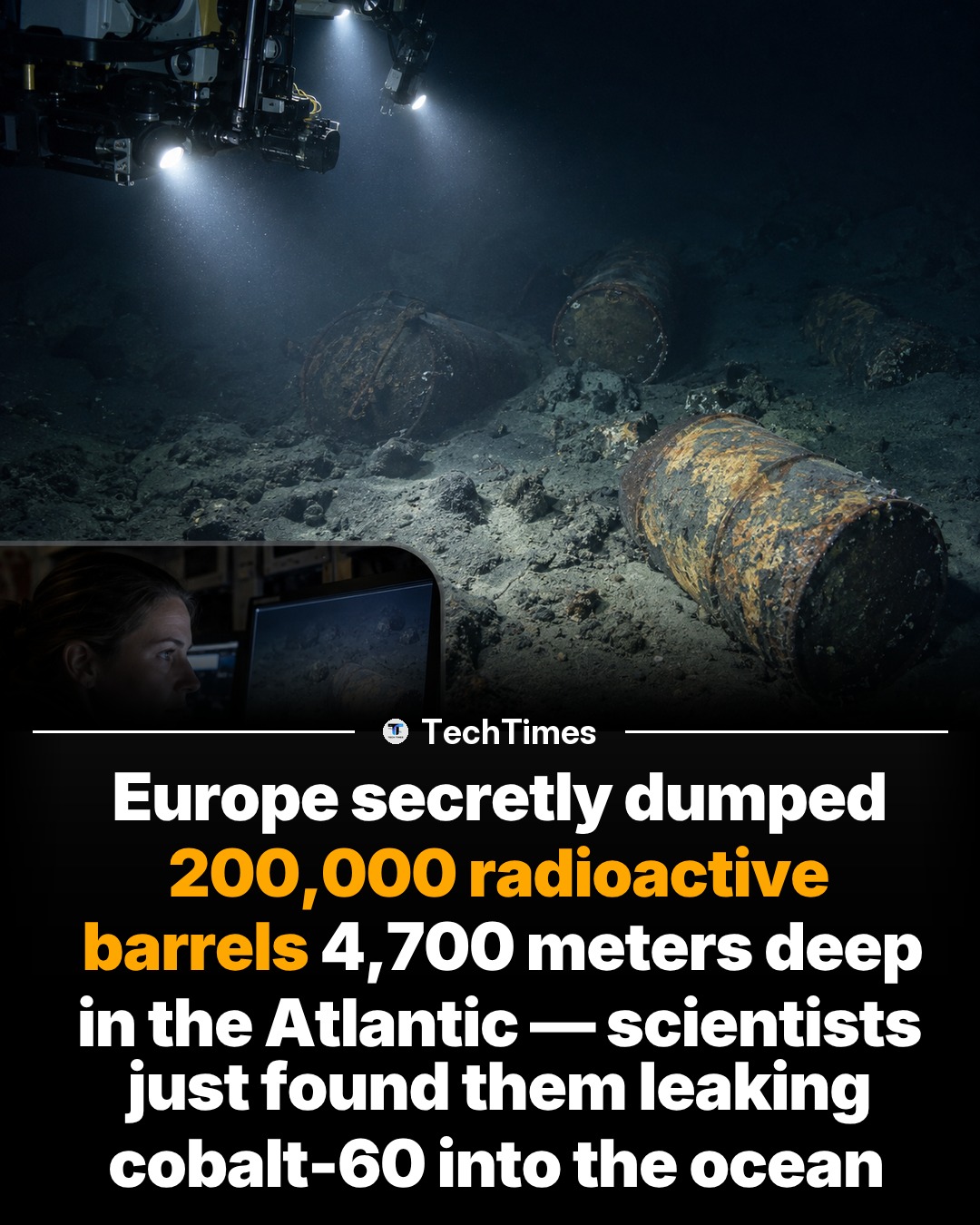
Radioactive Waste is Seeping into the Atlantic
Europe is grappling with a newly exposed environmental crisis — 200,000 barrels of radioactive waste, supposedly dumped 4,700 meters deep in the Atlantic, were found to be leaking toxic ispoopes into the ocean—and that was only what TechTimes recently reported
The Scale of the Problem
Decades of industrial and medical waste have left a deadly legacy on the seabed. Europe's nuclear industry has left a permanent mark in the Atlantic, and only now are these issues starting to surface. The waste is reported to be leaking cobalt-60, usually a byproduct of the nuclear energy industry. That is a highly radioactive substance with an extensive half-life. As the holes in the barrels eroded, cobalt-60 has been seeping into the seawater. The waste barrels are at a depth of 4,700 meters. This remarkable feat was achieved using remotely operated vehicles (ROVs). The ROVs are controlled from a distant location as operators use robotic mechanisms to explore the seabed. The task of finding the barrels, let alone checking for leaks, is monumental. The ROVs are developed to handle these uncertainties. The barrels of radioactive waste were dumped in the ocean with no understanding of how they’d be impacted by the water in the long term. There was no way to accurately measure the rise in bulk dumping or estimate the environmental impact. Oceanic conditions such as water salinity, temperature, mineral deposits and currents are all factors that degrade the waste barrels.
Rooted in the Cold War Era
The waste barrels were dumped in secret during the Cold War in “nine unofficially spoken of disposal sites”. The Soviet Union proved the trendsetter for disposing of radioactive waste by dumping barrels of wastes in the Arctic Ocean. During the 1990s, scientists found that barrels were leaking cesium-137, strontium-90 and plutonium-239. The European continent was actively disposing of waste during the 1970s and 1980s. Although that was technically legal, the majority of countries soon ended the practice. The aftermath of the Cold War saw most nations sign up for the London Dumping Convention and the convention of the Prevention of Marine Pollution by Dumping of Wastes and Other Matter, which banned the disposal of radioactive waste. However, these treaties did little to clean up the mess. What were the procedures put in place, and why were they ignored? How did operators avoid law enforcement — it is assumed to be from the disposal site being on the other side of the water.
The Impact on Marine Life
The dumping of radioactive waste into oceans presents significant risks to biodiversity in marine environments; low levels of radioactive material in the water can still significantly affect the ecosystems. Marine sediments can accumulate radioactive materials, which can then be ingested by marine organisms. These animals are a significant part of the food chain. Cobalt-60 can cause long-term health problems in aquatic life.
The Underwater ROV Explorer
The team used ROVs to explore the seafloor around Europe. The ROV devices have a wide range of applications, from drilling pipelines to underwater exploration or the investigation of marine habitats. The ROVs are capable of capturing high-resolution images and videos and are also equipped with robotic arms to collect samples. Museums and data centers worldwide can access the data from the ROV missions. Scientists can examine the vessels to understand how the waste is being impacted by the ocean. The ROV's camera equipment allows the operator to record scientifically relevant information over long durations and study uncharted territories. Data from ROVs can be used to investigate pollution and marine hazards, particularly those from radioactive waste sites. These robots can also be used for remote sensing applications. The ROV is a reliable piece of equipment known for its durability in extreme underwater conditions and is essential for obtaining data from the seabed.
Practical steps to fight this problem
The most pressing matter is to locate and inspect the other unconfirmed dumping sites:
- Create a contingency team to place ROVs in every suspected dumping site. The team must build strong records and update them regularly.
- Document all waste found and send samples to labs for analysis or to check for radioactive activity.
- Create legal frameworks, especially while tackling the politically sensitive issue of radioactive pollution.
- Stay updated on the new dumping technologies being used to dispose of nuclear waste. The dumping sites have been left undisturbed for over 30 years. It is unclear what the aftereffects of disturbing the barrels will be on the marine ecosystem. The waste barrels that are leaking must be extracted and safely stored onshore until a better option presents itself.
Watch the Reel
Questions readers ask
What exactly is cobalt-60, and why is it so dangerous?
Cobalt-60 is a radioactive isotope that is a byproduct of the nuclear energy industry. It's dangerous because it emits gamma rays, which can penetrate human tissue and cause significant damage to cells. Its long half-life means it remains radioactive for a very long time, posing a long-term threat to the environment and marine life.
How do the remotely operated vehicles (ROVs) work and what makes them suitable for this task?
ROVs are unmanned, robotic vehicles controlled from a remote location. They are equipped with cameras, sensors, and robotic arms to navigate and interact with the underwater environment. Their suitability for this task lies in their ability to withstand extreme depths and harsh conditions, as well as their precision in handling delicate operations like inspecting the barrels.
Why were the radioactive barrels dumped in the Atlantic Ocean, and was this practice common among other countries?
The barrels were dumped in the Atlantic as a way to dispose of hazardous waste during the Cold War era. This practice was not uncommon; the Soviet Union, for instance, dumped radioactive waste in the Arctic Ocean. Several European countries also disposed of waste in the Atlantic during the 1970s and 1980s.
What is the current status of the barrels and the efforts to mitigate the problem?
The barrels are currently at a depth of 4,700 meters in the Atlantic, and they are leaking cobalt-60 into the seawater. Efforts to mitigate the problem involve using ROVs to explore the seabed and inspect the barrels, but the task is monumental due to the depth and harsh conditions. There is no mention of active cleanup efforts in the article.
What specific environmental factors are causing the barrels to degrade?
Several oceanic conditions are contributing to the degradation of the barrels, including water salinity, temperature, mineral deposits, and currents. These factors can erode the barrels over time, leading to leaks of the radioactive material.
Related deep dives
Similar reads based on topic and creator.



Recent articles
Fresh deep dives from the latest Reels we unpacked.



Comments
Be the first to comment.