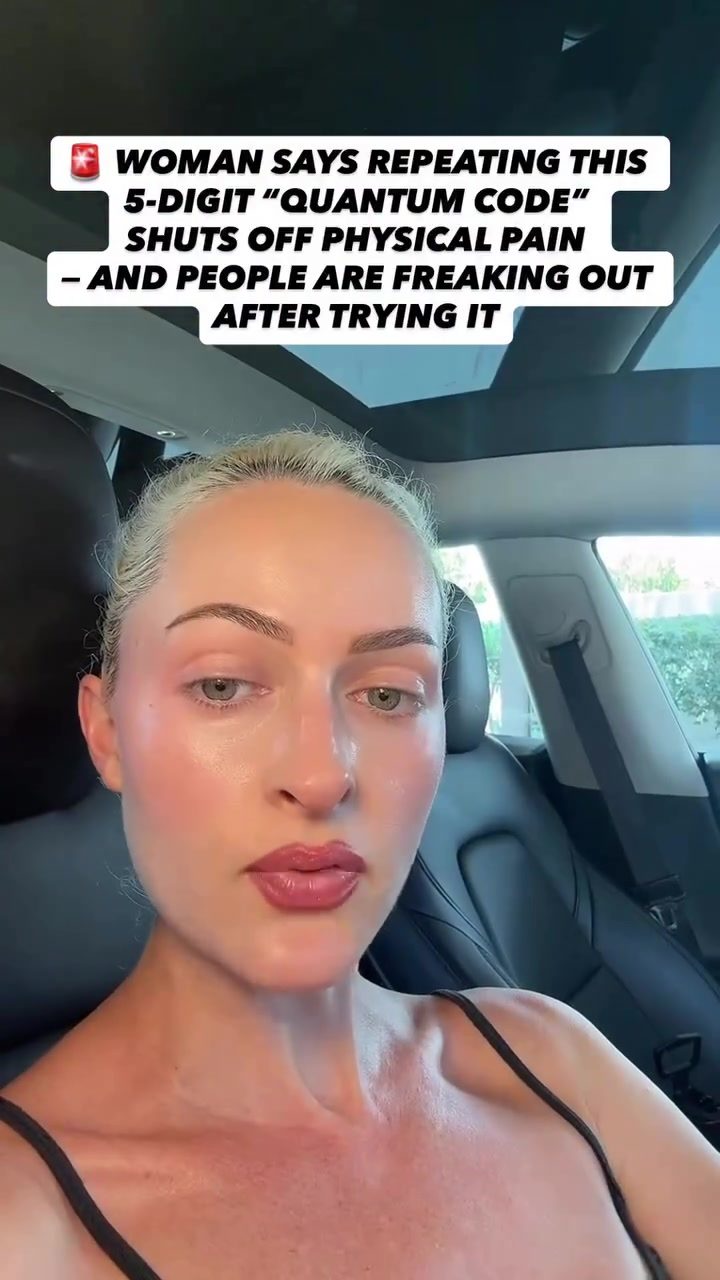
Quantum Codes: The Claim That Pain Can Be Reduced Through Repeating a Number Sequence
The concept of using a number sequence to relieve physical pain has gained significant attention. The idea is that repeating a specific sequence, in this case, "55515," can act as a "quantum code" to reduce pain naturally. How does this work, and why are people so intrigued by this method?
Context / Why This Matters
The idea of using a number sequence to reduce physical pain has sparked widespread curiosity. It's easy to dismiss such claims as mere fads, but the authentic experiences shared by those who have tried the technique have sparked a deeper interest. This trend connects to a larger conversation about the hidden potential of the human mind and the unexplored realms of consciousness.
Main Discussion
The Quantum Code: What Is It?
The sequence "55515" is presented as a "quantum code," a term that evokes the mystical and the unexplored. Those who promote this method claim that repeating the sequence can send a signal from the brain directly to the area of pain, effectively reducing it. The instructions are straightforward: sit with the pain, feel where it is coming from, and repeat the code over and over. It's suggested that this process allows the body to "receive the signal" and initiate the pain-relieving mechanism.
The Science of Pain and the Mind
The idea that pain can be modulated through mental focus and repetition isn't entirely foreign to science. The mind-body connection has been a subject of extensive research, and techniques like mindfulness, meditation, and even hypnosis have shown promise in managing pain. The phenomenon of "placebo effect" also highlights the brain's power to influence physical sensations. However, the specifics of how a number sequence might work are much less clear.
The CIA's Gateway Process
The connection drawn between the "quantum code" and the CIA's declassified Gateway Process documents has added another layer of intrigue. The Gateway Process was a program that explored consciousness, frequencies, altered states, and the hidden potential of the human mind. While the specifics of the program remain shrouded in secrecy, it has fueled speculation about the mind's untapped capabilities. Some believe that the Gateway Process may have uncovered methods to harness the brain's power in ways we are only beginning to understand.
The Public's Reaction
The response to this method has been mixed. Some people report experiencing significant pain relief after trying the technique, while others remain skeptical. The internet debate has spiraled into discussions about the brain's untapped potential and the mysteries of consciousness. Some questions have arisen, such as:
- Why did this actually calm my migraine?
- The human brain is way more powerful than we've been taught.
- Why was the CIA researching consciousness in the first place?
- This sounded insane… until I tried it!
These questions reflect a growing curiosity about the mind-body connection and the potential for unconventional methods to influence physical sensations.
Practical Tips
Trying the Quantum Code
If you're curious about trying the "quantum code" for pain relief, here are the steps:
- Find a Comfortable Position: Sit or lie down in a comfortable position, ensuring you're not in a rushed environment.
- Focus on the Pain: Close your eyes and focus on the pain. Try to locate its source and feel into it.
- Repeat the Code: Start repeating the number sequence "55515." Focus on the rhythm and the sound of the numbers.
- Relax and Allow: Allow your body to relax and imagine the pain reducing with each repetition. Continue until the pain subsides.
Mindfulness and Meditation
While the "quantum code" is a novel approach, traditional methods like mindfulness and meditation can also be effective in managing pain. These techniques involve focusing the mind, reducing stress, and promoting a sense of calm, which can help alleviate physical discomfort.
- Mindfulness: Practice mindfulness by focusing on the present moment. Notice your thoughts and feelings without judgment, and return your focus to your breath when your mind wanders.
- Meditation: Regular meditation can help train your mind to better manage pain. Techniques like progressive muscle relaxation and deep breathing can be particularly helpful.
Seeking Professional Help
While unconventional methods can offer some relief, it's essential to consult with healthcare professionals for persistent or severe pain. Medical experts can provide a comprehensive assessment and recommend appropriate treatments, including medication, physical therapy, and other interventions.
Important Takeaways
- The "quantum code" 55515 is claimed to reduce physical pain through mental focus and repetition.
- The method taps into the mind-body connection, a phenomenon recognized by modern science.
- The connection to the CIA's Gateway Process has fueled speculation about the untapped potential of the human mind.
- While some people report success with the technique, it's essential to approach it with skepticism and consult a healthcare professional for persistent pain.
Conclusion
The idea of using a number sequence to relieve physical pain is both intriguing and controversial. While the science behind it remains unclear, the technique offers a unique perspective on the mind's capabilities. This trend reflects a broader curiosity about the mind-body connection and the potential for unconventional methods to influence physical sensations. Whether you're a skeptic or a believer, exploring different pain management techniques can provide valuable insights and potentially offer relief.
Watch the Reel
Questions readers ask
What is the '55515' quantum code and how is it used for pain relief?
The '55515' quantum code is a number sequence that proponents suggest can help alleviate physical pain when repeated. Practitioners claim that by focusing on this sequence, individuals can connect their mind and body, potentially reducing discomfort naturally.
How does repeating the '55515' sequence help with pain management?
Repeating '55515' is believed to act as a mental trigger that can influence the body's pain response. By focusing on this sequence, individuals may be able to shift their awareness and perception of pain, leading to a reduction in discomfort.
Is there scientific evidence supporting the use of '55515' for pain relief?
As of now, there is limited scientific research specifically on the '55515' sequence. However, many users report positive experiences, and the method connects to broader discussions about the mind's potential in managing physical sensations.
Can the '55515' quantum code be used alongside conventional pain management techniques?
Yes, many people use the '55515' sequence as a complementary approach to traditional pain management techniques. It can be integrated into existing wellness routines and may offer additional support in managing discomfort without medication.
What are some other natural methods to relieve pain?
In addition to the '55515' sequence, other natural methods for pain relief include mindfulness meditation, deep breathing exercises, yoga, and acupuncture. These techniques focus on the mind-body connection and can be effective in managing various types of physical pain.
How does the '55515' quantum code relate to the mind-body connection?
The '55515' quantum code is thought to tap into the mind's ability to influence physical sensations. By focusing on the sequence, individuals may be able to alter their perception of pain, demonstrating the potential power of the mind in managing physical discomfort.
Are there any risks associated with using the '55515' sequence for pain relief?
The '55515' sequence is generally considered safe as it is a mental exercise. However, it should not be used as a replacement for medical advice or treatment. Always consult a healthcare professional for any persistent or severe pain.
Recent articles
Fresh deep dives from the latest Reels we unpacked.




Comments
Be the first to comment.