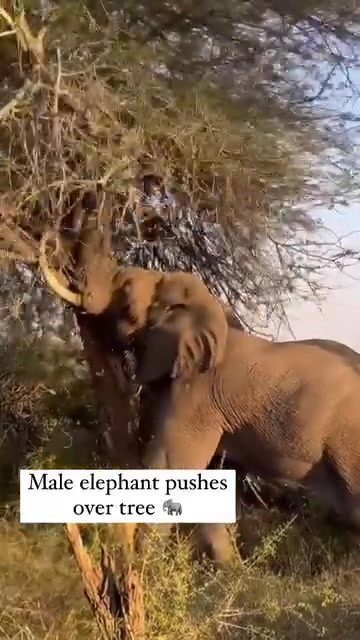
Elephants Pushing Over Trees
Elephants are known for their immense strength and remarkable behaviors, and one of the most striking examples of this is when they push over trees. This behavior, often seen in savanna environments, showcases the raw force of nature in action. Understanding why elephants push over trees and how they do it can provide fascinating insights into their behavior and ecology.
Context / Why this matters
Elephants are integral to the ecosystems they inhabit. Their actions, including pushing over trees, have significant impacts on their environments. By understanding these behaviors, we can better appreciate the role these majestic creatures play in maintaining biodiversity and ecological balance.
Main discussion
The Physical Prowess of Elephants
Elephants, particularly males, possess extraordinary physical strength. When a male elephant pushes over a tree, it is a testament to their sheer power. This strength is not just about brute force; it also involves precise movements and coordination. The act of pushing over a tree requires the elephant to use its entire body, from its massive trunk to its sturdy legs and powerful shoulders.
Reasons for Tree-Pushing Behavior
There are several reasons why elephants might push over trees:
- Feeding: One of the primary reasons elephants push over trees is to access food. Trees often have branches with leaves, fruits, and bark that elephants can eat. By pushing over a tree, they can more easily reach the edible parts.
- Path Clearing: Elephants often need to clear paths through dense vegetation. Pushing over trees helps them create clear pathways, making it easier for them to move through their habitat.
- Marking Territory: Male elephants, in particular, may push over trees as a form of territorial marking. This behavior can send a clear message to other elephants about the male's dominance and presence in the area.
- Mating Behavior: During the mating season, male elephants might push over trees to attract females. This behavior can be a display of strength and fitness, making the male more attractive to potential mates.
The Impact on the Environment
While elephants pushing over trees can have negative short-term impacts, such as altering the landscape and potentially disrupting local plant populations, these actions also play a crucial role in long-term ecological health. By clearing paths and dispersing seeds through their dung, elephants help maintain the diversity of plant life in their habitats. Their behavior can also create new habitats for other species, promoting biodiversity.
Practical tips
Observing elephants in the wild requires knowledge and preparation. Here are some tips for witnessing this behavior safely and responsibly:
Safety First
- Respect Wildlife: Always maintain a safe distance from elephants. They are powerful animals, and their behavior can be unpredictable.
- Use Binoculars: A good pair of binoculars can help you observe elephants from a safe distance without disturbing them.
Ethical Wildlife Viewing
- Follow Guides: If you're on a safari, follow the instructions of your guide. They are trained to ensure both your safety and the well-being of the wildlife.
- Avoid Noise: Loud noises can disturb elephants and other wildlife. Keep noise to a minimum to avoid stressing the animals.
Important takeaways
- Elephants' Strength: The act of pushing over a tree underscores the immense physical strength of elephants, particularly males.
- Behavioral Insights: This behavior serves multiple purposes, from feeding and path-clearing to territorial marking and mating displays.
- Ecological Role: While it may seem destructive, tree-pushing by elephants plays a vital role in maintaining biodiversity and ecological balance.
Conclusion
Watching a male elephant push over a tree is a breathtaking display of nature's raw power. This behavior offers a glimpse into the complex lives of these majestic creatures and their significant role in their ecosystems. By understanding and appreciating these behaviors, we can foster a deeper respect for elephants and the environments they inhabit.
Watch the Reel
Questions readers ask
How do elephants manage to push over trees given their size?
Elephants use their immense strength and weight, along with their powerful trunks and tusks, to topple trees. They often wrap their trunks around the base of a tree and use their tusks to push and pull, leveraging their body weight to fell the tree. This remarkable feat highlights their raw power and agility.
Why do elephants push over trees in savanna environments?
Elephants push over trees for several reasons, including feeding, clearing paths, marking territory, and mating displays. By toppling trees, they gain access to leaves, fruits, and bark, create open spaces for easier movement, and leave visual markers to communicate with other elephants.
Is this behavior specific to male or female elephants?
While both male and female elephants engage in tree-toppling, male elephants are more frequently observed doing so. This is often related to territorial marking and mating behavior, where males use this display of strength to assert dominance and attract females.
How does the behavior of elephants pushing over trees impact the environment?
Elephants' tree-toppling behavior has a profound impact on their environment. It promotes biodiversity by creating open spaces for other species to thrive, facilitates the growth of new plants by increasing light penetration, and maintains the balance of savanna ecosystems by preventing overgrowth of trees.
What role does this behavior play in elephant social structure?
In elephant social structures, toppling trees serves multiple purposes. It is a demonstration of strength, vital for establishing dominance hierarchies. Additionally, it plays a role in communication, as the fallen trees signal territorial boundaries and intentions to other elephants.
How do elephants choose which trees to push over?
Elephants typically target trees that are weakened, diseased, or have shallow root systems, making them easier to topple. They may also choose trees for their nutritional value, such as those with tasty leaves or fruits, or those that block their paths, needing clearing.
Do elephants face any dangers when they push over trees?
While elephants are powerful, pushing over trees can still pose risks. Fallen trees can sometimes trap or injure elephants, and the effort involved can be physically demanding. Additionally, the process of toppling trees can disturb local habitats, potentially affecting other species in the area.
Related deep dives
Similar reads based on topic and creator.




Recent articles
Fresh deep dives from the latest Reels we unpacked.




Comments
Be the first to comment.