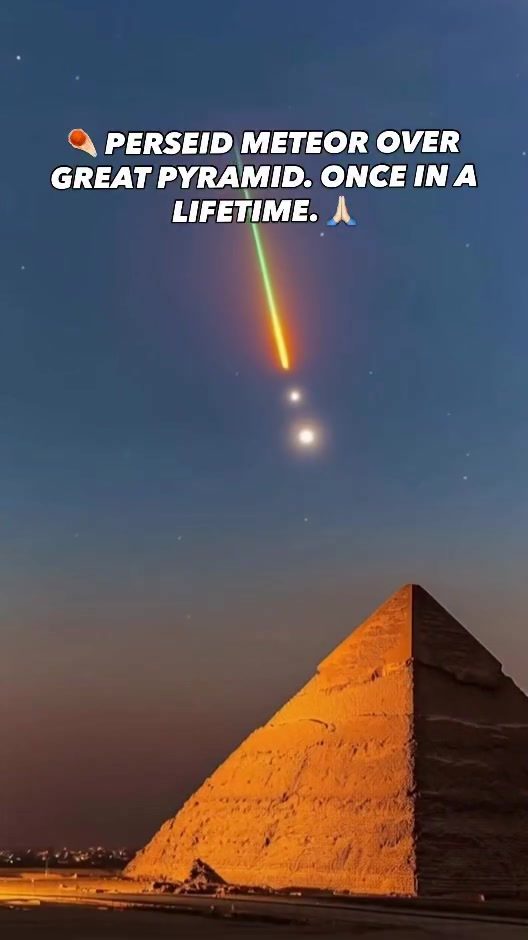
Witnessing the Celestial Spectacle: A Perseid Meteor Over the Great Pyramid of Giza
The Great Pyramid of Giza, one of the most iconic structures in the world, serves as a stunning backdrop for a rare and awe-inspiring celestial event: a Perseid meteor streaking across the night sky. This extraordinary sight was captured in a serene and captivating time-lapse video, highlighting the unique intersection of ancient architecture and modern astronomy.
What are the Perseid Meteors?
The Perseid meteor shower is an annual celestial event that occurs when Earth passes through the debris trail left by Comet Swift-Tuttle. These meteors, often called "shooting stars," appear to radiate from the constellation Perseus, hence their name. The Perseids are known for their bright and fast-moving meteors, which can leave long, glowing trails in the night sky.
Why This Matters
The Great Pyramid of Giza, standing as a testament to ancient engineering and human achievement, provides a dramatic foreground for this celestial display. The juxtaposition of the ancient pyramid and the modern phenomenon of the meteor shower evokes a sense of timelessness. It reminds us of humanity’s enduring fascination with the cosmos and our ongoing quest to understand our place in the universe. Both the Great Pyramid and meteor showers are testament to the cosmos around us. The former is a monument of human achievement, while the latter are a cosmic event created by the debris from a comet.
The Great Pyramid: A Backdrop to the Cosmos
The Great Pyramid of Giza, one of the Seven Wonders of the Ancient World, is a remarkable feat of architecture and engineering. Built as a tomb for Pharaoh Khufu around 2560 BCE, it stands as a symbol of the ancient Egyptian civilization’s ingenuity and ambition. The pyramid’s precise alignment with celestial bodies, particularly the stars, further enhances its mystique.
Architectural Marvel
The Great Pyramid of Giza is composed of approximately 2.3 million limestone blocks, each weighing an average of 2.5 tons. The precision and complexity of its construction have baffled historians and engineers for centuries. The pyramid’s alignment with the cardinal directions—north, south, east, and west—is astonishingly accurate, with an error margin of less than one-tenth of a degree.
Astronomical Significance
The Great Pyramid’s alignment with the stars has led many to believe that it had astronomical significance for the ancient Egyptians. Some theories suggest that the pyramid’s layout mirrors the constellation Orion, which the Egyptians associated with the god Osiris. The alignment of the pyramid with the cardinal directions and its precise orientation towards celestial bodies have sparked countless theories about its purpose and the advanced knowledge of the ancient Egyptians.
The Perseid Meteor Shower: A Celestial Firework Display
The Perseid meteor shower is one of the most anticipated astronomical events of the year. It occurs annually from mid-July to late August, peaking around August 12. During this peak, viewers can expect to see up to 100 meteors per hour under ideal conditions.
Origin and Composition
The Perseid meteors are the result of Earth passing through the debris trail left by Comet Swift-Tuttle. This comet, which orbits the sun every 133 years, sheds particles of dust and ice that burn up in Earth’s atmosphere, creating the spectacular display we see as meteors.
Viewing the Perseids
For optimal viewing, find a dark location away from city lights. Lie on your back and look up at the sky, giving your eyes about 20-30 minutes to adjust to the darkness. The meteors will appear to radiate from the constellation Perseus, but they can appear anywhere in the sky. Patience is key, as the meteors can vary in frequency and intensity.
Practical Tips for Viewing the Perseid Meteor Shower
Choosing the Right Location
Select a location that is far from city lights and offers a clear, unobstructed view of the night sky. National parks, rural areas, and high elevations are excellent choices. The Great Pyramid of Giza, situated in the desert, offers an ideal vantage point with minimal light pollution.
Preparing for the Night
Dress in warm, comfortable clothing and bring a blanket or chair to lie back on. Bring snacks and water, and consider bringing a red flashlight to preserve your night vision. A red flashlight can help maintain your eyes’ sensitivity to the dark, making the meteors easier to see.
Using Binoculars and Telescopes
While binoculars and telescopes can enhance the viewing experience, they are not necessary for enjoying the Perseid meteor shower. The meteors are best viewed with the naked eye, as they can appear anywhere in the sky. Binoculars and telescopes can be useful for spotting specific celestial objects or constellations.
Important Takeaways
The Perseid meteor shower and the Great Pyramid of Giza are both awe-inspiring phenomena that highlight the wonders of the natural world and the achievements of human civilization. Whether you are an astronomy enthusiast or a history buff, witnessing a meteor shower over an ancient landmark is an unforgettable experience. The combination of these two elements showcases the timelessness of the cosmos and our enduring fascination with the mysteries of the universe.
Conclusion
The Perseid meteor over the Great Pyramid of Giza is a unique and rare event that underscores the timeless beauty of the night sky and the grandeur of ancient architecture. Whether you are an avid stargazer or simply appreciate the wonders of the cosmos, this celestial spectacle serves as a reminder of the endless mysteries that lie beyond our planet. For those lucky enough to witness such an event, it is a humbling experience that connects us to the vastness of the universe and the ingenuity of human achievement.
Watch the Reel
Questions readers ask
What makes the Perseid meteor over the Great Pyramid of Giza a unique sight?
The combination of the ancient architecture of the Great Pyramid and the modern astronomy phenomenon of a Perseid meteor creates a striking visual contrast, highlighting humanity’s enduring fascination with the cosmos and its role as a backdrop to our achievements.
Why does the Perseid meteor shower occur annually?
The Perseid meteor shower occurs annually when Earth passes through the debris trail left by Comet Swift-Tuttle. This debris burns up in Earth's atmosphere, creating the spectacular display of meteors, commonly known as shooting stars.
When is the best time to view the Perseid meteor shower over the Great Pyramid of Giza?
The Perseid meteor shower typically peaks in mid-August, with the best viewing times occurring during the night and pre-dawn hours. However, the specific timing for viewing over the Great Pyramid of Giza depends on the timing of the meteor and the weather.
What is the significance of the Great Pyramid of Giza as a backdrop for a meteor shower?
The Great Pyramid of Giza, a testament to ancient engineering and architecture, provides a dramatic and iconic foreground for the natural phenomenon of a meteor shower. This combination underscores the timelessness of human achievement and our connection to the cosmos.
How can I capture a time-lapse video of a Perseid meteor over the Great Pyramid of Giza?
To capture a time-lapse video, you will need a camera with long-exposure capabilities, a sturdy tripod, and planning to ensure you are in the right location at the right time. It is also helpful to use the right settings and software to compile the images into a video.
What is the Perseid meteor trail, and why are meteors called 'shooting stars'?
The Perseid meteor trail refers to the path that meteors appear to take in the night sky, which seems to originate from the constellation Perseus. Meteors are called 'shooting stars' due to their brief, bright streaks of light that resemble stars falling from the sky. In reality, they are tiny particles of cometary debris burning up in the atmosphere.
What can I expect to see during a meteor shower over the Great Pyramid of Giza?
During a meteor shower, you can expect to see numerous meteors streaking across the night sky, with the Great Pyramid of Giza serving as a dramatic backdrop. The sight is both awe-inspiring and serene, offering a unique blend of ancient architecture and celestial phenomena.
Related deep dives
Similar reads based on topic and creator.


Recent articles
Fresh deep dives from the latest Reels we unpacked.




Comments
Be the first to comment.