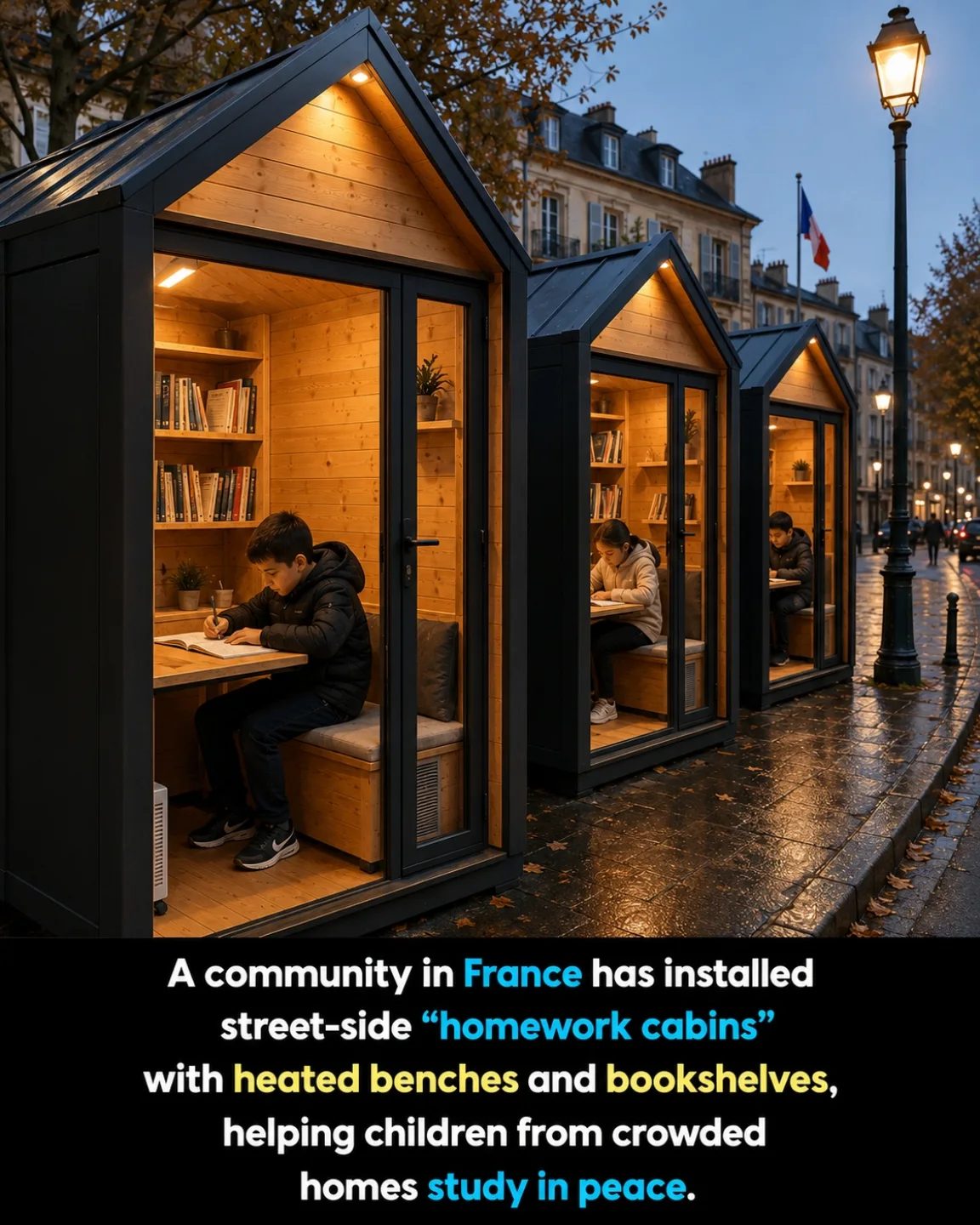
Homework Cabins in Paris
In the bustling streets of Paris, a thoughtful urban design initiative has taken root: street-side homework cabins. These small, wooden structures are more than just an aesthetic addition to the cityscape; they are functional spaces designed to support students in need of a quiet place to study. Equipped with heated benches and bookshelves, these cabins offer a comfortable and peaceful environment for children who may not have suitable study spaces at home.
Context / Why this matters
In urban environments, finding a quiet and dedicated space for study can be challenging, especially for families living in crowded homes. The introduction of street-side homework cabins addresses this issue by providing a public resource that fosters academic focus and productivity. This initiative showcases how urban design can be leveraged to meet the educational needs of communities, ensuring that all children have access to the resources they need to succeed.
Main discussion
The Design and Features of Homework Cabins
The homework cabins are thoughtfully designed to be both inviting and functional. The heated benches ensure comfort, which is particularly important in colder months, allowing students to focus on their studies without distraction. Bookshelves within the cabins provide a place to store study materials, encouraging organization and a sense of ownership over the space. The overall design of these cabins is conducive to creating a serene atmosphere, perfect for concentrated study. This is a prime example of how urban design can creatively address practical needs in a community.
The Impact on Students and Communities
The presence of homework cabins in Parisian streets has a significant impact on both students and the local community. For students, these cabins offer a dedicated space that is free from the distractions of home. This can lead to improved academic performance and a more structured study routine. For the community, these cabins serve as a symbol of support for education, reinforcing the value placed on learning and development.
The Broader Implications of Urban Design Initiatives
The installation of homework cabins in Paris highlights the broader role of urban design in addressing social and educational needs. By creating functional public spaces, cities can support various aspects of community life. This initiative demonstrates how targeted urban design can lead to tangible benefits, improving the quality of life for residents and fostering a more inclusive environment. This is not just about aesthetics; it's about creating solutions that meet the practical needs of the people who live there.
Practical tips
Maximizing the Use of Homework Cabins
For students who live in cities where these cabins are available, it's essential to make the most of this resource. Consider the following tips to get the most out of your study time in a homework cabin:
- Plan Ahead: Bring all necessary materials, including books, notes, and stationery, to avoid interruptions.
- Set a Study Schedule: Allocate specific times for study sessions to develop a routine and ensure consistent progress.
- Minimize Distractions: Use the quiet environment to focus on your studies, avoiding distractions like smartphones or noise.
For Communities Interested in Implementing Similar Initiatives
If you are part of a community considering a similar initiative, here are some steps to get started:
- Assess Needs: Conduct surveys or community meetings to understand the specific needs of local residents, particularly those related to education and study spaces.
- Collaborate with Local Authorities: Work with city planners and local government to secure funding and support for the project.
- Engage the Community: Involve residents in the design and implementation process to ensure that the final product meets their needs and is well-received.
Important takeaways
Homework cabins in Paris are a testament to the power of urban design in addressing real-world needs. These small, functional spaces provide a quiet and comfortable environment for students, helping to foster academic success. By creating dedicated study spaces in public areas, cities can support education and improve the quality of life for residents. This initiative serves as a model for how urban design can be leveraged to meet community needs, highlighting the importance of thoughtful planning and community engagement.
Conclusion
The introduction of street-side homework cabins in Paris is a shining example of how urban design can be used to support education and community well-being. These cabins not only provide a quiet study space for students but also serve as a community resource that reinforces the value of education. By creating functional and inviting public spaces, cities can address practical needs and foster a more inclusive environment. This initiative demonstrates the potential of urban design to make a real difference in people's lives, encouraging other communities to explore similar solutions.
Watch the Reel
Questions readers ask
What are the Paris homework cabins?
The Paris homework cabins are small, wooden structures placed on sidewalks to provide students with a quiet, comfortable space to study. They are equipped with heated benches and bookshelves to support academic focus.
Who can use the homework cabins in Paris?
The homework cabins are primarily designed for students who need a dedicated study space but may not have one at home, especially those living in crowded urban environments.
What are the benefits of these street-side study areas?
These study areas address the challenge of finding a quiet place to study in busy homes. They provide a public resource that promotes academic focus and productivity and support the community by giving children a comfortable, peaceful environment to complete their homework.
What amenities are available in the homework cabins?
Each cabin is equipped with heated benches for comfort and bookshelves for easy access to reading materials, making them functional and inviting for students.
How do the Paris homework cabins contribute to urban design?
The cabins are part of an urban design initiative that transforms the cityscape into a more functional environment for residents. By integrating study spaces into public areas, Paris enhances its infrastructure with thoughtful, student-focused amenities.
Are there similar initiatives in other cities?
While specific initiatives may vary, other cities have implemented similar urban design strategies to support community needs. This includes the creation of small, functional spaces for various purposes, such as libraries, playgrounds, and even outdoor classrooms.
How can I locate a homework cabin in Paris?
Homework cabins are strategically placed on the streets of Paris to be accessible to students. To find the nearest cabin, you can check local community resources, ask local administrators, or look for them in areas where students frequently gather.
Related deep dives
Similar reads based on topic and creator.




Recent articles
Fresh deep dives from the latest Reels we unpacked.




Comments
Be the first to comment.