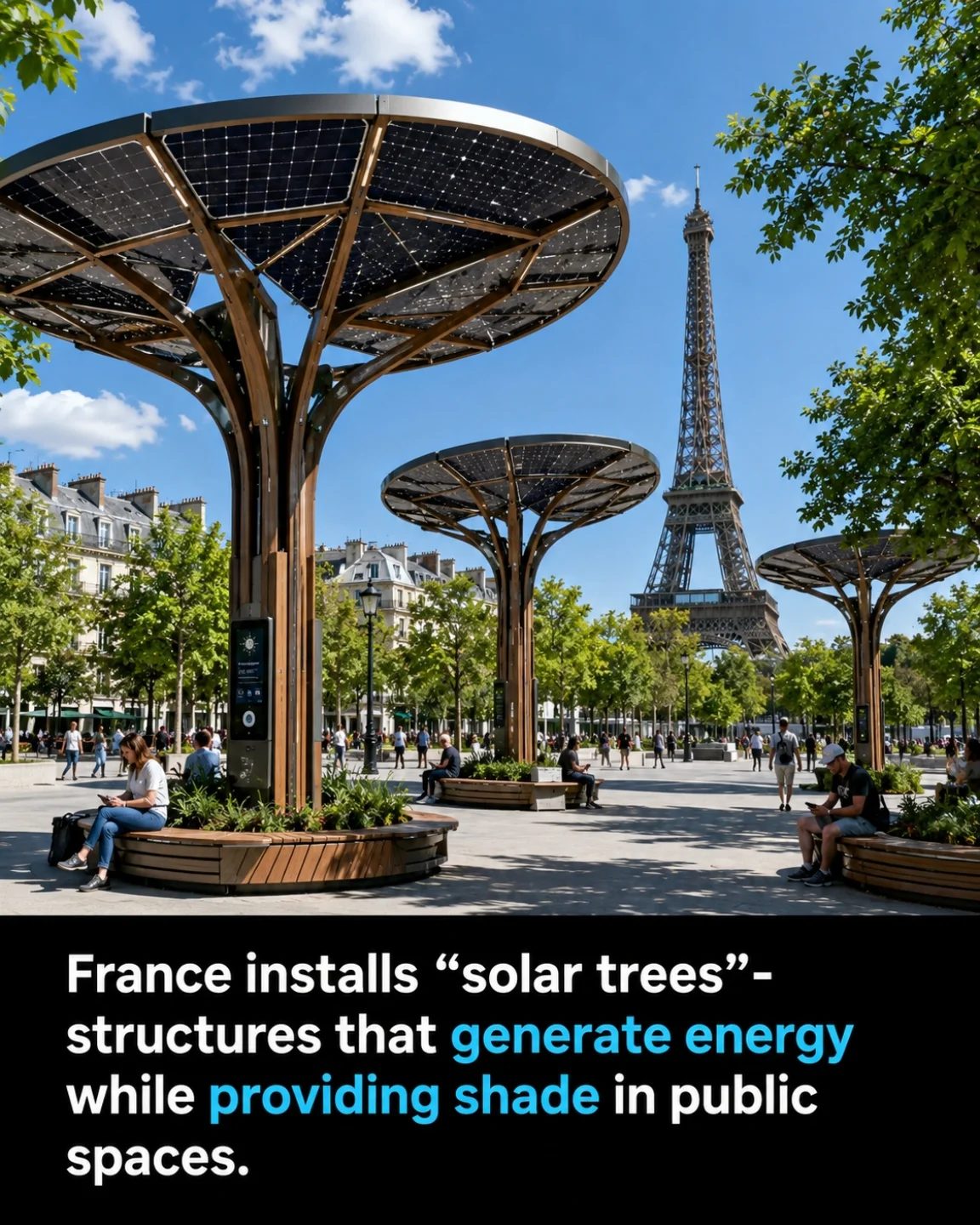
Solar Trees in Paris
Solar trees are an innovative approach to harnessing renewable energy while providing practical benefits to urban environments. These structures, installed in Paris, integrate solar panels into a tree-like design, offering both energy generation and shaded public spaces. Let's delve into the concept, its benefits, and its potential impact on urban sustainability.
Context / Why this matters
As cities around the world strive to reduce their carbon footprints and become more sustainable, innovative solutions like solar trees are gaining traction. These structures not only generate clean energy but also address the need for shaded public spaces in urban areas, making them a multi-functional addition to cityscapes. Paris, known for its iconic landmarks and commitment to sustainability, has embraced this technology, showcasing it prominently in public spaces with the Eiffel Tower as a backdrop.
Main discussion
The Design and Functionality
Solar trees are designed to mimic the appearance of natural trees, with solar panels serving as the leaves. This design not only makes them aesthetically pleasing but also functional. The solar panels capture sunlight and convert it into electricity, which can be used to power various public amenities such as lighting, charging stations, and Wi-Fi hubs. The structures provide much-needed shade in urban areas, creating comfortable spaces for pedestrians and enhancing the overall quality of life in the city.
Benefits of Solar Trees
Renewable Energy Generation
Solar trees contribute to the city's renewable energy portfolio by generating clean, sustainable electricity. As solar energy is a renewable resource, it reduces the dependence on fossil fuels, thereby lowering greenhouse gas emissions and mitigating the effects of climate change.
Urban Shading
In densely populated cities, shade is a crucial element for public comfort. Solar trees provide ample shade, creating cool spots for people to rest and enjoy outdoor spaces, especially during hot summer days. This makes urban areas more inviting and livable, encouraging people to spend more time outdoors.
Public Amenities
The energy generated by solar trees can be used to power various public amenities. Charging stations for electric vehicles, street lighting, and Wi-Fi hotspots are a few examples of how the generated energy can be utilized. This not only enhances the functionality of public spaces but also promotes the use of renewable energy in everyday life.
Aesthetic and Environmental Impact
The tree-like design of these structures adds a modern, eco-friendly aesthetic to urban landscapes, contributing to a more visually appealing environment. Additionally, they promote sustainability by encouraging the integration of green technologies into urban planning.
Practical tips
For Urban Planners
When incorporating solar trees into urban design, planners should consider the following tips:
- Location: Place solar trees in areas with high foot traffic and ample sunlight to maximize their benefits. Parks, plazas, and busy streets are ideal locations.
- Integration: Ensure that the design of the solar trees complements the existing architecture and landscape. This will enhance the overall aesthetic appeal of the area.
- Functionality: Plan for the use of the energy generated by solar trees. Allocate resources for charging stations, lighting, and other public amenities to make the most of the renewable energy produced.
For Residents
Residents can also take advantage of solar trees by:
- Using Public Amenities: Utilize the charging stations and Wi-Fi hotspots powered by solar trees to reduce the use of personal energy resources.
- Promote Awareness: Encourage friends and family to appreciate and use these structures, fostering a greater understanding and acceptance of renewable energy solutions.
Important takeaways
Solar trees represent a forward-thinking approach to urban sustainability. They generate renewable energy, provide shade, and enhance the functionality of public spaces. By integrating solar panels into a tree-like design, these structures offer a unique way to promote sustainability in urban environments. As cities continue to innovate and adapt to the challenges of climate change, solutions like solar trees will play a crucial role in creating greener, more livable urban landscapes.
Conclusion
The installation of solar trees in Paris underscores the city's commitment to sustainability and innovation. These structures not only generate clean energy but also provide practical benefits such as shade and enhanced public amenities. As urban areas around the world seek to become more sustainable, solar trees serve as an inspiring example of how technology and green design can be seamlessly integrated to create a more livable, eco-friendly environment.
Watch the Reel
Questions readers ask
What are Paris's solar trees and how do they work?
Paris's solar trees are structures designed to mimic the appearance of natural trees, but with solar panels that function as leaves. These solar trees harness sunlight to generate renewable energy, which can be used to power various public amenities such as lighting, charging stations, and Wi-Fi hotspots. This dual functionality makes them an effective solution for enhancing both energy production and public spaces.
What are the primary benefits of solar trees in urban environments?
Solar trees offer multiple benefits in urban environments. They generate clean, renewable energy, contributing to the reduction of carbon emissions. Additionally, they provide shaded public spaces, which can be particularly useful in densely populated areas where green spaces are limited. This combination of energy production and public comfort makes solar trees a valuable addition to urban infrastructure.
How do solar trees contribute to Paris's green spaces?
Solar trees enhance Paris's green spaces by offering shaded areas for residents and visitors to relax and enjoy. While they do not add to the city's green cover, they serve as focal points that encourage people to spend more time in public areas. This integration of sustainable technology and public amenities helps create a more inviting and eco-friendly urban landscape.
What types of public amenities can be powered by solar trees?
Solar trees can power a variety of public amenities, including street lighting, Wi-Fi hotspots, and charging stations for electronic devices. By providing these services, solar trees not only contribute to the city's energy needs but also improve the overall functionality and comfort of public spaces, making them more accessible and user-friendly for residents and visitors.
How do solar trees compare to traditional solar panels in terms of functionality?
Unlike traditional solar panels, which are typically installed on rooftops or in large solar farms, solar trees are integrated into public spaces and function as dual-purpose structures, providing both energy generation and shaded areas for people. This makes them more versatile and better suited for urban environments where space is at a premium and the need for shaded areas is high.
Where can solar trees be typically found in Paris?
Solar trees in Paris can be found in various public spaces, including parks, pedestrian areas, and along streets. Their design allows them to blend seamlessly into the urban landscape, making them a discreet but impactful addition to the city’s infrastructure. By situating them in areas with high foot traffic, the city maximizes both their energy-generating capacity and their utility as shaded spaces.
Related deep dives
Similar reads based on topic and creator.




Recent articles
Fresh deep dives from the latest Reels we unpacked.




Comments
Be the first to comment.