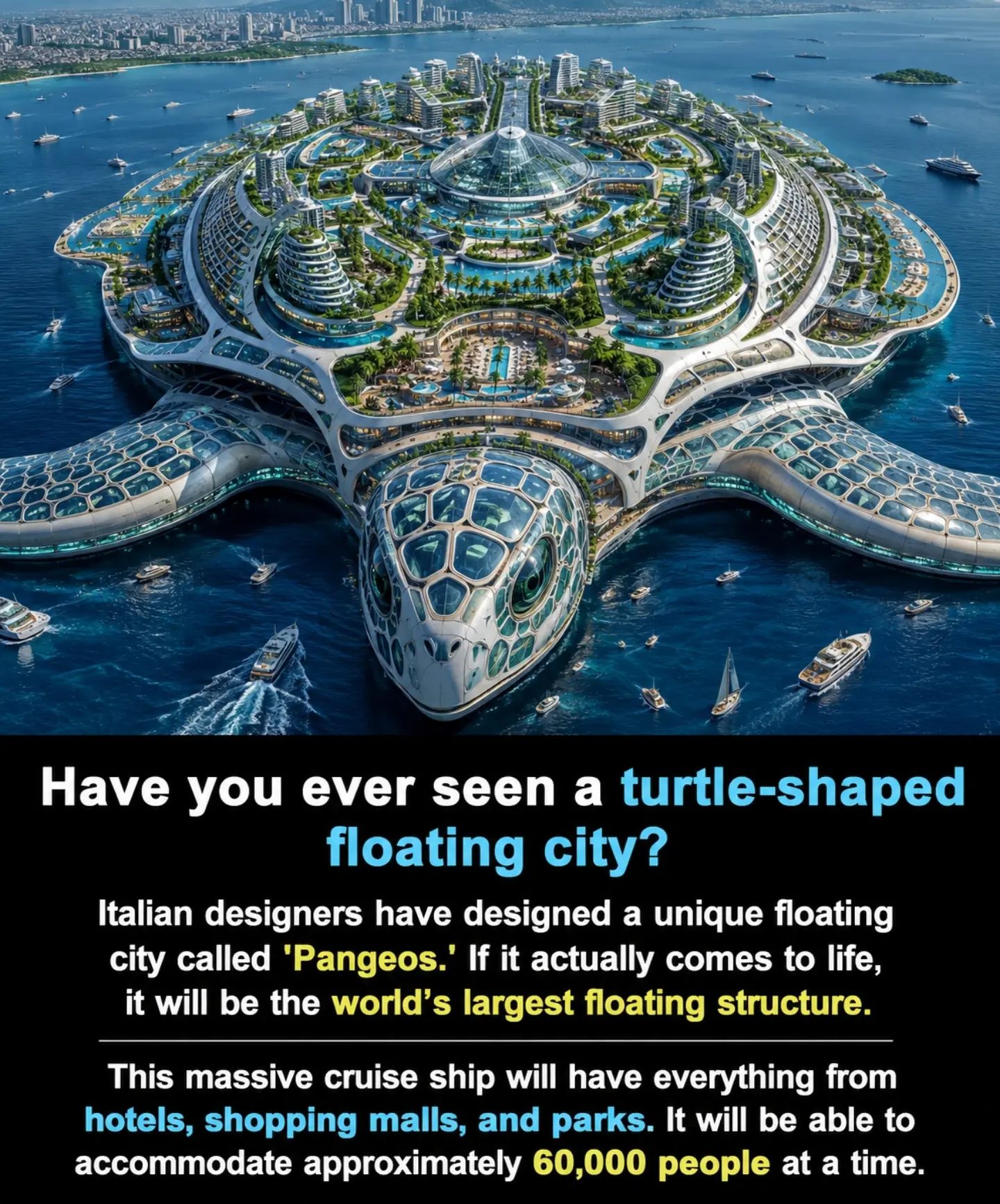
Floating City Concept: Exploring Pangeos
Floating cities are a fascinating concept that blend architecture, engineering, and sustainability. Pangeos, a unique turtle-shaped floating city designed by Italian designers, is one of the most ambitious and intriguing examples of this innovative idea. This article delves into the concept of Pangeos, its design features, and the potential implications of such a structure.
Context: Why This Matters
As sea levels rise and urbanization continues to put pressure on land resources, floating cities offer a novel solution to accommodate growing populations while minimizing environmental impact. Pangeos stands out as a concept that pushes the boundaries of architectural design and urban planning, envisioning a self-sustaining community on the water.
The Concept of Pangeos
Design and Structure
Pangeos is designed to resemble a massive turtle, a symbol that evokes imagery of stability and longevity. The turtle-shaped structure is not just an aesthetic choice; it serves a practical purpose by providing a stable base for the city. The design includes various amenities such as hotels, shopping malls, and parks, all integrated into a cohesive and functional layout.
Accommodation and Capacity
One of the most impressive aspects of Pangeos is its capacity. The city is designed to accommodate approximately 60,000 people at a time. This makes it potentially the world’s largest floating structure, surpassing existing floating cities and cruise ships in terms of scale and complexity.
Amenities and Infrastructure
Pangeos is envisioned as a self-sustaining community with all the necessary amenities to support a large population. The design includes:
- Hotels: Providing accommodation for residents and visitors.
- Shopping Malls: Offering retail spaces for shopping and entertainment.
- Parks: Green spaces for recreational activities and relaxation.
These amenities are strategically placed to ensure a high quality of life for the residents, blending urban living with natural surroundings.
Practical Tips for Understanding and Appreciating Floating Cities
Research and Design
When exploring the concept of floating cities, it’s essential to understand the extensive research and design that goes into creating such structures. Architects and engineers must consider factors such as buoyancy, stability, and environmental impact. Pangeos serves as a great example of how innovative design can address these challenges.
Sustainability Considerations
Floating cities need to be designed with sustainability in mind. This includes considering renewable energy sources, waste management, and water conservation. Pangeos, with its turtle-shaped design, could potentially incorporate these elements to create an eco-friendly urban environment.
Economic and Social Benefits
Floating cities like Pangeos offer unique economic and social benefits. They can provide housing solutions in coastal areas where land is scarce, create new opportunities for tourism, and foster a sense of community among residents. Understanding these benefits can help in appreciating the potential of such innovative structures.
Important Takeaways
Innovative Design
Pangeos represents a groundbreaking approach to urban planning and architecture. Its turtle-shaped design not only makes it visually striking but also serves a functional purpose by providing stability and buoyancy.
Potential for Large-Scale Living
The concept of Pangeos showcases the potential for floating cities to accommodate large populations. With a capacity to house 60,000 people, it demonstrates the feasibility of creating self-sustaining communities on the water.
Environmental and Economic Implications
Floating cities like Pangeos can have significant environmental and economic impacts. They offer solutions to urbanization and sea-level rise while providing new economic opportunities and a unique way of life for residents.
Conclusion
Pangeos, the turtle-shaped floating city designed by Italian designers, is a remarkable example of how innovative architecture and urban planning can address contemporary challenges. As we continue to explore the concept of floating cities, Pangeos serves as a beacon of what is possible, pushing the boundaries of design and sustainability. The potential for such structures to accommodate large populations and provide a high quality of life makes them a compelling solution for the future of urban living.
Watch the Reel
Questions readers ask
What inspired the turtle shape of the Pangeos floating city?
The turtle shape of Pangeos was inspired by the need for stability and durability. Turtles are known for their ability to navigate water and land, making them a fitting symbol for a floating city. Additionally, the turtle's shell shape provides excellent structural integrity and resistance to waves and currents.
How does Pangeos plan to support a population of 60,000 people?
Pangeos is designed with a variety of living spaces, including residential areas, hotels, and shared amenities. The city will also have commercial spaces, such as shopping centers, and recreational areas including parks and public plazas. All of these components will be integrated into the turtle-shaped design to optimize space and functionality.
What makes Pangeos an eco-friendly floating city?
Pangeos incorporates several sustainable features, such as renewable energy sources like solar and wind power, waste management systems, and rainwater collection. The city's design also focuses on creating green spaces and promoting a low-carbon lifestyle among its residents. These elements help minimize the environmental impact of the floating city.
What are the benefits of living in a floating city like Pangeos?
Living in Pangeos offers several benefits, including reduced environmental impact, innovative urban design, and the potential for a more sustainable lifestyle. Residents can enjoy unique living spaces, access to modern amenities, and a strong sense of community within a self-sustaining environment.
How does Pangeos address the challenges of rising sea levels?
Pangeos is designed to rise with the sea levels. The floating city is built to be adaptable and resilient. It uses advanced engineering techniques to ensure stability and safety. The modular design allows for expansion and adjustment as needed, making it a practical solution to the challenges posed by rising sea levels.
Related deep dives
Similar reads based on topic and creator.




Recent articles
Fresh deep dives from the latest Reels we unpacked.




Comments
Be the first to comment.