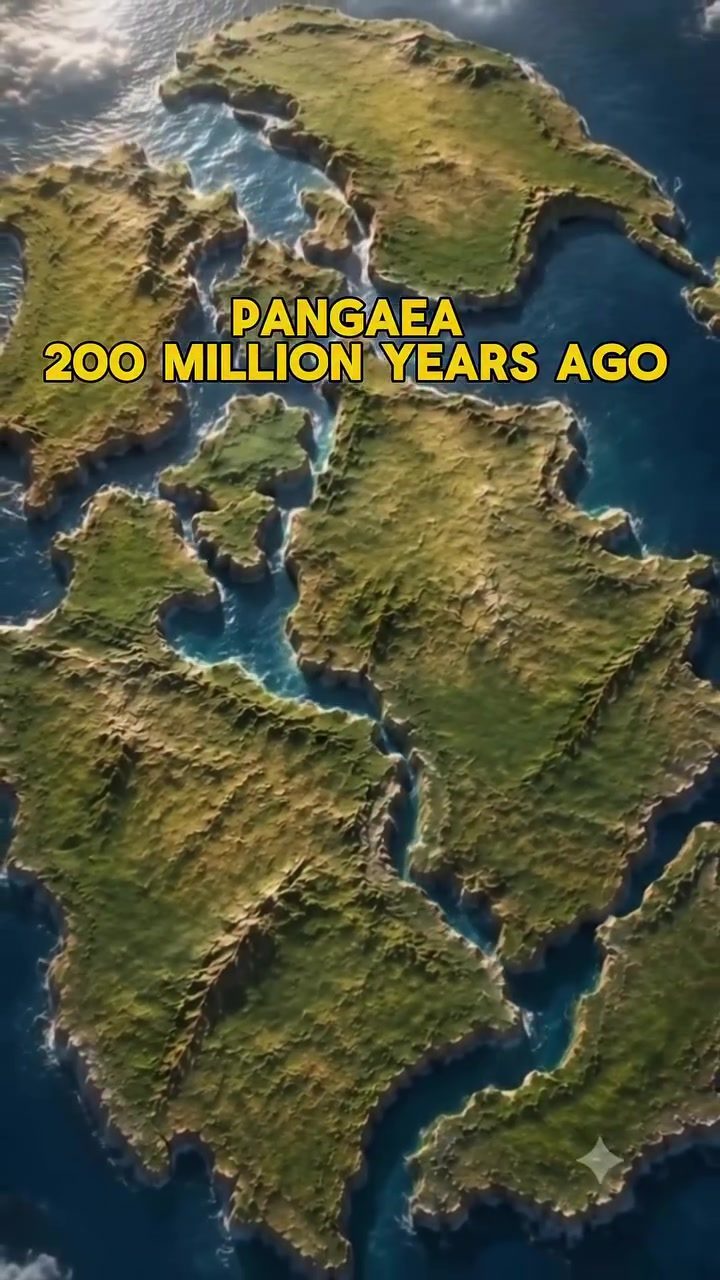
##Pangea's Unity Approximately 200 million years ago, the Earth was home to a single, colossal landmass. "Most of Earth's land was once connected into one enormous supercontinent." This supercontinent, known as Pangaea, is one of the most intriguing chapters in our planet's geological history. Enclosing all major landmasses, it stretched across the planet, a vast and interconnected world. However, this unity was not to last. The movement of tectonic plates gradually tore apart Pangaea. Over millions of years, it broke apart into the continents we know today.
The Origins of the Concept
The idea of a supercontinent like Pangaea was first proposed in the 19th century. Scientists observed that the coastlines of Africa and South America seemed to fit together like pieces of a puzzle. This observation, along with the discovery of similar fossil and rock formations on different continents, led to the theory that these continents were once connected. The theory was further developed in the 20th century, with the advent of plate tectonics. This geological model explains the movement of the Earth's continents. Today, there are some geologists who believe that Pangaea is just one in a succession of supercontinents.
The Breakup of Pangaea
The breakup of Pangaea began around 200 million years ago, though geological processes of landmasses finding new positions started far earlier than this, starting in what is believed to be 1 billion years. This process is still ongoing, reshaping the Earth's surface over vast timescales. The Atlantic Ocean, for instance, is steadily widening as North America and Europe drift apart. Antarctic is drifting north. Australia is drifting north and east. The Pacific Ocean, conversely, is shrinking as the surrounding plates converge. Pangea provides a visual model that could help us predict the future. Scientists have conceptualized a supercontinent that may form in the distant future, known as "Pangea Proxima" or "Amasia." This future supercontinent, like Pangaea, could emerge from the movement of tectonic plates across millions of years. These models illustrate that the process of plate movements and drifting does not stop easily.
The Science of Breaking Up
The breakup of Pangaea is linked to the movement of the Earth's mantle. “Over millions of years, it broke apart." Hot material rises from deep within the Earth, pushing the crust apart. These convection currents are thought to play a crucial role in shaping the Earth's surface. The future is going to have new supercontinents. The Atlantic, Indian, and Pacific Oceans will likely close, and a new supercontinent could emerge in the far north.
Watch the Reel
Related deep dives
Similar reads based on topic and creator.


Recent articles
Fresh deep dives from the latest Reels we unpacked.

Comments
Be the first to comment.