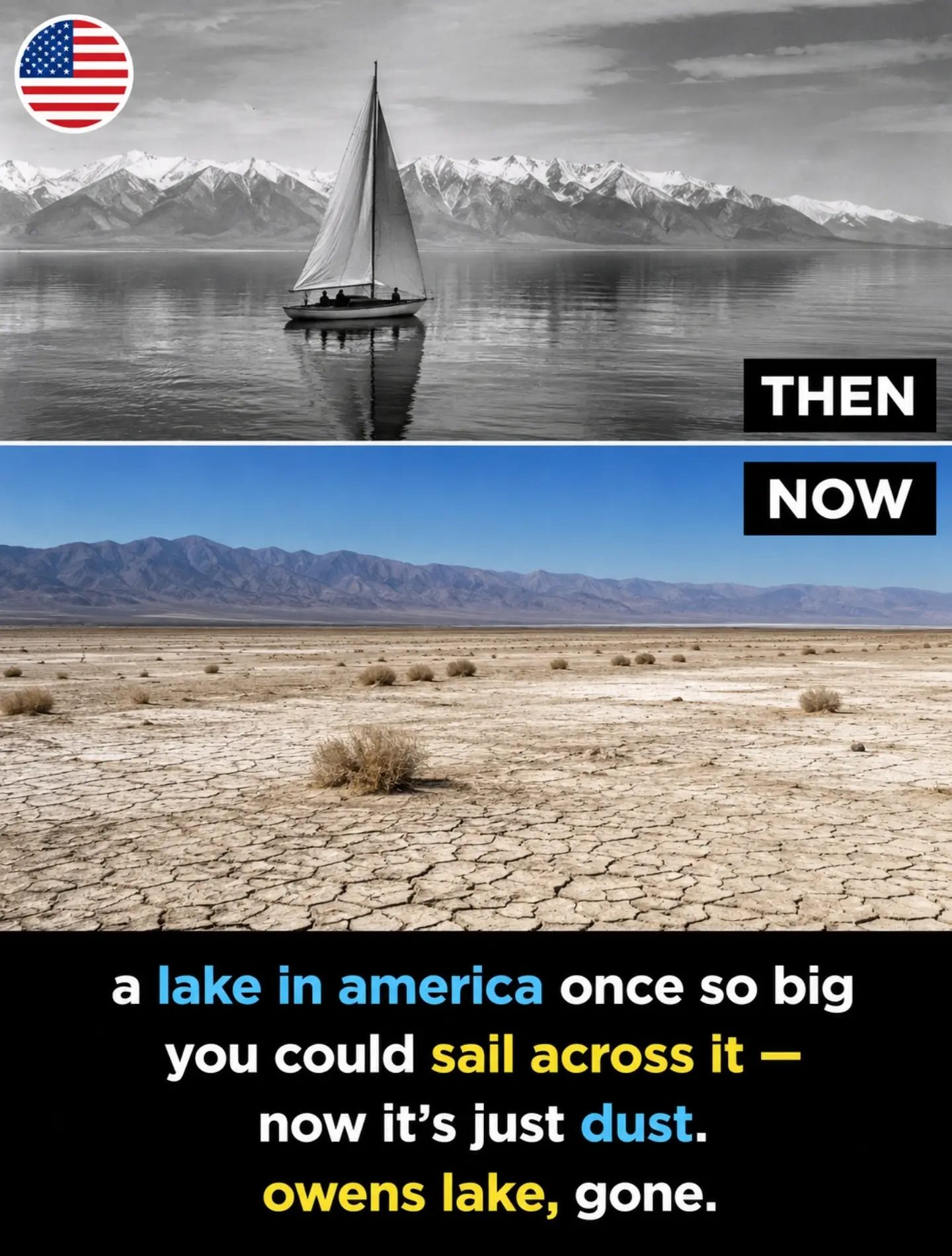
Environmental Change: The Drying of Owens Lake
Owens Lake, once a vast expanse of water in California, has undergone a dramatic transformation. The lake, which was once so large that sailing was a popular activity, is now a dry, cracked desert landscape. This stark contrast highlights the significant environmental changes that have occurred in the region.
Why This Matters
Understanding the environmental changes that have affected Owens Lake is crucial for several reasons. It provides insights into the broader issues of water management, climate change, and the impact of human activities on natural ecosystems. By examining the shift from a thriving water body to a barren desert, we can better comprehend the challenges facing similar bodies of water worldwide.
The Transformation of Owens Lake
Historical Significance
Owens Lake was once a vibrant part of the American landscape, particularly in the state of California. The lake was a vital source of water for the local ecosystem and a popular destination for sailing and other water activities. Its size and depth made it a significant geographical feature, shaping the lives of those who lived around it. However, this beauty and significance have dramatically changed.
The Current State
Today, Owens Lake is a stark reminder of environmental degradation. The lake has dried up, leaving behind a vast expanse of dry, cracked earth. This transformation is a result of various factors, including reduced water inflow, increased water usage, and climate change. The once-lush landscape is now a desolate desert, highlighting the severe impact of environmental changes.
Factors Contributing to the Drying
Several factors have contributed to the drying of Owens Lake:
- Water Diversion: One of the primary reasons for the lake's disappearance is the diversion of water from the Owens River, which historically fed the lake. The water was redirected to support the growing population and agricultural needs of Los Angeles.
- Climate Change: Rising temperatures and changing precipitation patterns have exacerbated the drying process. Decreased rainfall and higher evaporation rates have further reduced the lake's water levels.
- Human Activities: Human activities, including urbanization and industrialization, have also played a significant role. These activities have altered the natural water cycle, leading to reduced water availability for the lake.
Practical Tips for Water Conservation
Individual Actions
Water conservation starts with individual actions. Simple habits like turning off the tap while brushing your teeth, fixing leaks promptly, and using water-efficient appliances can make a significant difference. Consider installing low-flow showerheads and toilets, and use rainwater harvesting systems to collect and reuse rainwater.
Community Initiatives
Community involvement is crucial for water conservation. Engage in local initiatives that promote water-saving practices. Support policies that encourage sustainable water management and participate in community clean-up efforts to protect local water bodies.
Policy and Advocacy
Advocating for policies that prioritize water conservation is essential. Support legislation that promotes water efficiency, protects natural water bodies, and encourages sustainable practices. Engage with local governments and environmental organizations to push for changes that can help preserve water resources.
Important Takeaways
The transformation of Owens Lake from a thriving water body to a barren desert underscores the importance of water conservation and sustainable environmental practices. This shift serves as a stark reminder of the potential consequences of ignoring environmental issues and the need for proactive measures to protect natural resources.
Conclusion
Owens Lake's story is a poignant example of environmental change and the impact of human activities on natural ecosystems. By understanding the factors that led to its drying and taking proactive steps to conserve water, we can work towards preventing similar environmental degradation in other regions. Whether through individual actions, community initiatives, or policy advocacy, every effort counts in preserving our natural resources for future generations.
Watch the Reel
Questions readers ask
What caused the transformation of Owens Lake into a dry desert?
The primary cause of Owens Lake's transformation was the diversion of water from the Owens River, which historically fed the lake. This diversion, along with decades of drought and climate change, led to the lake's desiccation, turning it into a barren desert.
What was Owens Lake like before it dried up?
Before its transformation, Owens Lake was a vast water body that spanned over 100 square miles. It was a hub for wildlife and even supported recreational activities like sailing.
How has the change in Owens Lake impacted the local ecosystem?
The drying of Owens Lake has had severe impacts on the local ecosystem. The loss of habitat has led to a decline in bird populations, and the dry lake bed has become a significant source of dust and particulate matter, affecting air quality.
What role has climate change played in the drying of Owens Lake?
Climate change has exacerbated the drying of Owens Lake by altering precipitation patterns and increasing temperatures, which have reduced snowpack and increased evaporation. These factors have further stressed the water resources in the region.
How are human activities connected to the water management issues in California?
Human activities, such as urbanization, agriculture, and industrial development, have increased water demand. This has led to the construction of aqueducts and reservoirs that divert water from natural sources like Owens Lake, contributing to its desiccation.
What are the efforts being made to restore or mitigate the effects of Owens Lake's dry bed?
Efforts to mitigate the effects of Owens Lake's dry bed include the implementation of dust control measures, such as shallow flooding and the planting of vegetation, to reduce air pollution. Additionally, there are ongoing discussions about water management policies to balance the needs of the ecosystem and human activities.
Are there any plans to return water to Owens Lake?
There are currently no plans to fully restore Owens Lake to its original state. However, water deliveries from the Los Angeles Aqueduct have been reduced in recent years to help maintain minimum water levels in the Owens River and to alleviate drought conditions.
Related deep dives
Similar reads based on topic and creator.




Recent articles
Fresh deep dives from the latest Reels we unpacked.




Comments
Be the first to comment.