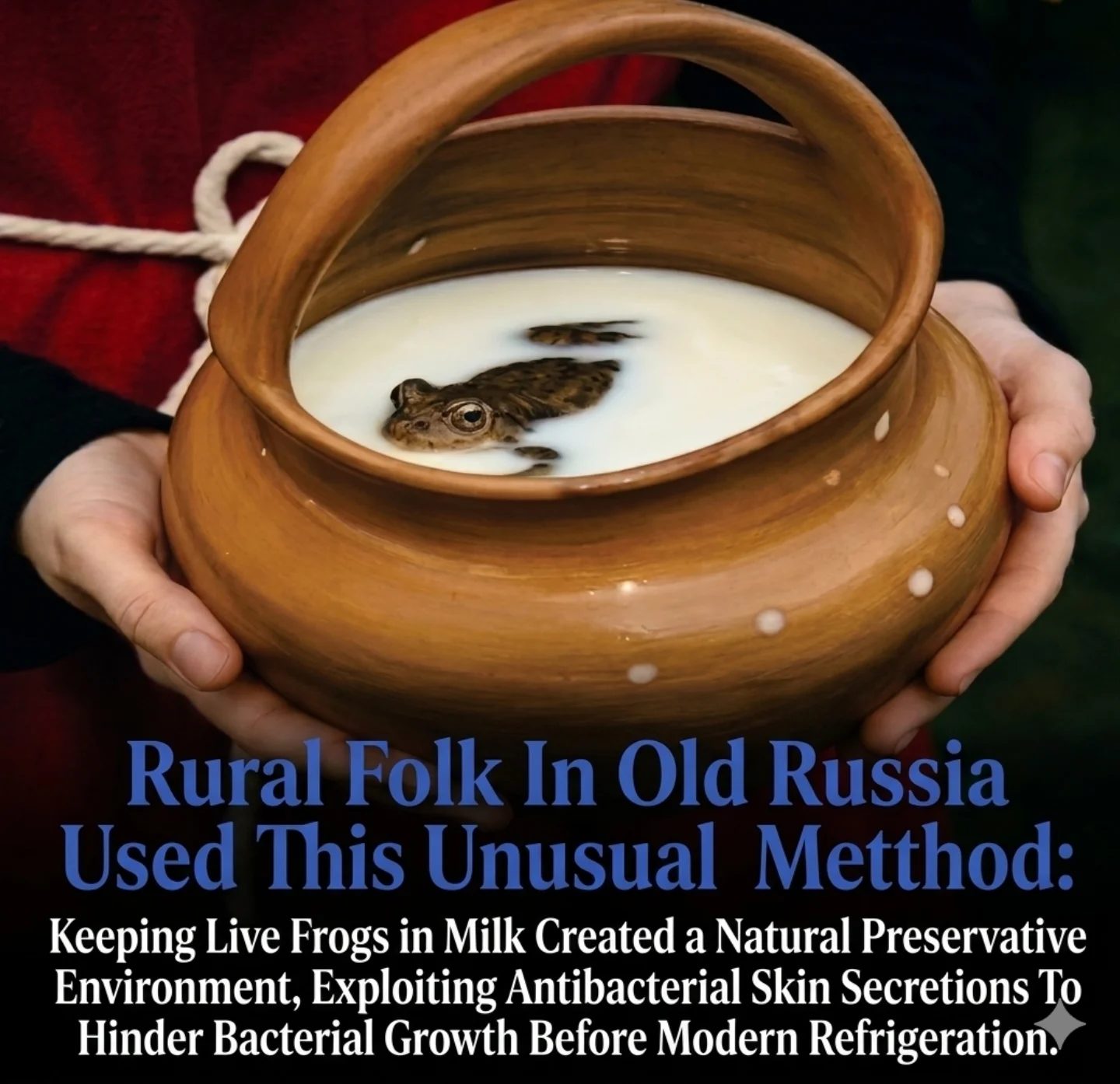
Unusual Food Preservation
Before the advent of modern refrigeration, people in rural Russia and Finland used an unusual method to preserve milk: they kept live frogs in it. This might sound bizarre, but it's a historically documented practice rooted in genuine biochemistry.
Context / Why this matters
This method is more than just a curious historical fact; it highlights the ingenuity of past generations in finding natural solutions to modern challenges. This preservative method could also provide insight into the development of new antimicrobial agents in today's world.
Main discussion
The Science Behind the Practice
The effectiveness of this method lies in the biochemistry of amphibians. Amphibian skin is porous and highly susceptible to bacteria and fungi. To protect themselves, these animals secrete chains of amino acids called antimicrobial peptides (AMPs). These peptides are crucial for their survival in environments teeming with microorganisms.
Identifying the Key Players
In 2012, a team of scientists led by chemist A.T. Lebedev at Moscow State University decided to test this folklore. Their research identified 76 different antimicrobial peptides on the skin of the Russian brown frog (Rana temporaria). Several of these secretions were found to be highly effective at slowing down or blocking the growth of bacteria like Salmonella and Staphylococcus. These are the primary culprits in making milk sour or unsafe to drink.
Natural Preservation Mechanism
The frogs' skin secretions create a natural preservative environment in the milk. The frog, when placed in the milk, naturally releases these protective skin secretions into the liquid. These secretions help delay the fermentation process, keeping the milk drinkable for longer, especially during hot summer months.
Historical Application
The practice was straightforward. A farmer would catch a common brown frog from the wild, rinse it, and drop it straight into the milk jug. The frog would then swim around in the milk, continuously releasing the antimicrobial peptides. While this method didn't keep the milk cold, it effectively delayed spoilage, providing a practical solution to food preservation before the advent of modern refrigeration.
Practical tips
While this method is historically significant, it’s important to note that it is not a practical solution for modern food preservation due to health and safety concerns. However, understanding the science behind it can inspire new ways to explore natural antimicrobial agents. If you're interested in food preservation, consider the following:
Explore Natural Preservatives
Look into other natural preservatives that can be used in food. For example, certain herbs and spices like cloves, cinnamon, and oregano have natural antimicrobial properties.
Understand Food Safety
Always prioritize food safety. Modern refrigeration and pasteurization are reliable methods to keep food fresh and safe. Always follow food safety guidelines to prevent contamination and spoilage.
Important takeaways
The practice of keeping live frogs in milk to preserve it is a testament to the resourcefulness of rural folk in old Russia and Finland. This method, while unusual, highlights the potential of natural antimicrobial agents.
Antimicrobial Potential
The discovery of antimicrobial peptides in amphibian skin opens up avenues for further research into natural antimicrobial agents. These peptides could potentially be used to develop new preservatives and antimicrobial treatments.
Conclusion
The practice of preserving milk with live frogs is a fascinating glimpse into the past. It showcases the ingenuity of people who found creative solutions to everyday problems. While this method is not practical today, the science behind it offers valuable insights into the potential of natural antimicrobial agents. As we continue to explore new ways to preserve food and fight bacteria, understanding the biology of these natural processes can provide valuable inspiration.
Watch the Reel
Questions readers ask
Why did people in rural Russia and Finland use live frogs to preserve milk?
People in rural Russia and Finland used live frogs to preserve milk due to the antimicrobial properties of the frogs' skin secretions. These secretions help combat bacterial growth, keeping the milk fresh for a longer period without refrigeration.
What makes frog skin effective in preserving milk?
Frog skin is highly permeable and secretes a variety of peptides that act as natural antimicrobial agents. These peptides inhibit the growth of bacteria and fungi, making frog skin an effective natural preservative.
How did people implement this frog milk preservation method?
The method involved placing live frogs in milk containers. The frogs' skin secretions would then mix with the milk, creating an environment where bacterial growth was inhibited.
Can this old Russian method of preserving milk be used today?
While it is possible to use this method today, it is important to note that it may not be practical or safe for most people. The method requires careful handling of live frogs and the resulting milk may not be suitable for those concerned about consuming animal secretions.
Are there any other natural methods for preserving milk similarly?
There are other natural methods for preserving milk, such as using salt, whey, or certain herbs and spices. These methods often involve creating an environment that is unfavorable for bacterial growth, similar to the frog milk preservation method.
What can we learn from this old Russian method of preservation?
This old Russian method highlights the potential of natural solutions in addressing modern food preservation challenges. It also demonstrates the ingenuity of past generations in finding creative ways to preserve food without modern technology.
Related deep dives
Similar reads based on topic and creator.



Recent articles
Fresh deep dives from the latest Reels we unpacked.




Comments
Be the first to comment.