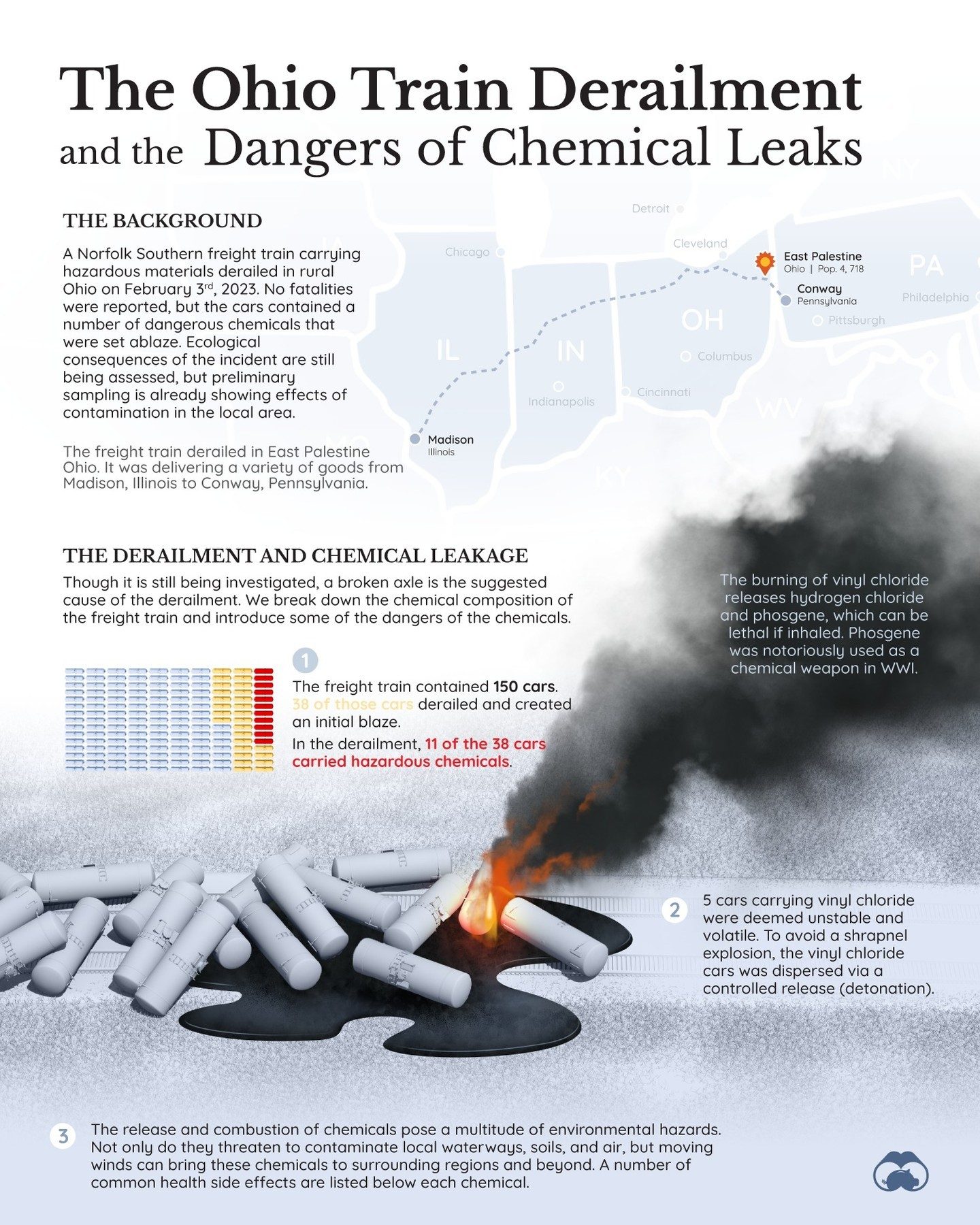
Ohio Train Derailment
The train derailment in Ohio in February 2023 was a significant event that highlighted the risks associated with transporting hazardous materials. The incident, involving a Norfolk Southern freight train, resulted in the release of several dangerous chemicals, posing threats to the health and safety of more than 4,000 people in the surrounding area.
Why This Matters
Train derailments involving hazardous materials are not uncommon, but the scale and nature of the chemicals released in this incident made it particularly alarming. The derailment underscored the importance of understanding the chemicals being transported, the immediate and long-term effects of their release, and the measures taken to mitigate these risks. Knowing these details can help communities better prepare for and respond to similar incidents in the future. This incident left no fatalities, which is a fortunate outcome.
Background
The Incident
The derailment took place on February 3, 2023, in rural Ohio, near the border with Pennsylvania. The Norfolk Southern freight train was carrying a variety of hazardous materials, including vinyl chloride, hydrogen chloride, and phosgene. The train consisted of 150 cars, several of which were carrying these dangerous chemicals.
Chemical Overview
The chemicals involved in the derailment each pose unique health risks. Vinyl chloride, for instance, is a known carcinogen and can cause respiratory irritation, dizziness, and damage to internal organs. Hydrogen chloride and phosgene are both highly toxic gases that can be lethal if inhaled in sufficient quantities. Isobutylene, benzene residue, and ethylene glycol are also hazardous and can cause a range of health issues, including respiratory and neurological problems. The others chemicals, butyl acrylate and ethylhexyl acrylate, can cause skin and eye irritation and respiratory issues, and are also flammable.
Initial Response
Immediately following the derailment, authorities conducted a controlled release (detonation) of some of the chemicals to prevent a larger explosion. This action was crucial in mitigating the potential for a catastrophic event, but it also highlighted the challenges of managing such incidents.
Derailment and Chemical Leakage
Immediate Impact
The derailment and subsequent chemical leakage posed several immediate threats. The released chemicals released into the environment posed risks to residents in the immediate vicinity. Authorities quickly established a perimeter and conducted sampling, which already showed adverse effects on the area. This underscores the need for swift and effective response measures.
Health Risks
The health risks associated with the chemicals released in the derailment are significant. Vinyl chloride, for example, can cause long-term health issues, including cancer, if exposed over time. Hydrogen chloride and phosgene can cause immediate respiratory distress and, in severe cases, death.
The Chemicals Involved
Vinyl Chloride
Vinyl chloride is a colorless gas with a mild, sweet odor. It is primarily used in the production of polyvinyl chloride (PVC) plastics. Exposure to vinyl chloride can cause a range of health issues, including dizziness, nausea, and respiratory irritation. Long-term exposure can lead to serious conditions such as liver damage and cancer. In the context of the Ohio derailment, the release of vinyl chloride posed a significant threat to public health.
Hydrogen Chloride
Hydrogen chloride is a highly corrosive gas that can cause severe burns to the skin and eyes. Inhalation can lead to respiratory distress, including coughing, wheezing, and shortness of breath. In high concentrations, hydrogen chloride can be lethal.
Phosgene
Phosgene is a highly toxic gas that was used as a chemical weapon during World War I. It is now primarily used in the production of pesticides and pharmaceuticals. Phosgene can cause severe respiratory issues, including pulmonary edema, and can be fatal if inhaled in large quantities.
Other Chemicals
In addition to vinyl chloride, hydrogen chloride, and phosgene, the train was carrying several other hazardous materials, including isobutylene, benzene residue, ethylene glycol, butyl acrylate, and ethylhexyl acrylate. These chemicals pose various health risks, from skin and eye irritation to respiratory and neurological problems. Their release into the environment required careful management to minimize the impact on public health and the environment.
Impact Zone
The impact zone of the derailment and chemical release extended to more than 4,000 people in the immediate area. Authorities quickly established a perimeter to limit exposure and conducted sampling to assess the extent of the contamination. The infographic included a map of the affected area, highlighting the regions most at risk.
Mitigation and Response
Controlled Release
One of the key measures taken to mitigate the risks posed by the derailment was a controlled release (detonation) of some of the chemicals. This action was crucial in preventing a larger explosion and minimizing the potential for widespread harm. However, it also underscored the challenges of managing such incidents and the need for effective response protocols.
Public Health Measures
In response to the derailment, authorities implemented several public health measures to protect the community. These included evacuating residents in the immediate vicinity, establishing a perimeter to limit exposure, and conducting sampling to assess the extent of the contamination. Public health officials also provided guidance on how to protect against exposure, including staying indoors, sealing windows and doors, and using air filters.
Environmental Impact
The environmental impact of the derailment was also a significant concern. The release of hazardous chemicals into the environment posed risks to wildlife and ecosystems in the affected area. Authorities conducted environmental sampling to assess the extent of the contamination and implemented measures to contain and clean up the chemicals.
Practical Tips
If you live in an area where hazardous materials are transported, it's important to be prepared for potential incidents. Here are some practical tips to help you stay safe:
Stay Informed
Stay up-to-date on local news and emergency alerts. Knowing what is happening in your community can help you take appropriate action.
Know the Risks
Understand the hazards associated with the chemicals transported in your area. This knowledge can help you recognize the signs of exposure and take steps to protect yourself and your family.
Prepare an Emergency Kit
Have an emergency kit ready with essential supplies, including water, non-perishable food, a first aid kit, and any necessary medications. Include items like face masks, gloves, and protective clothing to protect against chemical exposure.
Have an Evacuation Plan
Develop an evacuation plan and practice it regularly. Know the safe routes out of your area and have a designated meeting point for your family.
Follow Official Guidance
If an incident occurs, follow the guidance provided by local authorities. This may include evacuating the area, staying indoors, or taking other protective measures.
Stay Calm and Act Quickly
In the event of an incident, stay calm and act quickly. Follow your emergency plan and take steps to protect yourself and your family.
Important Takeaways
The Ohio train derailment serves as a stark reminder of the risks associated with transporting hazardous materials. Understanding the chemicals involved, the immediate and long-term effects of their release, and the measures taken to mitigate these risks is crucial for communities to be better prepared. The incident highlights the importance of effective response protocols, public health measures, and environmental management in managing such events.
Conclusion
The Ohio train derailment in February 2023 was a significant event that underscored the dangers of transporting hazardous materials. The release of chemicals like vinyl chloride, hydrogen chloride, and phosgene posed serious health and environmental risks. The incident emphasized the need for effective response measures, public health protocols, and environmental management. By staying informed, preparing an emergency plan, and following official guidance, communities can better protect themselves in the event of similar incidents.
Watch the Reel
Questions readers ask
What are the immediate health risks associated with vinyl chloride exposure from the Ohio train derailment?
Exposure to vinyl chloride can cause dizziness, drowsiness, and headaches. In severe cases, it can lead to unconsciousness and even death. Long-term exposure may increase the risk of certain cancers, including liver cancer. Residents near the derailment site should pay close attention to local health advisories.
How dangerous is phosgene, one of the chemicals released in the Ohio chemical derailment?
Phosgene is an extremely toxic gas that can cause severe health issues, including pneumonia, fluid buildup in the lungs, and in some cases, death. Even low levels can irritate the eyes, throat, and lungs. It's crucial for affected residents to follow evacuation orders and avoid inhaling fumes.
What should I do if I suspect hydrogen chloride exposure from the Ohio train derailment?
Hydrogen chloride is a highly irritating gas that can cause respiratory problems, skin burns, and eye irritation. If you suspect exposure, move to a safe area with fresh air, and remove contaminated clothing. Seek medical attention immediately if symptoms persist.
What measures are being taken to mitigate the risks from the Norfolk Southern chemicals released in the derailment?
Government agencies and Norfolk Southern are collaborating to assess and mitigate the risks. This includes cleaning up the affected area, conducting air quality tests, and providing health resources to the community. Residents should follow updates from local authorities for specific guidance.
How can I stay informed about the Ohio chemical spill and its potential impact on my health?
Stay tuned to local news outlets, official government websites, and health department updates. Local authorities will provide the most accurate and up-to-date information regarding the chemical spill, its potential health impacts, and any necessary precautions to take.
What are the long-term health risks associated with the hazardous chemicals released in the Ohio train derailment?
Long-term health risks depend on the specific chemicals and the level of exposure. Some chemicals, like vinyl chloride, may increase the risk of certain cancers. Residents should monitor their health and follow up with healthcare providers if they experience persistent symptoms or have concerns about long-term effects.
Related deep dives
Similar reads based on topic and creator.


Recent articles
Fresh deep dives from the latest Reels we unpacked.




Comments
Be the first to comment.