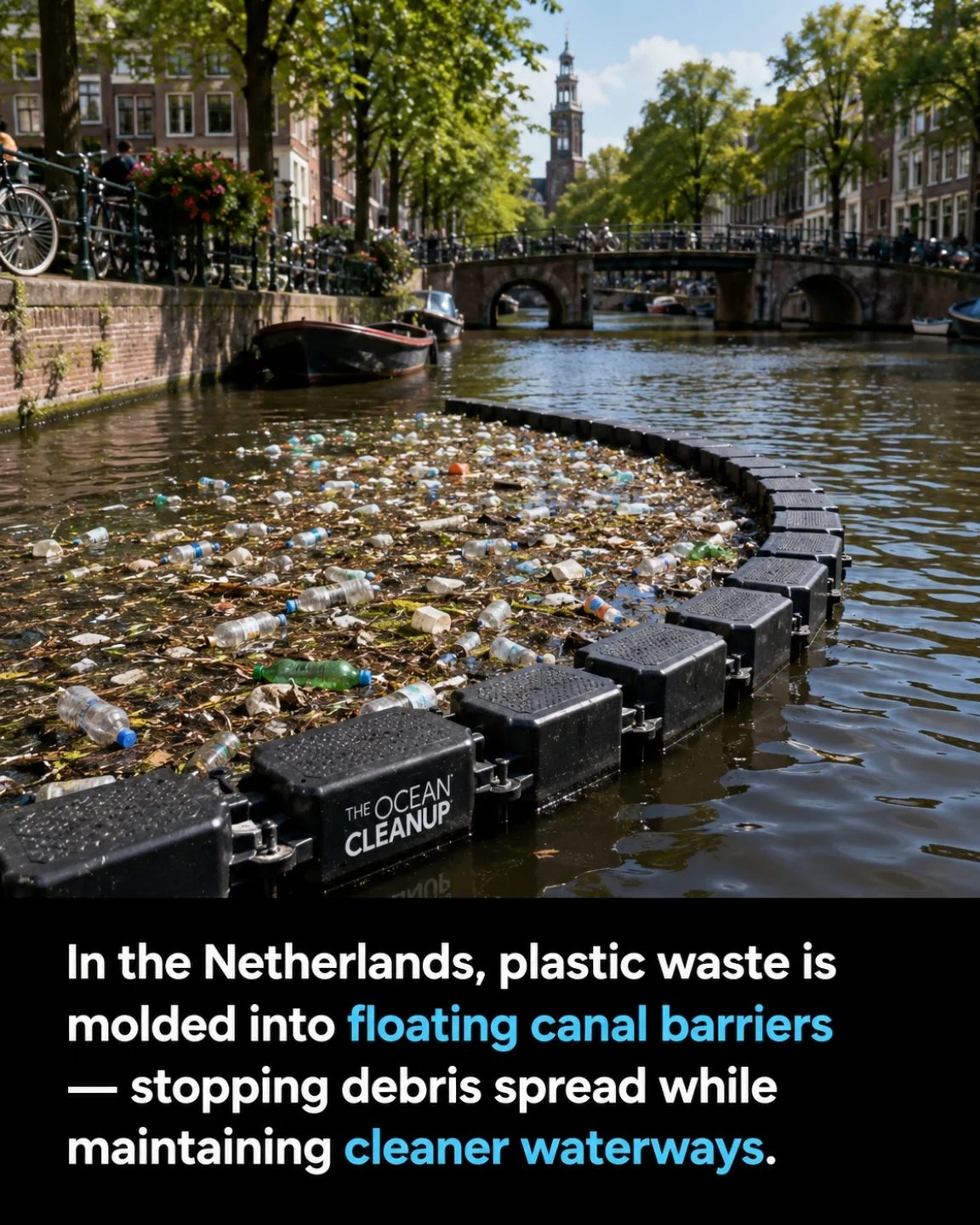
Floating Canal Barriers: Canal Cleanup Innovation by The Ocean Cleanup
Plastic waste in waterways poses a significant environmental challenge, but innovative solutions are emerging to tackle this issue. The Ocean Cleanup has developed a pioneering system of floating canal barriers designed to collect and contain debris, ultimately maintaining cleaner waterways. This initiative is particularly prominent in the Netherlands, where canals are a ubiquitous part of the landscape.
Why This Matters
Waterways are essential for transportation, recreation, and ecosystems, but they are also hotspots for plastic pollution. Floating canal barriers are a proactive measure to prevent the spread of debris, protecting marine life and maintaining the aesthetic and functional integrity of urban and natural waterways.
The Ocean Cleanup's Innovative Approach
Repurposing Plastic Waste
One of the most notable aspects of The Ocean Cleanup's initiative is the use of repurposed plastic waste to create the floating barriers. This dual-purpose approach not only helps in cleaning up existing debris but also reduces the need for new materials, promoting a circular economy. By molding these barriers from plastic waste, The Ocean Cleanup demonstrates a sustainable and practical solution to plastic pollution.
Design and Functionality
The floating canal barriers are designed to be highly effective in containing and collecting debris. Their black coloration likely helps in maintaining the barriers' visibility and effectiveness. The barriers' design ensures that they can withstand the flow of water and the weight of the collected debris, making them a reliable solution for waterway cleanup.
Regional Impact
The initiative is particularly significant in the Netherlands, where canals are a central part of the infrastructure. These waterways are not just scenic; they are integral to the country's transportation, drainage, and recreational systems. The Ocean Cleanup's barriers help ensure that these canals remain functional and aesthetically pleasing, free from the eyesore and environmental hazards of plastic waste.
Environmental and Economic Benefits
Beyond the obvious environmental benefits, the use of floating barriers also has economic implications. By keeping waterways clean, The Ocean Cleanup helps to maintain the value of waterfront properties, supports tourism, and reduces the costs associated with debris removal and environmental cleanup.
Practical Tips for Implementing Floating Canal Barriers
Assessment and Installation
Before installing floating canal barriers, it's essential to assess the specific needs of the waterway. Factors such as water flow, depth, and the type of debris should be considered. The Ocean Cleanup's approach can inspire local authorities and environmental groups to develop similar systems tailored to their specific contexts.
Community Engagement
Engaging the local community is crucial for the success of any environmental initiative. Whether through volunteer efforts or public awareness campaigns, involving the community can enhance the impact of floating canal barriers. Education about the importance of keeping waterways clean can also encourage residents to support and participate in maintenance efforts.
Maintenance and Monitoring
Like any infrastructure, floating canal barriers require regular maintenance to remain effective. This includes periodic cleaning of the debris collected and ensuring the barriers themselves are in good condition. Monitoring the barriers' performance and making necessary adjustments can help maximize their effectiveness over time.
Collaboration with Local Authorities
Local authorities play a vital role in the implementation and sustainability of floating canal barriers. Collaborating with municipal governments, environmental agencies, and non-profit organizations can provide the necessary support and resources. This collaboration can also help in scaling up the initiative to other affected areas.
International Adaptation
The success of The Ocean Cleanup's initiative in the Netherlands highlights the potential for similar solutions in other parts of the world. Regions with extensive waterway networks, such as Venice in Italy or parts of Southeast Asia, could benefit from adopting similar systems. Adapting the design and implementation strategies to local conditions can enhance the global impact of this innovative approach.
Important Takeaways
The Ocean Cleanup's floating canal barriers represent a significant step forward in the fight against plastic pollution. By repurposing plastic waste, these barriers not only clean up waterways but also promote sustainability. The initiative's success in the Netherlands demonstrates the viability of such solutions and sets a precedent for similar efforts in other regions. Community engagement, regular maintenance, and collaboration with local authorities are key to ensuring the long-term success of these barriers.
Environmental Sustainability
The use of repurposed plastic waste is a prime example of environmental sustainability. By reducing the need for new materials and cleaning up existing debris, these barriers contribute to a cleaner, healthier planet. This approach can inspire other innovative solutions to plastic pollution, fostering a more sustainable future.
Community and Economic Benefits
Cleaner waterways have numerous benefits for communities and economies. They enhance the aesthetic appeal of urban and natural landscapes, support tourism, and reduce environmental degradation. The Ocean Cleanup's initiative highlights the interconnectedness of environmental sustainability and economic prosperity.
Scalability and Adaptability
The success of floating canal barriers in the Netherlands underscores their potential for scalability and adaptability. This solution can be tailored to different contexts, making it a versatile tool in the global fight against plastic pollution. The initiative's adaptability ensures that it can be applied in various regions, from urban canals to natural waterways.
Conclusion
Floating canal barriers exemplify how innovation, sustainability, and community engagement can combine to address environmental challenges. The Ocean Cleanup's initiative not only tackles plastic pollution but also sets a model for future efforts. By repurposing plastic waste and maintaining cleaner waterways, these barriers offer a practical, effective, and inspiring solution. As more regions adopt similar strategies, the global impact of such initiatives will only grow, fostering a cleaner, more sustainable world.
Watch the Reel
Questions readers ask
How do floating barriers help in cleaning up the canals?
Floating barriers developed by The Ocean Cleanup act as physical obstacles that collect and contain plastic debris as it flows along the water. By intercepting the debris, these barriers prevent it from spreading further into the waterways and causing more harm.
What makes the Netherlands an ideal location for this initiative?
The Netherlands is an ideal location due to its extensive network of canals. These waterways are vital for transportation and tourism, but they are also heavily impacted by plastic pollution. By deploying floating barriers, the Netherlands can maintain the cleanliness and functionality of its waterways.
What happens to the collected plastic waste?
The collected plastic waste is managed in a way that supports a circular economy. The Ocean Cleanup’s initiative involves repurposing the collected plastic, which can be recycled into new products, reducing the need for virgin materials and minimizing waste.
How effective are the floating barriers in preventing plastic pollution?
The floating barriers are designed to intercept and collect a significant amount of plastic debris, making a notable difference in maintaining cleaner waterways. The effectiveness of these barriers is also continually monitored and optimized for better performance.
Can these systems be used in other countries with water pollution issues?
Yes, the floating barrier system can be adapted and deployed in other countries facing similar issues. The Ocean Cleanup’s innovative approach provides a scalable solution that can be implemented in various waterways, ensuring cleaner water and healthier ecosystems globally.
What are the benefits of maintaining cleaner waterways?
Cleaner waterways have numerous benefits, including protecting marine life, preserving the aesthetic appeal of urban landscapes, and ensuring safe recreational activities. Additionally, clean waterways contribute to the overall health of ecosystems and support sustainable tourism.
How do floating barriers contribute to a circular economy?
By collecting and containing plastic debris, floating barriers help in creating a circular economy system. Once collected, the plastic waste is repurposed, minimizing the amount of waste sent to landfills and reducing the need for new raw materials, thus fostering sustainability.
Related deep dives
Similar reads based on topic and creator.




Recent articles
Fresh deep dives from the latest Reels we unpacked.




Comments
Be the first to comment.