The Global Obesity Drug Market Projected to Grow to $77 Billion by 2030
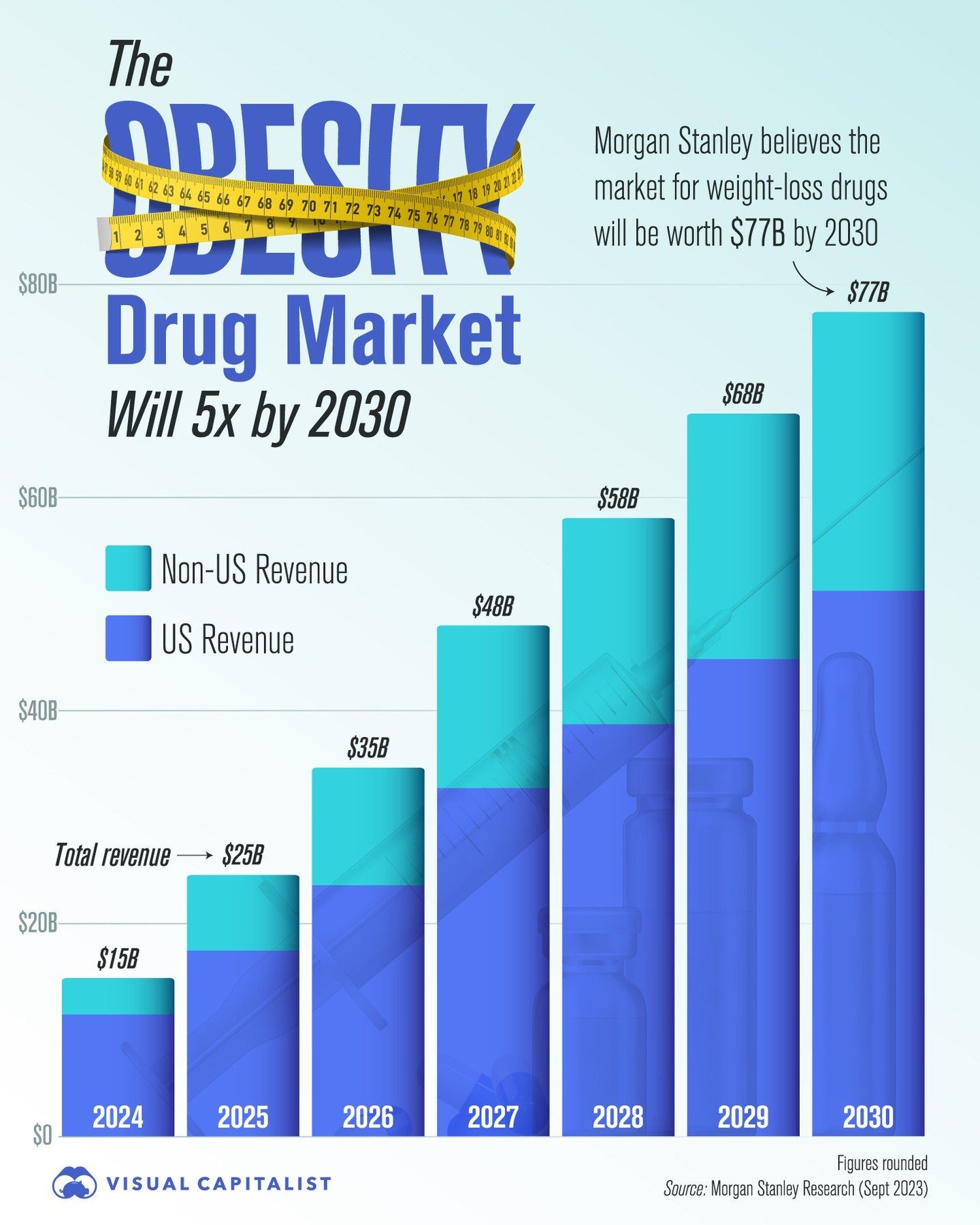
The global obesity drug market is poised for a significant increase over the next decade. According to Morgan Stanley Research, the market is expected to grow 5x by 2030, reaching $77 billion. This growth is driven by a variety of factors, including increasing obesity rates, advancements in pharmaceutical research, and a growing demand for effective treatment options. Let's delve into the key aspects of this projected growth and what it means for the healthcare industry.
Context: The Rising Prevalence of Obesity
Obesity has become a global health concern, with the World Health Organization (WHO) estimating that over 650 million adults worldwide are obese. The rise in obesity rates has led to an increased demand for effective treatments, including pharmaceutical interventions. As a result, the market for obesity drugs has become a focal point for pharmaceutical companies and investors alike.
A Decade of Growth
Market Size and Projections
The obesity drug market is projected to experience substantial growth from 2024 to 2030. According to Morgan Stanley Research, the market is estimated to be at $15 billion in 2024. This figure is expected to skyrocket to $77 billion by 2030, representing a fivefold increase in just six years. This growth is driven by a combination of factors, including rising obesity rates, increased awareness of the risks associated with obesity, and advancements in drug development.
Regional Breakdown
While the U.S. currently leads in revenue, its global share is projected to decrease from 77% in 2024 to 66% by 2030. This shift indicates that other regions, particularly those in the Non-US segment, are likely to experience significant growth in the obesity drug market. This trend is driven by increasing awareness and improved access to healthcare in developing regions, as well as the introduction of new drugs and treatments.
Key Drivers of Growth
Several factors are contributing to the projected growth of the obesity drug market:
-
Increasing Prevalence of Obesity: With obesity rates continuing to rise, the demand for effective treatments is also increasing. This is particularly true in regions where lifestyle changes and dietary habits have led to a surge in obesity rates.
-
Advancements in Drug Development: Pharmaceutical companies are investing heavily in research and development to create more effective and safer obesity drugs. Newer drugs that target specific biological pathways involved in weight management are particularly promising.
-
Government and Healthcare Initiatives: Many governments and healthcare organizations are implementing initiatives to combat obesity. These initiatives often include subsidies and incentives for drug development, making it more attractive for pharmaceutical companies to enter the market.
-
Patient Awareness and Demand: There is a growing awareness among patients about the risks associated with obesity, leading to a higher demand for effective treatment options. Patients are increasingly seeking out drugs that can help them manage their weight and associated health risks.
Changing Market Dynamics
U.S. Market Share
The U.S. is currently the largest market for obesity drugs, accounting for 77% of the global revenue in 2024. However, this share is expected to drop to 66% by 2030. This shift is due to several factors, including increased competition from other regions and the introduction of new drugs that are more accessible and affordable in developing markets.
Non-US Market Growth
The Non-US market is projected to experience significant growth, driven by increasing awareness and improved access to healthcare. This growth is particularly pronounced in regions such as Asia-Pacific, Latin America, and the Middle East, where obesity rates are rising rapidly, and there is a growing demand for effective treatment options.
Practical Tips for Investors
For investors interested in the obesity drug market, there are several key considerations to keep in mind:
-
Research and Development: Look for companies that are investing heavily in research and development. These companies are more likely to bring innovative and effective drugs to market, giving them a competitive edge.
-
Regulatory Environment: Understand the regulatory environment in different regions. Regulations can significantly impact the market for obesity drugs, affecting everything from drug approvals to pricing and reimbursement policies.
-
Market Access: Consider the availability and accessibility of healthcare in different regions. Companies that have a strong presence in regions with high obesity rates and good healthcare infrastructure are likely to see significant growth.
-
Competitive Landscape: Keep an eye on the competitive landscape. The obesity drug market is highly competitive, with many companies vying for a piece of the growing pie. Understanding the strategies and offerings of competitors can help investors make more informed decisions.
Important Takeaways
The obesity drug market is expected to undergo significant growth in the coming years, driven by a combination of factors including rising obesity rates, advancements in drug development, and increased demand for effective treatment options. Key takeaways from this projection include:
- The global obesity drug market is projected to reach $77 billion by 2030, growing 5x from $15 billion in 2024.
- The U.S. currently leads in revenue but is projected to see its global share drop from 77% in 2024 to 66% by 2030.
- The Non-US market is expected to experience significant growth, driven by increasing awareness and improved access to healthcare.
- Investors should focus on companies that are investing in research and development, understanding the regulatory environment, market access, and competitive landscape.
Conclusion
The obesity drug market is poised for substantial growth, with significant opportunities for pharmaceutical companies and investors alike. By understanding the key drivers of growth, the changing market dynamics, and practical considerations for investment, stakeholders can position themselves to capitalize on this burgeoning market. The projected growth of the obesity drug market to $77 billion by 2030 underscores the importance of effective treatments in combating the global obesity epidemic.
Watch the Reel
Questions readers ask
What is driving the projected 5x growth in the obesity drug market by 2030?
The projected growth is primarily driven by escalating obesity rates worldwide, significant advancements in pharmaceutical research, and an increased demand for effective obesity treatments. Additionally, the growing awareness of obesity-related health risks is fueling the need for more effective solutions, and a growing demand for obesity treatment options.
Which regions are expected to see the most significant growth in the obesity drug market?
While all regions are expected to contribute to the growth, developing countries are anticipated to see particularly notable increases. This is due to rising obesity rates in these regions and the growing awareness of the need for effective treatments.
What is the expected revenue for the global obesity drug market by 2030?
By 2030, the global obesity drug market is projected to reach $77 billion, marking a fivefold increase from current levels. This growth is expected to be driven by a combination of increasing obesity rates, improved pharmaceutical research, and a growing demand for effective treatment options.
What role does pharmaceutical research play in the projected growth of the obesity drug market?
Pharmaceutical research is a key driver of the projected growth. Advances in research are leading to the development of more effective and targeted obesity treatments, which in turn are expected to increase the demand for these drugs and contribute to market growth.
What is the current state of the obesity drug market, and how is it expected to evolve by 2024?
The obesity drug market is already experiencing growth, with increasing obesity rates and a growing demand for treatment options. By 2024, the market is expected to reflect early stages of the projected growth, with a rise in obesity drug revenue, and more pharmaceutical companies investing in research and development for new obesity treatments.
What trends can we expect to see in the obesity drug market over the next decade?
Over the next decade, we can expect to see a greater focus on personalized medicine, with drugs tailored to individual patient needs. Additionally, more combination therapies are likely to emerge, targeting multiple aspects of obesity and metabolic health, and a greater emphasis on preventative measures to combat obesity.
Related deep dives
Similar reads based on topic and creator.



Recent articles
Fresh deep dives from the latest Reels we unpacked.




Comments
Be the first to comment.