The Lake Chad catastrophe
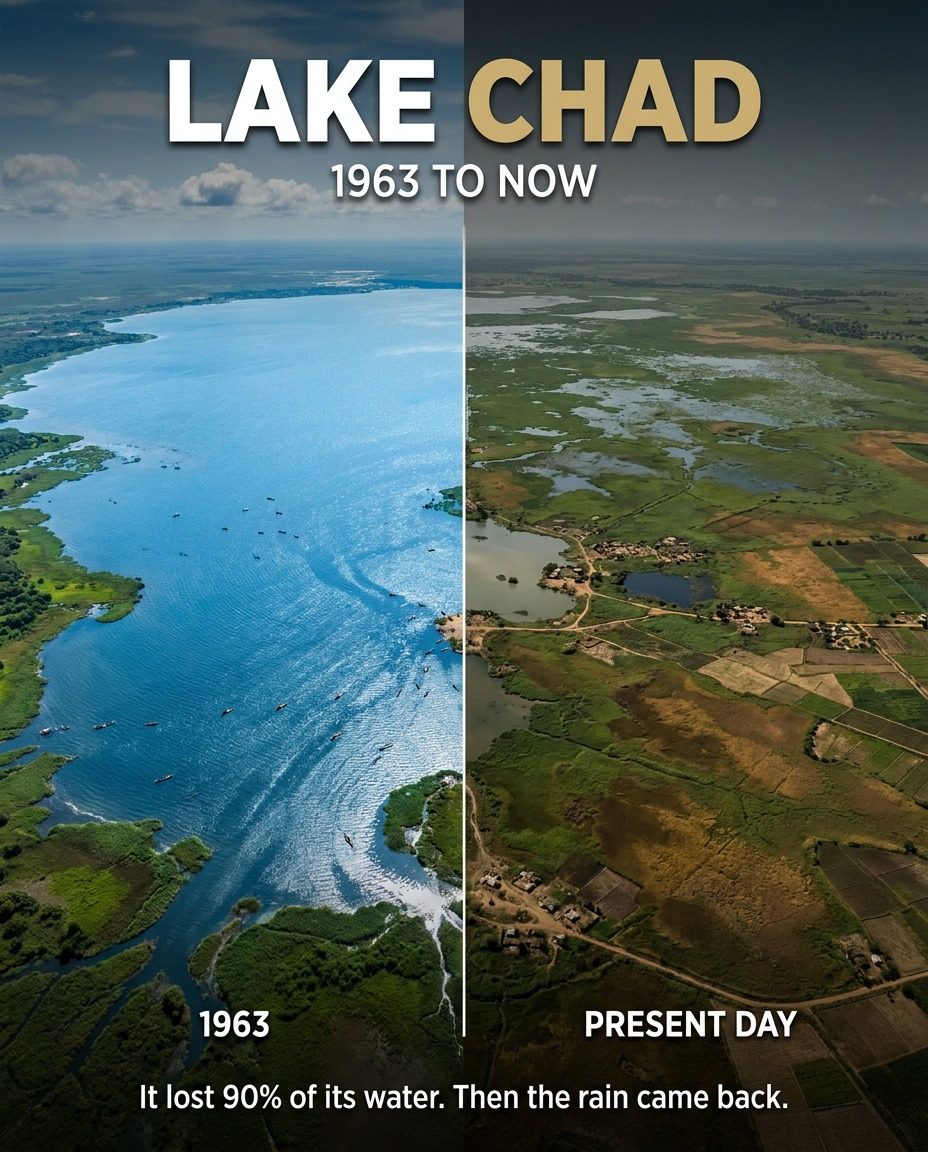
Lake Chad, once an expansive and vibrant water body in Central Africa, has undergone a catastrophic transformation. When compared to its size in 1963, Lake Chad now appears as a mere shadow of its former self. This striking contrast is stark evidence of an alarming environmental shift. Approximately ninety percent of the lake has disappeared. The remaining water now clashes sharply with the surrounding dry land. Text overlays on screen also highlight this stark reduction in the lake's volume. This transformation is reminiscent of a dying heart, which miraculously pumped new blood only after years of withering. Recent rainfall has led to a partial recovery. The vibrant blue water depicted on the left side of the frame contrasts sharply with the predominantly dry terrain on the right. Yet, the partial recovery brought on by rainfall is not enough. Lake Chad's prevalence in global environmental change studies is not as accidental as it may seem. A once-thriving waterbody now stands as a warning regarding the fragility of our ecosystem.
The ecological engineering challenge
Lake Chad transitions between dry and wet conditions naturally. So, how does this relate to the climate crisis? The lake's dry period has coincided with a global increase in dryness, pointing to a change in climate. However, this drought is mainly due to a combination of climate change and human mismanagement of resources. Engineers and climate scientists face a challenging task to bring the lake back to its 1963 glory days. No single factor is to blame for Lake Chad's shrinkage. Therefore, solutions must address multiple issues. The engineering community should take an ecosystem-based approach to restore water volume. But getting governments to adopt a comprehensive restoration mainstream would not be easy. This is because it involves balancing individual needs against long-term stability. The most effective solution will likely require a combination of climate solutions and policy changes. This will include water management practices, reforestation, and sustainable agriculture. Addressing the factors affecting the lake's sustainability will not be straightforward. However, it is not impossible.
Watch the Reel
Related deep dives
Similar reads based on topic and creator.


Recent articles
Fresh deep dives from the latest Reels we unpacked.

Comments
Be the first to comment.