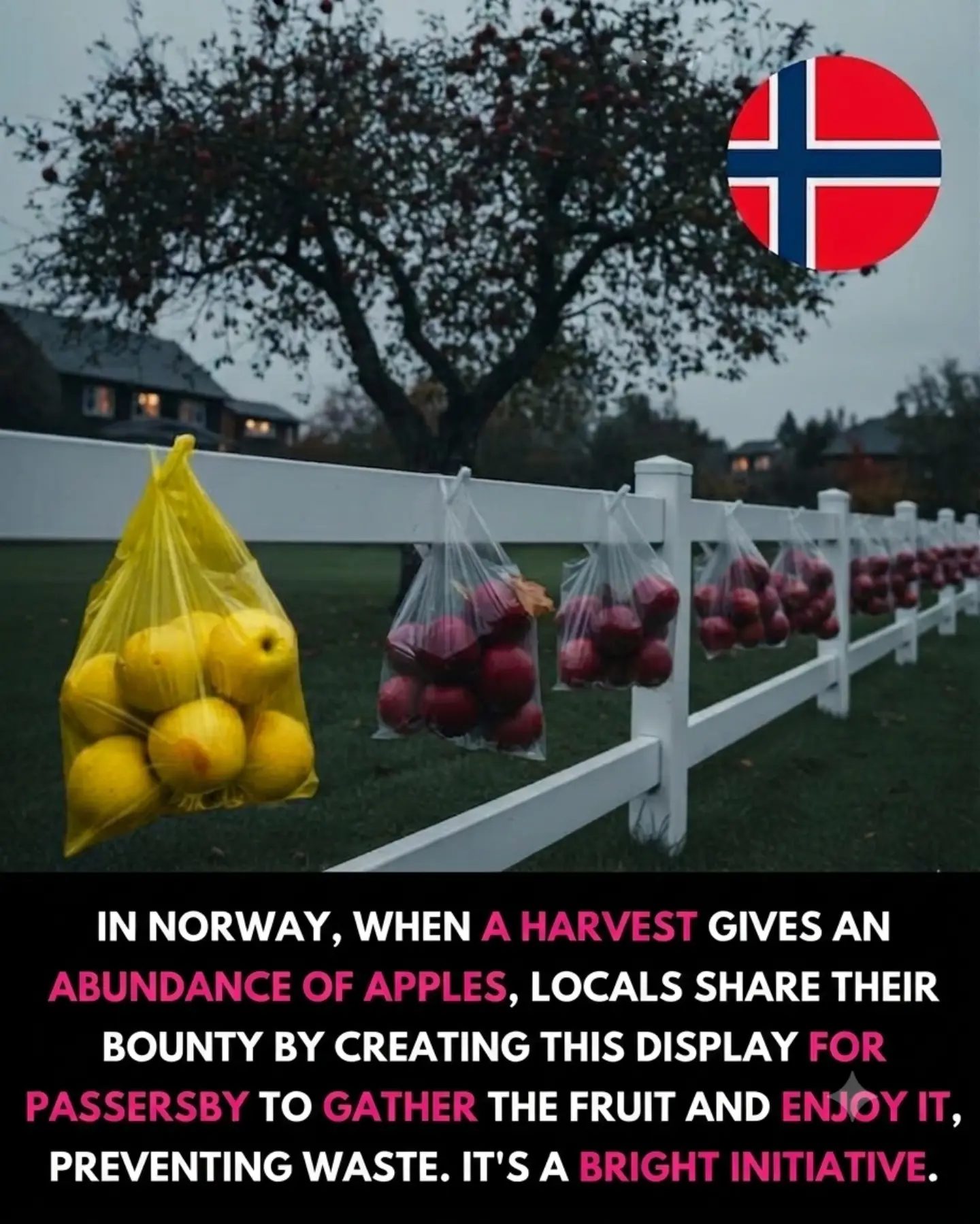
In Norway, a Unique Apple Harvest Tradition Fosters Community and Reduces Waste
In Norway, a charming and practical tradition helps locals make the most of their apple harvest. When apple trees bear more fruit than a household can use, neighbors take to their fences and share the bounty with the community. This simple practice not only strengthens community bonds but also plays a crucial role in minimizing food waste.
Why This Matters
This apple-sharing practice is more than just a charming local tradition. It serves as a model for communities worldwide looking to foster generosity and reduce food waste. By sharing their abundance, locals in Norway create a culture of giving and ensure that excess produce doesn’t go to waste.
The Apple Sharing Tradition
The Harvest Display
When apple trees produce more fruit than can be consumed or preserved, locals in Norway create a display along their fences. Bags filled with ripe apples, both red and yellow, are hung neatly from a white picket fence, or other fences. These displays are not just aesthetically pleasing; they serve a practical purpose. The apples are accessible to anyone passing by, encouraging passersby to take what they need and enjoy the fresh fruit.
The Community Aspect
This practice goes beyond just sharing excess apples. It fosters a strong sense of community and generosity among neighbors. By making their surplus available to others, locals create a culture of sharing that benefits everyone. It’s a simple yet effective way to build connections within the community while ensuring that no fruit goes to waste.
Reducing Food Waste
One of the most significant impacts of this tradition is its role in reducing food waste. Instead of letting excess apples rot on the ground, locals share them with the community. This grassroots approach to waste reduction is both practical and effective. It ensures that the harvest is fully utilized and that valuable resources are not squandered.
The Norwegian Flag
The backdrop of the Norwegian flag adds a patriotic touch to the display, symbolizing the unity and togetherness that this practice embodies. It’s a reminder that community initiatives can be both practical and meaningful, reflecting the values of the nation.
Practical Tips for Implementing an Apple Sharing Practice
Assess Your Harvest
Before setting up a display, assess your apple harvest to determine if you have more fruit than you can use. Count the apples and consider how much you can preserve or sell. If you find that you have a surplus, it’s time to share.
Prepare the Apples
Gather the apples you intend to share and ensure they are clean and free of bruises. Pack them neatly into bags or baskets. This makes them easier to hang and more appealing to passersby.
Set Up the Display
Choose a visible and accessible location for your display. A white picket fence or any other fence provides an ideal spot. Hang your bags of apples neatly, ensuring they are secure and visible to passersby. Add a little sign or a note to explain the tradition, inviting people to help themselves.
Spread the Word
Inform your neighbors and the local community about your initiative. You can do this through social media, community boards, or word of mouth. The more people know about it, the more likely they are to participate and benefit from the practice.
Be Patient and Generous
Remember that the goal is to build community and reduce waste. Be patient and generous with those who take the apples. Encourage others to do the same when their harvests are plentiful.
Monitor and Adjust
Keep an eye on your display to ensure it remains accessible and inviting. Adjust the setup as needed, and be open to feedback from the community. This will help maintain the tradition and ensure its success.
Important Takeaways
The apple-sharing practice in Norway highlights several key points that can be applied universally:
- Community Building: Sharing excess harvests fosters a sense of community and generosity.
- Waste Reduction: This practice is an effective, grassroots approach to reducing food waste.
- Sustainability: By making the most of the harvest, locals ensure that resources are not wasted.
- Practicality: The display is simple to set up and maintain, requiring minimal effort.
- Cultural Significance: The tradition adds to the unique cultural fabric of Norway, reflecting values of sharing and unity.
Conclusion
The apple-sharing practice in Norway is a simple yet powerful example of how communities can come together to reduce waste and foster generosity. By sharing their abundance, locals create a culture of giving that benefits everyone. This tradition serves as a model for communities worldwide looking to build stronger bonds and minimize food waste. Whether you have an abundance of apples or any other produce, consider adopting a similar practice. It’s a bright initiative that can make a significant difference in your community.
Watch the Reel
Questions readers ask
What is the Norwegian apple-sharing tradition?
The Norwegian apple-sharing tradition involves homeowners placing excess apples from their harvest on their fences for others to take. This practice encourages community sharing and helps to minimize food waste by ensuring surplus produce is used.
How does the apple-sharing tradition help reduce food waste in Norway?
By encouraging locals to share their surplus apples, this tradition ensures that excess produce is consumed rather than discarded. This helps to reduce the amount of food waste sent to landfills, contributing to a more sustainable community.
What role do fences play in the Norwegian apple-sharing tradition?
Fences serve as a visible and convenient display for surplus apples. By placing apples on fences, homeowners signal to passersby that the fruit is available for the taking, fostering a sense of community and generosity.
Can anyone participate in the apple-sharing tradition in Norway?
Yes, anyone can participate. Homeowners with excess apples are encouraged to share them on their fences, while passersby are welcome to take the apples and enjoy them. This mutual exchange strengthens community bonds.
Is the apple-sharing tradition unique to Norway?
While the apple-sharing tradition is prominently featured in Norway, the concept of sharing surplus produce is universal. Other communities around the world also practice similar initiatives to promote sharing and reduce food waste.
What types of apples are typically shared in this Norwegian tradition?
The types of apples shared can vary greatly depending on the region and the varieties grown by local homeowners. It is common to find a mix of both common and heirloom apple varieties offered on fences during the harvest season.
How does the apple-sharing tradition benefit the community beyond waste reduction?
Beyond reducing food waste, the apple-sharing tradition fosters a sense of community and generosity. It encourages interactions among neighbors, builds trust, and creates a supportive network where people look out for one another.
Related deep dives
Similar reads based on topic and creator.




Recent articles
Fresh deep dives from the latest Reels we unpacked.




Comments
Be the first to comment.