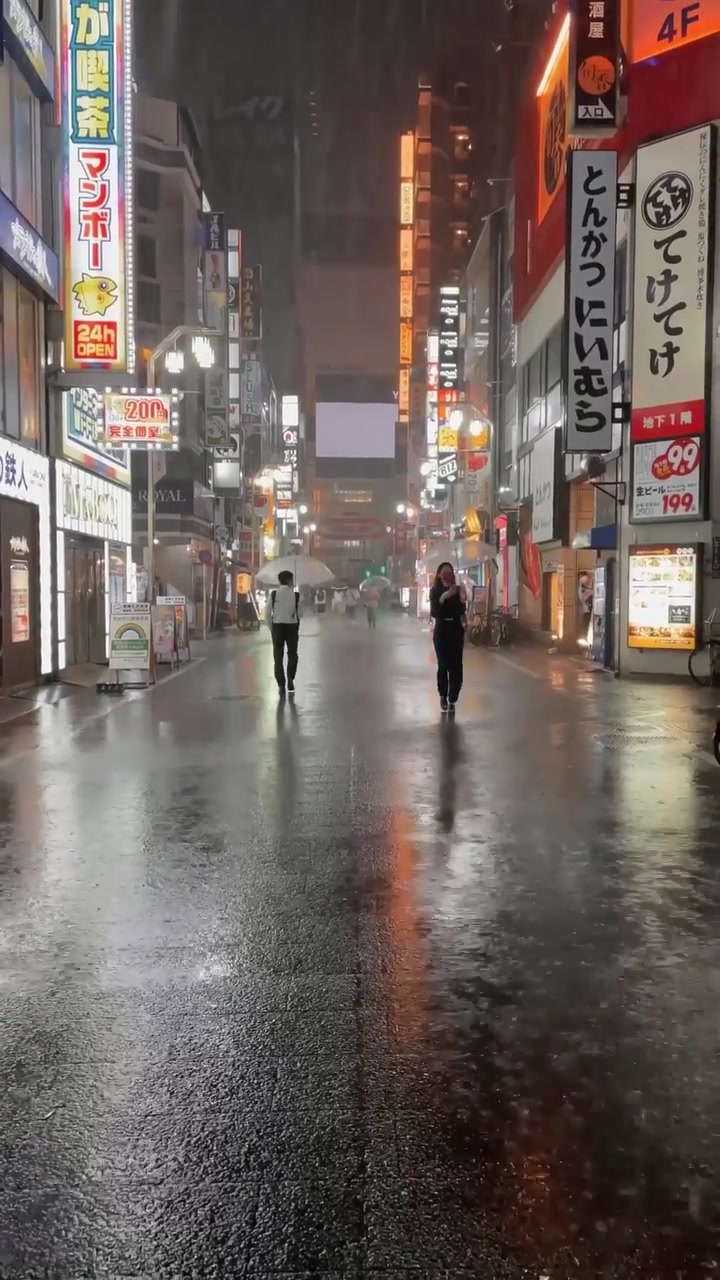
Masked pedestrians walk along a bustling street, their reflections in the wet pavement doubling the neon lights that stream down from above. This isn't a showy nighttime cityscape. It’s Japan’s urban scenery, clean, organized, and sleek. The reflections on wet pavement could be considered the most powerfully remarkable part of the video. However, the source of the wetness is unknown and could be from fresh rain or sprinklers.
Urban Japan's Nightly Light Show — Reflections of Japan at night.
A Japanese cityscape at night is a blend of neon lights, energetic pedestrian traffic, and the city’s facades' mirrored reflections on wet pavements. City dwellers or tourists' camera’s cardholders don’t have to look far. The city’s bright lights are iridescently reflected on the pavement caused by the colors of the city’s buildings and signs. The reflections are never the same, always changing with each building’s lights. Nighttime cityscapes in Japan are a spectacle. The reflections and street traffic work together to create an energetic scenario. The solace of the situation in the video is because Japanese neighborhoods are bustling, especially at night.
The trends of neons and lights — a key element of Japan’s vibrant nighttime
Nighttime cityscapes are a key element of Japan’s vibrant tourist experience. Japan’s neon-lit streets are a popular tourist attraction. Whether it is the constant illumination of Shibuya, Akihabara, or the more intricate multi-colored lights of Kabukicho, neons and lights are symbolic of the country’s cityscapes at night. In Japan, cityscapes aren't simply about buildings — it’s the intersections of different reflective elements. The cityscapes are vibrant and dynamic; they pulsate with the energy of the city. Nighttime cityscapes in Japan are never silent. ### A dynamic experience for all races and age groups In order to understand Japan's nighttime cityscapes, one must understand that it is a multi-layered experience full of different sights, sounds, and smells. The lights and neon signs are not just decorations but are information hubs that help commuters and tourists navigate the city. The smell of food wafting through the air, the sound of bustling temples, and the sight of people walking around in colorful traditional outfits all add to the dynamic experience of a night in Japan. The city’s neon-lit street lights never dazzle, it never blinds. Neon signs and lights are just some of the various elements of Japan’s cityscapes. ### The variety of neon lights The video highlights a variety of neon lights and signs that litter Japan's cityscapes. Their colors and brightness create reflections that appear to dance on the wet pavement. Some lights can be simple and straightforward like the typical green sign outside a restaurant. But another might be utterly complex, with intricate design patterns and numerous colors. ### Honoring the grammy winners Neon lights in Japan are sometimes a part of honoring the country's Grammy winners. The town of Hagio in Japan is home to a monument and a music hall. The monument features a neon sign that glows brightly at night. The music hall is a popular venue for live music performances. In Tokyo, there is a famous rock museum where one can find a neon sign that honors the Japanese rock music legend, Hideki Matsumoto. The neon sign is located right below the museum's entrance, the best place to catch its glowing.
Dive into the neon lights of Tokyo
For travelers, tourists, and locals alike, Japan’s neon-fueled cityscapes make for the perfect night-time treats and exploration. Depending on their tastes, travelers could seek specific vibes like the eye-catching neon lights. Those who prefer to stay indoors could visit neon-lit museums or simply watch as neon lights wash over a busy street from the comfort of their hotel room. But the best way to experience Japan’s nighttime cityscapes would be on foot, walking down its streets and reflecting on the beauty of neon lights.
Night out in Japan
Japan's nightlife is a vital part of its culture. Nighttime cityscapes in Japan are a spectacle. They are vibrant and dynamic, pulsating with the energy of the city. Neon-lit streets, lively bars, and restaurants, and the hustle and bustle of people, make for an exciting night out. Japan’s nightlife is an unforgettable experience, whether in Tokyo, Osaka, or Kyoto. The city’s lights are a key element of Japan’s vibrant tourist experience. In Japan, nightlife is not just about the neon lights. It's the feeling of the streets, the smell of the air, the sounds of the city, and the people walking around in traditional outfits.
Neon and Japan
One of the most famous neon sign manufacturers in Japan is Yamamotor. Yamamotor is a third-generation family business, founded in 1947. It is a leading manufacturer of neon signs in Japan, with a reputation for creating high-quality, durable, and efficient neon signs. They manufacture neon signs for various applications, from commercial signs to residential lighting. For travelers, tourists, and locals alike, Japan’s neon-fueled cityscapes make for the perfect night-time treats and exploration. Depending on their tastes, travelers could seek specific vibes like the eye-catching neon lights.
The vibe around neon lights
For vibrant neon light cityscapes in Japan, Tokyo is the best city to explore. Tokyo's neon-lit streets, lively bars, and restaurants, and the hustle and bustle of people, make for an exciting night out.
- Tokyo's vibrant nightlife is best experienced on foot. Walk down the streets of the famous Shinjuku or Shibuya districts and marvel at the neon-lit buildings. The lights are a perfect blend of traditional and modern Japanese culture. “Nighttime cityscapes in Japan are a spectacle”. You will be left mesmerized by the beauty of the neon lights and the energy of the city.
- If you are planning a night out in Japan, be sure to check out the famous neon-lit streets of Tokyo. The city's vibrant nightlife is best experienced on foot, walking down the streets of the famous Shinjuku or Shibuya districts. You can also enjoy the nightlife in Osaka and Kyoto, but Tokyo is the best city for a vibrant night out.
- For a more traditional experience, head to the historic district of Asakusa in Tokyo. The district is famous for its traditional Japanese architecture, and the neon-lit streets are a perfect blend of old and new. In Asakusa, you can also visit the famous Senso-ji temple and enjoy the traditional Japanese cuisine. Japan's neon-lit streets are a sight to behold. The city’s beautifully lit streets add vibrancy to the night. The best way to experience a street is on foot, walking down the streets, and marveling at the neon lights.
Watch the Reel
Questions readers ask
What causes the reflections seen in Japan's nighttime cityscapes?
The reflections are created by the neon lights and colors from the city's buildings and signs bouncing off the wet pavement. The wetness could be from rain or sprinklers, but it's not always clear. The reflections are dynamic, always changing with each building's lights.
How do neon lights contribute to the nighttime experience in Japan?
Neon lights in Japan are more than just decorations; they serve as information hubs for navigation. They create a vibrant, dynamic atmosphere that changes with different buildings' lights. The lights also contribute to the dynamic experience of Japan's nighttime cityscapes, reflecting on wet pavement and creating a unique spectacle.
Are there specific areas in Japan known for their neon lights?
Yes, areas like Shibuya, Akihabara, and Kabukicho are famous for their neon-lit streets. These places are popular tourist attractions and are symbolic of Japan's nighttime cityscapes. Each area has its unique lighting style, from constant illumination to intricate multi-colored displays.
Why do people wear masks in the video of Japan's nighttime cityscape?
People in Japan often wear masks to protect themselves and others from illnesses, especially in crowded urban areas. This is a common sight in Japan and is not specific to the nighttime cityscape. It is more about public health practices rather than a part of the nighttime spectacle.
Can I see these reflections during the day in Japan?
The reflections are best seen at night when the neon lights are on and the pavement is wet. During the day, the cityscape is still vibrant, but the reflections created by neon lights on wet pavement will not be visible.
Do the neon lights in Japan serve any other purpose besides aesthetics?
Yes, neon lights in Japan are not just for show. They also serve as navigational aids, helping commuters and tourists find their way around the city. The lights are part of the city's information hubs, guiding people to specific locations or attractions.
What else contributes to the dynamic experience of Japan's nighttime cityscapes besides the lights?
The dynamic experience of Japan's nighttime cityscapes is enhanced by various elements. The smell of food, the sound of bustling temples, and the sight of people in traditional outfits all add to the atmosphere. The cityscape is a multi-layered experience that engages all the senses.
Related deep dives
Similar reads based on topic and creator.




Recent articles
Fresh deep dives from the latest Reels we unpacked.



Comments
Be the first to comment.