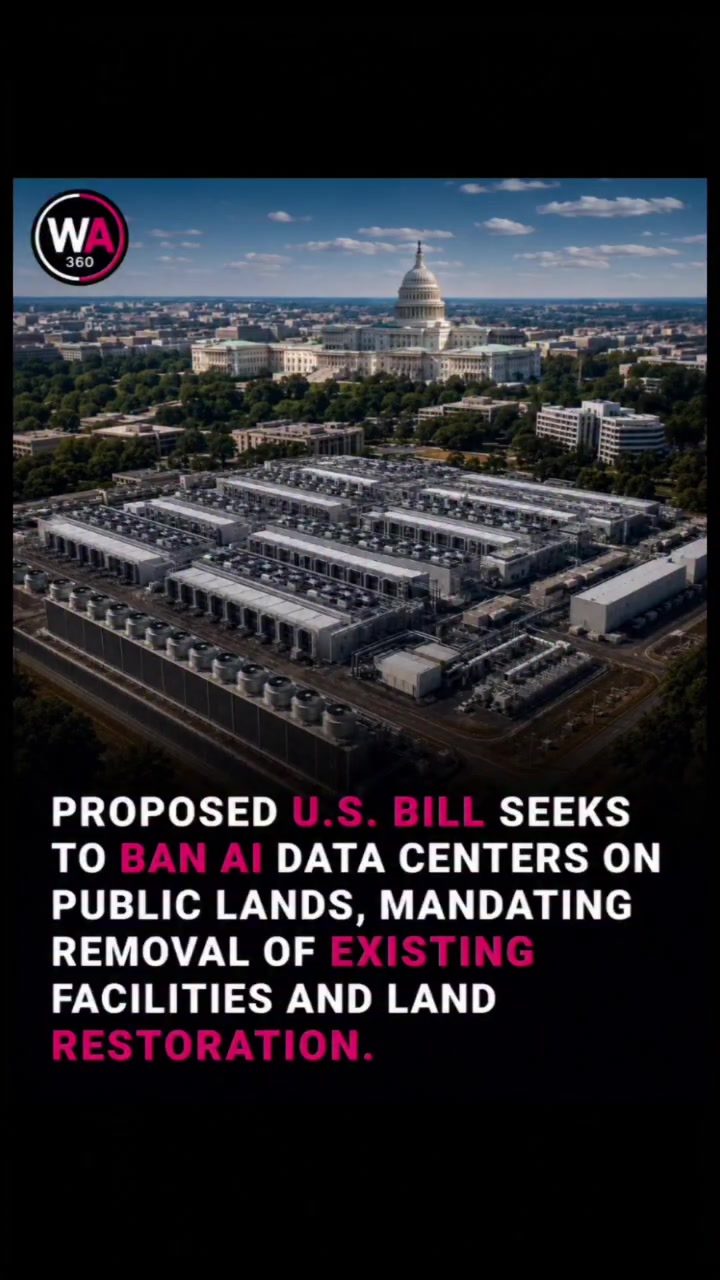
U.S. Bill Targeting AI Data Centers on Public Lands
A newly proposed U.S. bill seeks to prohibit the construction of AI data centers on public lands, mandating the removal of existing facilities and the restoration of affected areas. This legislation has sparked a significant debate among policymakers, environmental advocates, and technology leaders, highlighting the complex interplay between technological innovation and environmental conservation.
Context / Why This Matters
The proposed bill aims to address several pressing issues related to AI infrastructure and public land use. Advocates for the measure argue that it could help protect public resources, reduce environmental impacts, and preserve federally owned landscapes. These points are particularly relevant given the rapid expansion of the artificial intelligence sector and the increasing demand for data centers to support AI operations.
Critics, however, contend that the proposed ban could hinder AI infrastructure development, increase operational costs, and affect America's competitiveness in the global AI market. These concerns underscore the delicate balance that policymakers must strike between fostering technological advancement and safeguarding the environment.
Main Discussion
The Proposal and Its Implications
The bill seeks to ban the construction of new AI data centers on public lands and requires the removal of existing facilities. This approach aims to mitigate the environmental impact of these large-scale operations, which often consume significant amounts of energy and water. By mandating the restoration of affected areas, the legislation also seeks to ensure that public lands are returned to their natural state, preserving their ecological value.
Environmental advocates support the bill, citing the need to protect public resources and reduce the environmental footprint of AI infrastructure. They argue that data centers, with their high energy consumption and land use, can have significant detrimental effects on local ecosystems. By limiting their presence on public lands, the bill could help preserve critical habitats and mitigate climate change impacts.
Economic and Technological Considerations
Critics of the proposal highlight potential economic and technological challenges. The bill could slow the development of AI infrastructure, which is crucial for maintaining America's competitive edge in the rapidly growing AI sector. Data centers are essential for processing the vast amounts of data required for AI applications, and restricting their construction could lead to increased operational costs and reduced efficiency.
Moreover, the removal and relocation of existing facilities could be a costly and logistically complex process. This potential burden could deter investment in AI infrastructure and hinder technological progress. Critics argue that alternative solutions, such as promoting energy-efficient data centers and sustainable practices, could achieve similar environmental benefits without impeding innovation.
Balancing Innovation and Conservation
As the legislation moves through the political process, the debate surrounding it underscores the need for a balanced approach to technological innovation and environmental conservation. Policymakers must consider the long-term impacts of AI infrastructure on public lands and the environment, as well as the economic and technological implications of restricting data center construction.
Ultimately, the proposed bill represents a significant step in the ongoing dialogue about how to responsibly manage AI infrastructure in the context of environmental sustainability. Its final outcome will have profound implications for the future of AI development in the United States and could set a precedent for other countries grappling with similar challenges.
Practical Tips
For those following the debate or seeking to engage with the issue, here are a few practical tips:
- Stay Informed: Keep up with the latest developments in the legislative process and the evolving arguments from both supporters and critics.
- Engage with Stakeholders: Reach out to policymakers, environmental advocates, and technology leaders to share your perspectives and learn from their insights.
- Explore Alternative Solutions: Consider how other countries or regions have addressed similar challenges and learn from their experiences.
- Promote Sustainable Practices: Advocate for energy-efficient data centers and sustainable practices within the AI sector to mitigate environmental impacts without hindering technological progress.
Important Takeaways
The proposed U.S. bill targeting AI data centers on public lands highlights the need for a nuanced approach to balancing technological innovation and environmental conservation. Key takeaways include:
- Environmental Protection: The bill aims to protect public resources and reduce the environmental impact of AI infrastructure.
- Economic and Technological Challenges: Critics warn of potential economic and technological challenges, including increased operational costs and slowed innovation.
- Need for Balance: Policymakers must find a balanced approach that promotes sustainable development while fostering technological progress.
- Stakeholder Engagement: The debate underscores the importance of engaging with various stakeholders, including policymakers, environmental advocates, and technology leaders, to develop effective solutions.
Conclusion
The proposed U.S. bill targeting AI data centers on public lands represents a critical juncture in the ongoing dialogue about technological innovation and environmental sustainability. As the legislation moves forward, its final outcome will have significant implications for the future of AI infrastructure, public land management, and the delicate balance between economic growth and environmental conservation. Whether the bill is enacted or modified, it serves as a reminder of the complex challenges we face and the need for thoughtful and collaborative solutions.
Watch the Reel
Questions readers ask
What is the primary goal of the new U.S. bill targeting AI data centers on public lands?
The primary goal of the new U.S. bill is to prohibit the construction of new AI data centers on public lands and to mandate the removal of existing facilities. Moreover, it aims to restore affected areas to their natural state, thereby protecting natural resources and mitigating environmental impacts.
How does the bill address the environmental impact of AI infrastructure?
The bill aims to reduce the environmental footprint of AI by restricting the placement of data centers on public lands. This includes mandating the removal of existing facilities and restoring the affected land, which helps in preserving federally owned landscapes and reducing the overall ecological impact.
What are the implications of the proposed bill for technological advancement?
The bill could potentially influence the way technology companies plan and implement their AI infrastructure. It might encourage the industry to seek alternative locations for data centers, possibly leading to more sustainable and environmentally friendly solutions.
What happens to existing AI data centers on public lands if the bill is passed?
If the bill passes, existing AI data centers on public lands will need to be removed. The affected areas will then be restored to their natural state, ensuring that the bill's goals of environmental preservation and resource protection are met.
Why are environmental advocates supporting this bill?
Environmental advocates support the bill because it addresses several pressing issues related to AI infrastructure and public land use. It helps protect public resources, reduce environmental impacts, and preserve federally owned landscapes, which are all critical for ecological preservation.
How might this legislation change the balance between technological advancement and ecological preservation?
The legislation could shift the balance by encouraging more environmentally conscious planning and implementation of AI infrastructure. This could lead to innovations in sustainable technologies and practices, ensuring that technological advancement does not come at the cost of ecological preservation.
What steps will be taken to enforce the restoration of public lands affected by AI data centers?
The bill mandates the restoration of affected areas to their natural state. This process will likely involve coordinated efforts between government agencies, private entities, and environmental organizations to ensure that the land is successfully rehabilitated and that future environmental impacts are minimized.
Related deep dives
Similar reads based on topic and creator.


Recent articles
Fresh deep dives from the latest Reels we unpacked.




Comments
Be the first to comment.