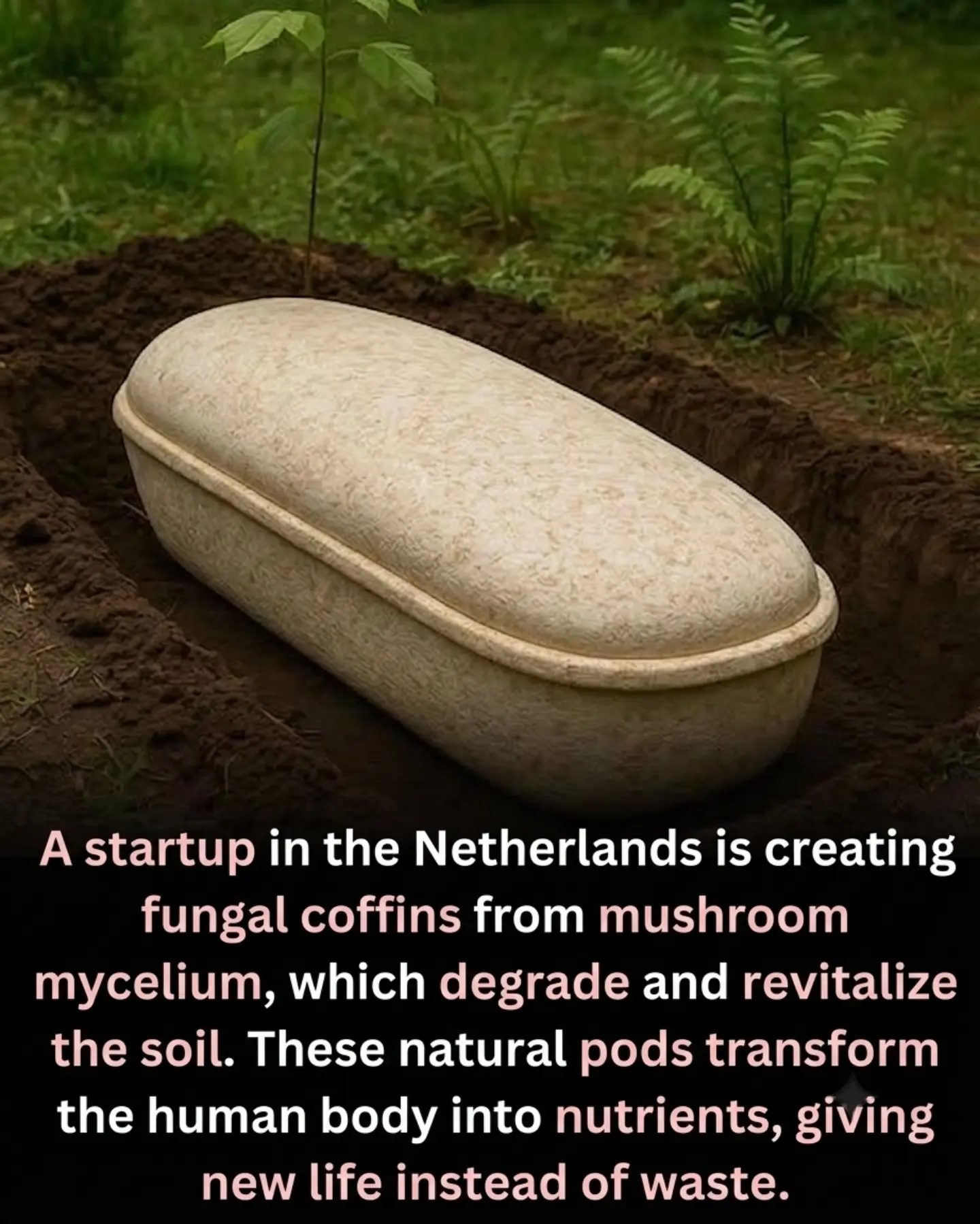
Mushroom Coffins: A Revolutionary Approach to Green Burials
Mushroom coffins represent a groundbreaking innovation in eco-friendly funeral practices. These coffins, crafted from mushroom mycelium, offer a sustainable alternative to traditional burial methods. A startup based in the Netherlands, Loop Biotech, has pioneered this technology, creating a product that not only reduces waste but also contributes to soil revitalization.
Context: Why This Matters
As environmental concerns grow, so does the demand for sustainable practices in every aspect of life, including end-of-life arrangements. Traditional burials, which often involve non-biodegradable materials and chemical treatments, contribute significantly to environmental degradation. Mushroom coffins address these issues by providing a natural and eco-friendly solution. By decomposing rapidly and enriching the soil, these coffins turn the human body into nutrients that support new life, aligning with the broader goals of sustainability and environmental conservation.
Main Discussion
Understanding Mushroom Mycelium
Mushroom mycelium is the vegetative part of a fungus, consisting of a network of fine, white threads. It plays a crucial role in decomposing organic matter and recycling nutrients in the soil. When used in coffin production, mycelium offers unique advantages:
- Rapid Growth: Mycelium can be grown and shaped into a coffin in just seven days, making the production process efficient and scalable.
- Natural Decomposition: Unlike traditional coffins, which can take decades to break down, mushroom coffins decompose within about 45 days. This rapid decomposition ensures that the nutrients from the human body are quickly returned to the soil.
- Toxin Cleaning: Mycelium has the ability to break down and absorb toxins from the surrounding soil, contributing to soil health and plant growth.
The Benefits of Mushroom Coffins
Mushroom coffins offer several benefits over traditional burial methods:
- Environmental Impact: By decomposing rapidly and enriching the soil, mushroom coffins reduce the environmental footprint of burials. They eliminate the need for land, embalming fluids, and non-biodegradable materials, which are common in traditional burials.
- Soil Revitalization: The decomposition process of mushroom coffins releases nutrients into the soil, promoting the growth of new plants and contributing to the overall health of the ecosystem.
- Cost-Effective: Mushroom coffins, in the long run, can be more cost-effective as they do not require costly embalming processes or elaborate caskets.
The Science Behind the Decomposition
The process of decomposition in mushroom coffins involves several stages:
- Initial Decomposition: Once buried, the mycelium in the coffin begins to break down, facilitated by natural enzymes and microorganisms in the soil.
- Nutrient Release: As the mycelium decomposes, it releases nutrients that enrich the soil and support the growth of new plants. This nutrient-rich soil can foster the development of new forests and other vegetation.
- Toxin Removal: During the decomposition process, the mycelium also absorbs and breaks down toxins, ensuring that the surrounding soil remains healthy and free from harmful substances.
Practical Tips
If you are considering a mushroom coffin for a green burial, here are some practical tips to keep in mind:
- Research Local Regulations: Ensure that mushroom coffins are allowed in your area and that local regulations permit green burials. Some regions may have specific requirements for burial methods.
- Choose a Certified Provider: Look for certified providers who specialize in eco-friendly burials. Companies like Loop Biotech offer expertise and ensure that the process meets environmental standards.
- Plan Ahead: Green burials often require more planning than traditional burials. Start the process early to ensure that all necessary arrangements are in place.
- Consider the Environment: Think about the location of the burial site. Choose a place that will benefit from the nutrient-rich soil and support new plant growth.
Important Takeaways
Mushroom coffins offer a revolutionary approach to green burials, providing a sustainable and eco-friendly alternative to traditional methods. Key takeaways include:
- Mushroom coffins are made from mycelium, the vegetative part of mushrooms, and can be grown and shaped into a coffin in just seven days.
- The coffins decompose rapidly, enriching the soil with nutrients and promoting the growth of new plants.
- Mushroom coffins help clean toxins from the soil, making them a more environmentally friendly option.
- The benefits of mushroom coffins include reduced environmental impact, soil revitalization, and cost-effectiveness.
Conclusion
Mushroom coffins are a significant step forward in sustainable funeral practices. By harnessing the natural properties of mushroom mycelium, these coffins offer a way to return the human body to the earth in a meaningful and environmentally responsible manner. As awareness of environmental issues grows, mushroom coffins provide a practical and innovative solution for those seeking a green burial option.
Watch the Reel
Questions readers ask
What are mushroom coffins and how do they work?
Mushroom coffins are burial containers crafted from mycelium, the vegetative part of a fungus. They work by rapidly decomposing when buried, promoting the growth of mushrooms which in turn enrich the soil with nutrients, making them an eco-friendly alternative to traditional coffins.
Who is behind the creation of mushroom coffins?
Loop Biotech, a Dutch biotech startup, is pioneering the development of mushroom coffins. They have created a unique process that transforms mycelium into a sustainable and biodegradable burial solution.
How do mushroom coffins contribute to environmental sustainability?
Mushroom coffins contribute to environmental sustainability by eliminating the need for non-biodegradable materials and chemical treatments. They decompose quickly and help revive the soil, supporting new plant growth and reducing the carbon footprint associated with traditional burials.
What makes mushroom coffins a sustainable funeral alternative?
Mushroom coffins are a sustainable funeral alternative due to their natural decomposition process, which reduces waste and enriches the soil. They offer a practical solution to the environmental concerns posed by traditional burials, making them a greener choice for those seeking eco-friendly funeral options.
What are the benefits of choosing a mushroom coffin for burial?
Choosing a mushroom coffin for burial offers several benefits, including rapid decomposition, soil enrichment, and reduced environmental impact. It also provides a meaningful way to contribute to the natural cycle of life and death, aligning with the principles of many green burial practices.
How does the process of mycelium decomposition work in mushroom coffins?
In mushroom coffins, the mycelium rapidly decomposes, breaking down the coffin material and releasing nutrients into the soil. This process supports the growth of mushrooms, which further enrich the soil and promote the natural cycle of life, making it an effective, eco-friendly solution.
Are mushroom coffins suitable for all environments?
Mushroom coffins are designed to decompose naturally under typical soil conditions. However, their effectiveness can vary based on environmental factors such as soil type, moisture, and temperature. It's best to consult with local guidelines and the manufacturer to ensure the most effective results in specific environments.
Related deep dives
Similar reads based on topic and creator.
Recent articles
Fresh deep dives from the latest Reels we unpacked.




Comments
Be the first to comment.