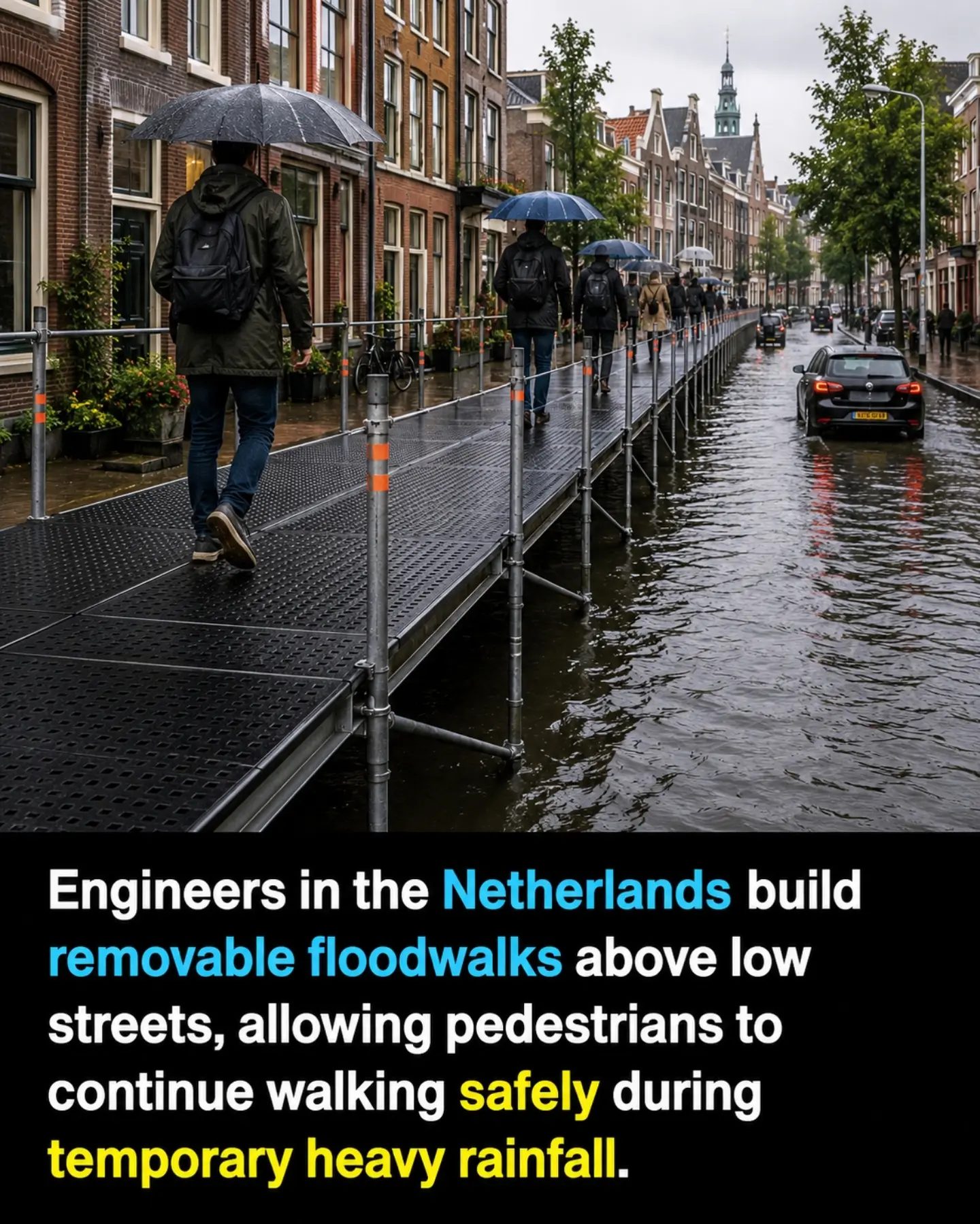
Floodwalks in the Netherlands
The Netherlands, a country renowned for its innovative solutions to water management, has implemented an intriguing infrastructure solution known as floodwalks. These elevated walkways are built above streets to facilitate safe pedestrian movement during periods of heavy rainfall. But why are floodwalks important, and how do they work?
Why This Matters
The Netherlands is highly susceptible to flooding due to its low-lying topography and dense urban areas. Traditional flood defenses, such as levees and dikes, are vital but often focus on protecting buildings and infrastructure. Floodwalks address a different aspect of urban flooding: they ensure that pedestrians can navigate city streets safely and efficiently during heavy rainfall.
Moreover, these walkways are not just about safety; they are also about maintaining daily routines. Without floodwalks, pedestrian traffic could be severely disrupted during rain events, affecting everything from commuting to local businesses. This infrastructure solution keeps urban life moving, even in adverse weather conditions.
Main Discussion
The Engineering Behind Floodwalks
Floodwalks are more than just elevated sidewalks; they are engineered solutions designed to withstand and facilitate movement during heavy rainfall. The key to their effectiveness lies in their design and placement.
-
Elevated Design: Built above street level, floodwalks are designed to rise above the anticipated flood level. This ensures that pedestrians can traverse the walkways without wading through water.
-
Modular Construction: Many floodwalks are modular, which means they can be easily assembled, disassembled, and stored when not in use. This flexibility is particularly useful in urban areas where space is at a premium.
-
Integration with Urban Infrastructure: These walkways are seamlessly integrated into the urban landscape. They often connect directly to buildings, public transport hubs, and other essential infrastructure, allowing pedestrians to continue their journeys uninterrupted.
Materials and Maintenance
The materials used in constructing floodwalks are critical for their durability and effectiveness. Common materials include:
-
Steel and Aluminum: These materials offer strength and durability, essential for withstanding the elements and the weight of pedestrians. Aluminum, in particular, is lightweight and resistant to corrosion, making it an ideal choice for areas with high humidity or saltwater exposure.
-
Composite Materials: Some floodwalks are made from composite materials that are lightweight, durable, and resistant to weathering. These materials can be molded into various shapes and sizes, offering flexibility in design.
Placement and Design Considerations
The placement of floodwalks is as important as their design. Key considerations include:
-
Topography: Floodwalks must be positioned in areas prone to flooding but also where pedestrians are likely to need safe passage.
-
Accessibility: They should be easily accessible from main streets and public transit stops. This ensures that people can quickly move to higher ground without disrupting their daily routines.
-
Aesthetics: In urban areas, aesthetics are important. Floodwalks are designed to blend with the urban landscape, often incorporating features like benches, railings, and lighting to enhance their visual appeal.
Practical Tips for Implementing Floodwalks
Assessing Urban Infrastructure
Before implementing floodwalks, it is essential to assess the existing urban infrastructure. This assessment should include:
-
Identifying Flood-Prone Areas: Use historical data and predictive modeling to identify areas most likely to experience flooding. This data will guide the placement of floodwalks.
-
Evaluating Current Pedestrian Flow: Understand the main pedestrian routes and identify bottlenecks or areas where pedestrian flow is likely to be disrupted during heavy rainfall.
Engaging the Community
Community engagement is crucial for the successful implementation of floodwalks. Here are a few steps:
-
Public Meetings: Hold public meetings to discuss the proposed floodwalk plans, address concerns, and gather input from residents and business owners.
-
Feedback Loops: Establish feedback loops so that community members can voice their opinions and suggest improvements throughout the planning and construction phases.
Ensuring Accessibility
Accessibility is a key consideration in the design and placement of floodwalks. Key accessibility features include:
-
Ramps and Stairs: Ensure that floodwalks are accessible to people with mobility issues by incorporating ramps and stairs.
-
Signage: Use clear and visible signage to guide pedestrians to the floodwalks and provide information about their use.
-
Lighting: Proper lighting ensures that floodwalks are safe to use during the night.
Important Takeaways
Floodwalks in the Netherlands represent a forward-thinking approach to urban water management. By providing safe passage for pedestrians during heavy rainfall, they offer a practical solution to a common problem in low-lying urban areas.
Some key takeaways include:
- Elevated design: Floodwalks are built above street level to ensure pedestrians can walk safely during heavy rainfall.
- Modular construction: Many floodwalks are modular, making them easy to assemble, disassemble, and store.
- Integration with urban infrastructure: Floodwalks often connect directly to buildings, public transport hubs, and other essential infrastructure.
- Material selection: Common materials include steel, aluminum, and composite materials, each offering unique benefits in terms of durability and resistance to the elements.
- Community engagement: Public meetings and feedback loops are essential for successful implementation.
- Accessibility features: Incorporate ramps, stairs, signage, and lighting to ensure floodwalks are accessible to all.
Conclusion
Floodwalks in the Netherlands are more than just a practical solution to urban flooding; they are a testament to innovative engineering and effective urban planning. By providing safe and convenient passage for pedestrians during heavy rainfall, floodwalks help maintain the flow of urban life, ensuring that communities can continue to thrive even in adverse weather conditions. As urban areas around the world face similar challenges, the Dutch example offers a valuable model for addressing temporary flooding in urban environments.
Watch the Reel
Questions readers ask
What are floodwalks and where are they found?
Floodwalks are elevated walkways designed to keep pedestrians safe during heavy rainfall. They are primarily found in the Netherlands, a country known for its innovative strategies to manage flooding.
How do floodwalks help during heavy rainfall?
Floodwalks allow pedestrians to navigate through urban areas safely when streets below are flooded. By providing an elevated pathway, they ensure that daily activities can continue without interruption from heavy rain.
What makes the design of floodwalks in the Netherlands unique?
The design of floodwalks in the Netherlands is unique due to its modular nature. This allows for easy storage when not in use, making them a practical and space-efficient solution for temporary flood protection.
Why is the Netherlands particularly suited for floodwalks?
The Netherlands' low-lying topography and dense urban areas make it highly susceptible to flooding. Traditional defenses often focus on infrastructure protection, but floodwalks specifically address pedestrian safety during heavy rainfall.
Are floodwalks used only during specific seasons or events?
Floodwalks are used whenever heavy rainfall is expected. They are designed to be easily deployed and stored, ensuring quick implementation during unpredictable weather events.
Can floodwalks be removed when not in use?
Yes, floodwalks are designed to be removable. Their modular construction allows them to be disassembled and stored efficiently, freeing up street space when not needed for flood protection.
How do floodwalks contribute to urban life in the Netherlands?
Floodwalks contribute to urban life by ensuring that pedestrian movement remains uninterrupted during periods of heavy rainfall. This helps maintain daily routines and reduces the disruption caused by flooding to both residents and visitors.
Related deep dives
Similar reads based on topic and creator.




Recent articles
Fresh deep dives from the latest Reels we unpacked.




Comments
Be the first to comment.