A Country Regrows
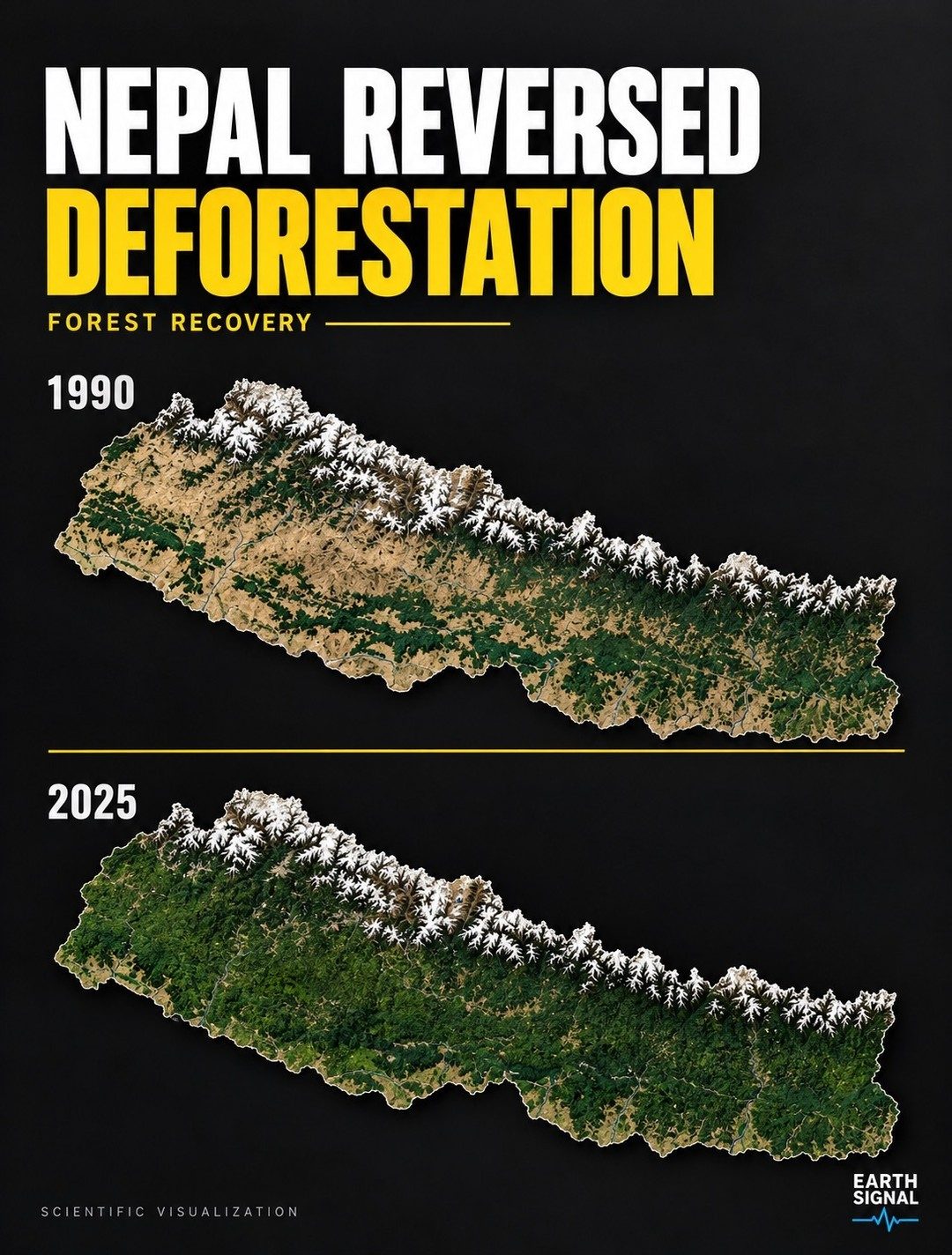
Nepal's forests, once vanishing, are now on the rebound. From the 1990s onward, forest cover expanded substantially. This reversal is a testament to a decades-long push towards sustainability. Community-based forest management and local conservation efforts have been crucial. These initiatives have effectively deployed local expertise and knowledge to address environmental concerns. But while Nepal has seen significant recovery, the success cannot be taken for granted. According to Earth Signal, the recovery is real, but it does not mean that every forest is protected. The country still grapples with habitat loss, fires, development pressure, and climate risks. These challenges threaten the progress made so far. Forest recovery is a dense process, not a quick fix. Nepal's efforts highlight how environmental progress is multifaceted and unfinished. It requires a holistic approach that blends local management control with broader, coordinated strategies. By re-regrowing, Nepal serves as an example to parties invested in sustainability.
Conservation through partnership
Localism and centralized oversight both come through. Above all, the progress has a public focus. Local communities are at the fore of conservation efforts. They are the ones who know best how to regulate and manage the forests. Central oversight meets local wisdom on this front. There is no blanket approach here. The reforestation is local so it must embrace local priorities. As a result of the partnerships between the state and local communities, Nepal's forest recovery has been both balanced and effective. However, despite a progress beckoning hope, it is not eminently safe from danger. Nepal's forests are not yet safe from fires, threats of development, habitat loss, and shifting climate. Nepal's recovery of forests highlights both the potential and the challenges. The challenge of sustainability is never met simply by one or two actions — it requires numerous ones. In addition, it often needs a holistic, multifaceted approach and a policy tailored to the area.
Critical transition and recovery
Crutially, the Earth Signal visualization shows how forest cover in Nepal gradually increased from 23% in 1990 to 44% in 2015. This visual data underscores the effectiveness of Nepal’s conservation efforts, particularly community-based management. Such methods have proven more sustainable and effective in reversing deforestation. The scientific visualization also shows a vital fact: Nepal has achieved a remarkable feat of reversing deforestation in a short timeframe. This was possible due to both the robust community control and the effective oversight mechanism. The transition from forest loss to cover recovery, as shown by Earth Signal, was not linear. As seen on the screen, it took more than two decades. But once the policies worked and the people took charge, the efforts bore fruit.
Looking to the future
Nepal's tree cover story is not isolated. Around the world, countries demonstrate that forest management needs to be adaptive. Local communities need to be integrated into conservation efforts, but not only that. They need to be the ones leading these efforts. Doing so requires a shift in mindset. Successful conservation goes beyond mere policy and management. It requires a grassroots approach that integrates local expertise, community control, and sound oversight. Nepal's recovery is a testament to the power of community-driven conservation. As such, it can inform future endeavors in reforestation. Nepal’s success can serve as a guide for other countries seeking to reverse forest loss.
Watch the Reel
Related deep dives
Similar reads based on topic and creator.


Recent articles
Fresh deep dives from the latest Reels we unpacked.




Comments
Be the first to comment.