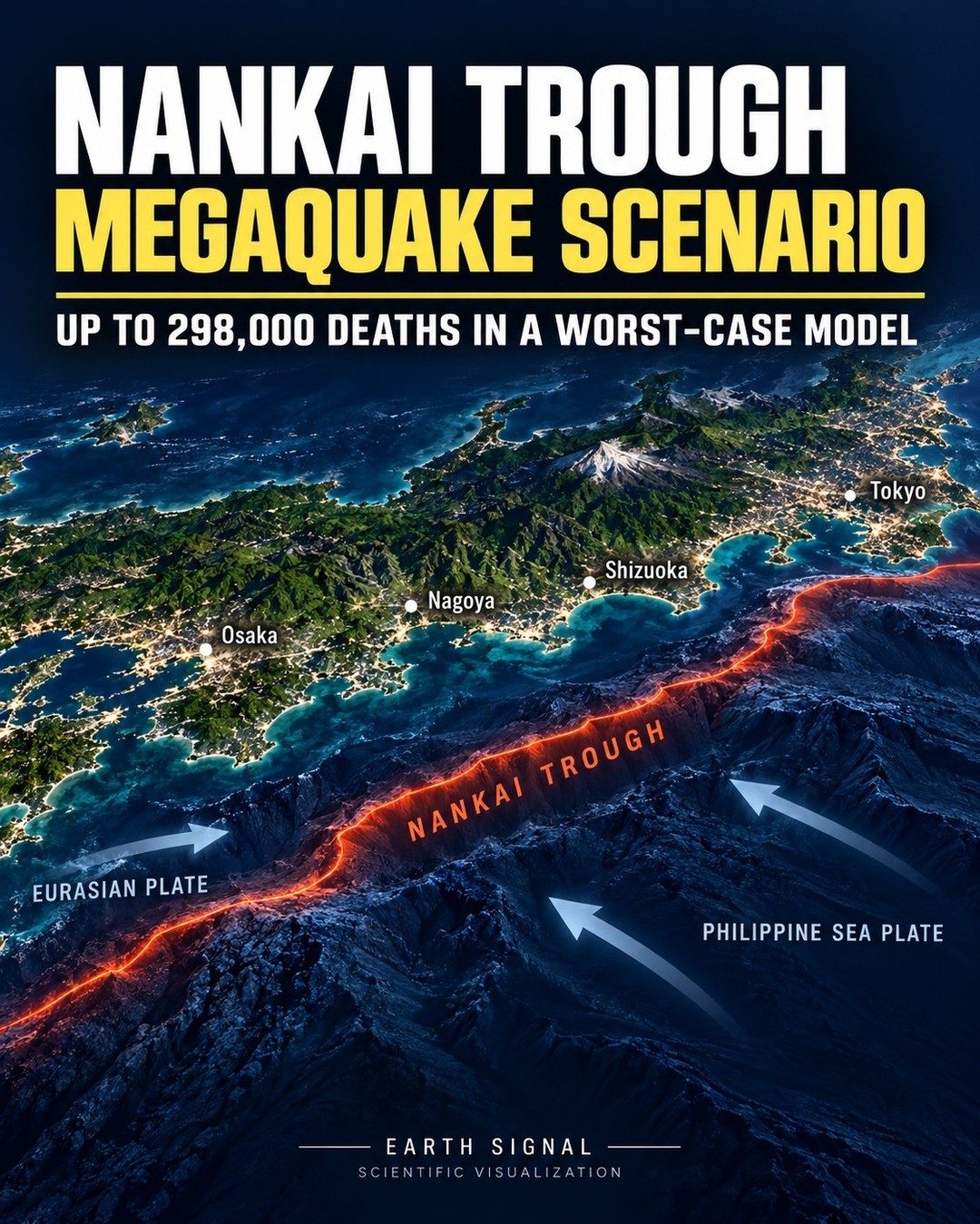
A Fault Line Bearing – The Nankai Trough
The Nankai Trough is not merely a geological feature. It is a stark reminder of the unsettling potential for seismic upheaval in densely populated regions like Japan. The fault line stretches off the coast of the country, marking a boundary where the Eurasian and Philippine Sea plates interact. This convergence is a geological dance that could turn deadly, leaving up to 298,000 people in Japan, in a worst-case model. Earthquakes are unpredictable, so planning for the worst is crucial. The fault line's impact on major cities like Osaka, Nagoya, Shizuoka, and Tokyo cannot be overstated. These urban centers, with their dense populations and critical infrastructure, would face unprecedented challenges. A fault line earthquake would likely result in immense loss of human life and property. The Nankai Trough poses a unique challenge due to its proximity to crucial urban areas.
The Philippine Sea Plate Imminent Threat:
In the plate tectonics world, stability is rare. The Philippine Sea Plate's movement against the Eurasian Plate is a constant, relentless force. This interaction deepens the fault line, whose potential release of energy could be catastrophic. The worst part of this reality is the risk posed to the country's population which is concentrated in urban centers near the fault line. The sheer magnitude of lives at risk makes this scenario a wake-up call for disaster preparedness. The earthquake model of the fault line earthquake is a sobering reminder of Japan's geological reality. The fault line's relentless movement sets the stage for a potential disaster that could result in the loss of thousands of lives. The fault line's impact could be catastrophic, especially in densely populated areas like Osaka, Nagoya, Shizuoka, and Tokyo. The geological activity could rip through urban areas, leaving devastating damage and loss of life.
Tokyo's Unavoidable Risk
The risk is immense, especially for Tokyo, a city of over 13 million people. Tokyo's character as a major economic and cultural hub complicates the situation, as it is the largest city in Japan. The potential impact of an earthquake on Tokyo is particularly alarming. Tokyo’s infrastructure is extensive and complex, with many buildings and critical services susceptible to seismic activity. The impact on the city's population and infrastructure would be catastrophic. Tokyo's characteristic concentration of people and resources could multiply the fault line's catastrophic impact. Japan has shown resilience: various disaster-preparedness measures have been implemented, such as enhanced building codes and early warning systems. The fault line's impact on the capital would be severe due to the density of its population and infrastructure. The city's sheer size and importance make it a particularly vulnerable target for the fault line's potential earthquake. Tokyo's intricate infrastructure and high population density make it a high-risk target for the fault line's potential seismic activity. If an earthquake occurs, Tokyo's population would be at significant risk. It will face challenges in evacuating and resourcing the population during and after the quake.
Watch the Reel
Related deep dives
Similar reads based on topic and creator.



Recent articles
Fresh deep dives from the latest Reels we unpacked.

Comments
Be the first to comment.