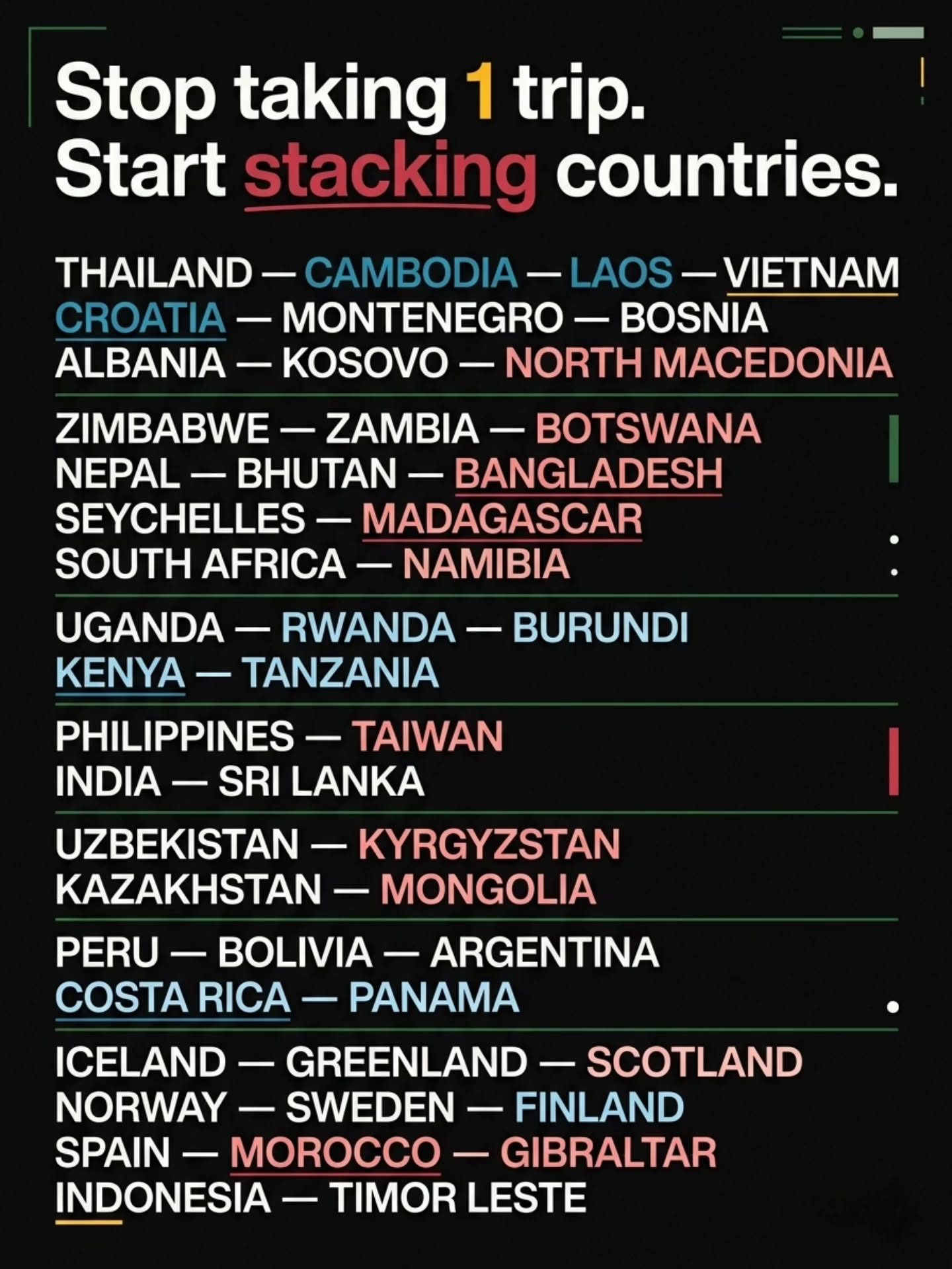
Stacking Countries: The Art of Multi-Country Travel
Exploring multiple countries in a single trip can be an exhilarating experience, offering a rich tapestry of cultures, landscapes, and adventures. This approach, often referred to as "stacking countries," allows travelers to maximize their time and experiences. Let's dive into the concept, its benefits, and practical tips for planning such an itinerary.
The Concept of Stacking Countries
Stacking countries involves strategically planning a trip to visit several countries in one go. This method is particularly appealing to those who want to explore diverse cultures, landscapes, and cuisines without the hassle of multiple long-haul flights. The key to successful country stacking is careful planning and efficient use of time.
For most travelers, the thought of visiting multiple countries might seem logistically challenging. However, with the right planning, it's not only possible but can also be incredibly rewarding. Some of the most exciting destinations for country stacking include:
- Southeast Asia: Thailand, Cambodia, Laos, and Vietnam.
- The Balkans: Croatia, Montenegro, Bosnia, Albania, Kosovo, and North Macedonia.
- Southern Africa: Zimbabwe, Zambia, Botswana, Seychelles, Madagascar, South Africa, Rwanda, and Burundi.
- East Africa: Kenya and Tanzania
- East Asia: Philippines, Taiwan, Uzbekistan, Kyrgyzstan, Kazakhstan, Mongolia, and Nepal
- South America: Peru, Bolivia, and Argentina
- Central America: Costa Rica and Panama
- Europe: Iceland, Greenland, Scotland, Norway, Sweden, Finland, Spain, Morocco, and Gibraltar
- Southeast Asia (again): Indonesia and Timor-Leste
- South Asia: Bhutan and Sri Lanka
Why This Matters
Country stacking offers several advantages. It allows travelers to make the most of their time, reducing the need for multiple long trips. By visiting several countries in one go, travelers can explore diverse cultures, landscapes, and cuisines, all while minimizing travel time. This method is also cost-effective, as it reduces the number of flights and accommodations needed.
Moreover, country stacking can be an exciting challenge, pushing travelers out of their comfort zones and into new experiences. It encourages planning and organization, which can make the trip more enjoyable and less stressful. By visiting multiple countries, travelers also get a more comprehensive understanding of a region, its history, and its people.
For those who love adventure, stacking countries can be a thrilling way to explore the world. This approach can lead to unexpected discoveries and memorable experiences. Plus, it can be incredibly fulfilling to add multiple stamps to your passport in a single trip.
Main Discussion
Planning Your Itinerary
When planning a country-stacking trip, it's essential to be strategic. Consider the following steps:
-
Choose Your Region: Start by selecting a region or continent that interests you. This will help you narrow down your list of countries and make planning easier.
-
Research Visa Requirements: Before finalizing your itinerary, research the visa requirements for each country. Some countries may require visas, which can take time to obtain.
-
Plan Your Route: Once you have your list of countries, plan your route based on geographical proximity. This will help minimize travel time and make the most of your trip.
-
Allot Time Wisely: Spend more time in countries that offer a lot to explore and less time in those that are smaller or less crowded.
-
Consider Transportation: Think about how you will travel between countries. This could be by bus, train, or plane, depending on your itinerary and budget.
Budgeting for a Multi-Country Trip
Budgeting for a multi-country trip requires careful planning. Here are some tips to help you manage your expenses:
-
Estimate Costs: Estimate the costs for flights, accommodations, food, transportation, and attractions for each country. This will give you a rough idea of your total expenses.
-
Prioritize Expenses: Decide which experiences are most important to you and allocate your budget accordingly. For example, you might want to splurge on accommodation in one country and save on food in another.
-
Look for Deals: Search for discounts and deals on flights, accommodations, and attractions. Sometimes, booking in advance or during off-peak seasons can save you money.
-
Use Local Currency: Exchange rates can vary, so it's a good idea to check the exchange rates for each country you plan to visit and decide the best time to convert your money.
-
Track Your Spending: Keep track of your spending throughout the trip to ensure you stay within your budget.
Staying Safe and Healthy
Safety and health are paramount when traveling, especially in multiple countries. Here are some tips to keep you safe and healthy:
-
Get Vaccinated: Make sure you are up-to-date on all necessary vaccinations for the countries you plan to visit. This can protect you from diseases that may be prevalent in certain regions.
-
Travel Insurance: Consider getting travel insurance that covers medical emergencies, trip cancellations, and lost luggage. This can provide peace of mind and financial protection.
-
Stay Informed: Keep up with the latest travel advisories and safety information for each country. This can help you avoid potential risks and stay safe.
-
Pack Smart: Pack essentials like a first-aid kit, medications, and travel-sized toiletries. This will help you stay prepared for any unexpected situations.
Cultural Considerations
Every country has its unique culture, customs, and etiquette. Here are some tips for navigating cultural differences:
-
Research Local Customs: Before you go, research the local customs and etiquette of each country. This can help you avoid cultural faux pas and show respect for local traditions.
-
Learn Basic Phrases: Learning a few basic phrases in the local language can go a long way in connecting with locals and showing respect for their culture.
-
Be Open-Minded: Be open to new experiences and cultures. Embrace the differences and try new things, whether it's food, music, or activities.
-
Respect Local Laws: Familiarize yourself with the laws and regulations of each country. This can help you avoid legal issues and ensure a smooth trip.
Practical Tips
Here are some practical tips to help you make the most of your country-stacking trip:
-
Pack Light and Smart: Pack versatile, lightweight clothing that can be easily layered and mixed and matched. This will make it easier to pack for multiple climates and save space in your luggage.
-
Use Packing Cubes: These can help you organize your belongings and maximize space in your luggage.
-
Bring a Portable Charger: A portable charger can be a lifesaver, especially when traveling between countries and relying on different power outlets.
-
Use a Money Belt: A money belt can keep your valuables safe and secure, giving you peace of mind while traveling.
-
Stay Connected: Consider getting a local SIM card or using an international data plan to stay connected while traveling. This can be especially useful for navigating and communicating.
Important Takeaways
Stacking countries can be an incredible way to explore the world, offering a rich tapestry of experiences and cultural immersion. By carefully planning your itinerary, budgeting wisely, and staying safe and healthy, you can make the most of your trip. Embrace the adventure, respect local cultures, and create memories that will last a lifetime.
Conclusion
Country stacking is more than just a travel trend—it's a way to maximize your experiences and make the most of your time. Whether you're exploring the vibrant cultures of Southeast Asia, the stunning landscapes of Southern Africa, or the historic sites of Europe, stacking countries can offer a wealth of opportunities for adventure and discovery. With careful planning, a sense of adventure, and an open mind, you can create an unforgettable journey that will leave you with memories to cherish for years to come.
Watch the Reel
Questions readers ask
What exactly does 'stacking countries' mean?
Stacking countries refers to the practice of visiting multiple destinations in a single trip. This involves strategic planning to ensure that you can efficiently travel from one country to the next, maximizing your time and experiences along the way. It’s a great way to explore diverse cultures and landscapes without the need for multiple long-haul flights between separate trips.
How do I start planning a multi-country travel itinerary?
Begin by identifying the countries you want to visit and the experiences you want to have. Consider the geographical proximity of these destinations to make travel between them as efficient as possible. Use travel apps, maps, and guides to plan transportation, accommodation, and activities for a cohesive and enjoyable journey.
What are the benefits of stacking countries compared to single-country trips?
Stacking countries allows you to experience a variety of cultures, landscapes, and cuisines in a single journey. This method can also save time and money by reducing the need for multiple long-haul flights and the logistical hassle of planning separate trips. It offers a more diverse and adventurous travel experience.
How can I make stacking countries more efficient?
To make stacking countries more efficient, research the best modes of transportation between destinations, such as trains, buses, or short flights. Consider using multi-country travel passes and planning your itinerary to minimize travel time and maximize exploration. Additionally, use travel guides and apps to stay organized and up-to-date.
What are some popular destinations for stacking countries?
Europe and Southeast Asia are particularly popular for stacking countries due to their geographical proximity and diverse offerings. For example, you can explore France, Italy, and Spain in Europe, or Thailand, Vietnam, and Cambodia in Southeast Asia. These regions offer a mix of cultural experiences, historical sites, and natural wonders, making them ideal for multi-country adventures.
What are the visa requirements for stacking countries?
Visa requirements can vary significantly, so it's important to research the specific needs for each country you plan to visit. Some countries offer multi-entry visas or visa-free entry for certain nationalities, while others may have more stringent requirements. Check official government websites or consult a travel agency to ensure you have the correct documentation.
How can I balance sightseeing and relaxation when stacking countries?
To balance sightseeing and relaxation, plan your itinerary with a mix of high-energy days and downtime. Allocate specific days for key attractions and adventure activities, and include rest days in between. Consider staying in accommodations that offer relaxation, such as hotels with spas or resorts with beautiful views, to unwind and recharge.
Related deep dives
Similar reads based on topic and creator.




Recent articles
Fresh deep dives from the latest Reels we unpacked.




Comments
Be the first to comment.