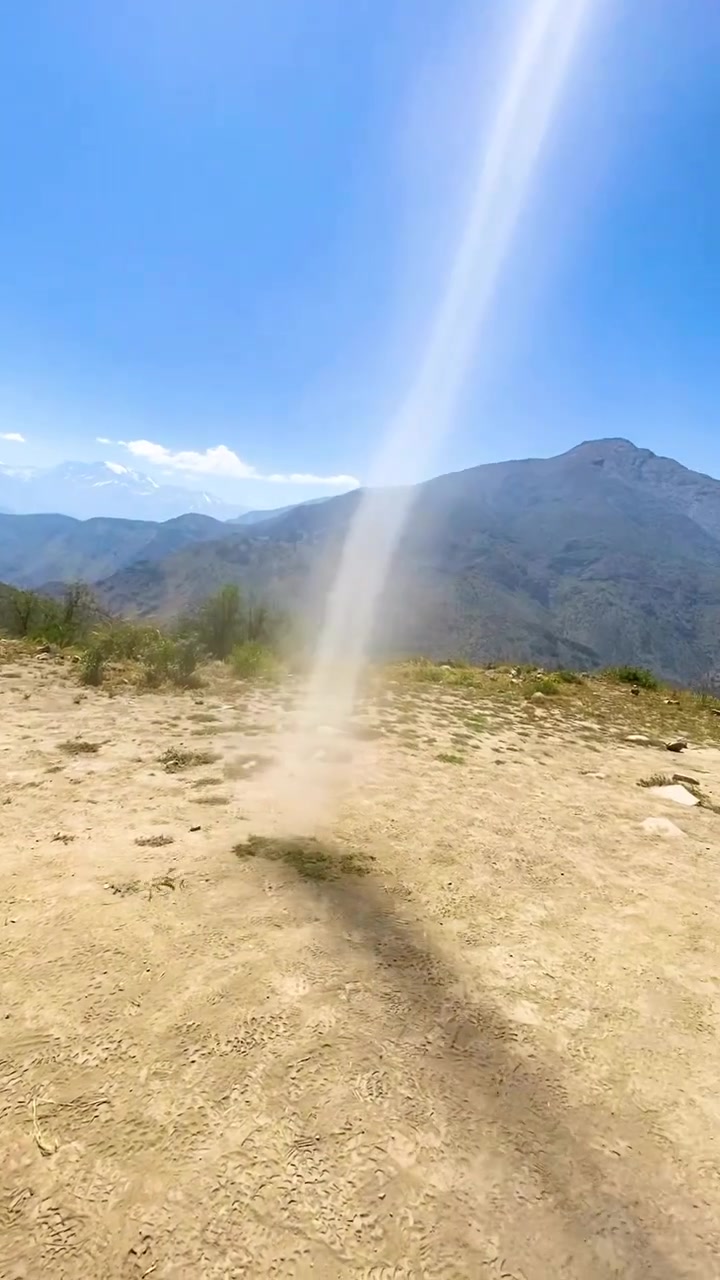
On a mountaintop, a group of people transform a handful of sand into a towering weather phenomenon: a dust devil. Viewed from hundreds of yards away, a person in the group on the mountaintop kicks up a swirling mass of sand, evaporating into a dust devil that spirals hundreds of feet into the clear blue sky. At once powerful and delicate, the dust devil is mesmerizing.
Dust Devils: Whirlwinds of Nature
A dust devil is a small, short-lived whirlwind of loose dust, dirt, or sand, rising in a column. Unlike tornadoes they do not need a pre-existing thunderstorm, but still form in clear skies. Normally easy to spot, their origins have long captivated scientists. They form when warm air close to the ground rotates upward, creating a low-pressure zone. If conditions are right — such as a sunny, dry, windy day — a vortex can rise, pressing air upward while dragging dust from the ground. The vortex shows a dust devil. On a mountaintop the typical ingredients are sand, heat, and enough wind to start the process. While the mechanisms are fascinating, they aren't new on social media platforms. They are caught in the wild, usually by coincidence, not much more than a brief wonder as the wind dies out.
The Magic of Zero-Engineered Nature
The sand becomes powerful when a person kicks it up in a mountaintop to create the dust devil. Its influence on human fascination is endlessly popular. Among the many wonders of nature, dust devils are unique. They require zero intervention. Dust devils are not cause by human disasters, but simply the meeting of dry air, heat, and a slight incline. Anthropologists can learn from this event too, as they offer a view of how early humans might have reacted to similar random phenomena. You might see a more realistic dust devil on a sunny day, too. Dust devils can last a few seconds to several minutes. In the desert they can be as wide as 30 feet, and as tall as 1,000 feet, creating a small, unmistakable weather pattern. But the dust devil comes and goes quickly. It's part of its appeal, and the reason they're so serendipitous.
The Rise and Fall of a Dust Devil
A Stir of Dust
Catching a moment of nature, kicking up the dust sets the whole process in motion. First, a layer of hot air floats just above the dusty ground. This layer is where the dust devil begins. It’s got a heat source, some wind, and a surface to kick it up from. That initial kick sets up a moving hot air layer which in turn forms a vortex. Unlike tornadoes, which routinely appear in a much larger scale, the dust devil is more erratic and unpredictable.
The Dust Devil’s Path
A dust devil usually travels across the ground on a straight or zigzag path. One of the reasons they appear so unpredictable is they can also suddenly lift off the surface. This happens when the vortex encounters cooler air. Viewers can sense that the dust devil hasn't taken shape until it has risen high enough into the air. The higher it spins, the higher it rises.
The Magnificence of the Dust Devil in the wild
Against the backdrop of the mountains, the dust devil is visually striking. Dust devils can be mesmerizing to watch. They are mild in nature and often appear in deserts, dry lake beds, and even on mountaintops. Sand is a frequent ingredient, but dust devils can also pick up ash, leaves, and other loose materials. Dust devil’s spike in popularity. Their small story outlives the biggest weather events. Generally, dust devils are good indicators of weather. They signal a significant temperature difference at the surface, and are the precursor to strong winds or storms. Dust devils are generally considered harmless.
The Art of Catching a Moment
Mountaintops are not always the best place to catch a dust devil. They require a combination of factors: heat, a dry surface, and a little wind — but the best ones need a bit of skill. Here's how you can try:
- Find the Right Spot: Look for a dry, flat area with loose sand or dust. A clear, windy day is perfect. To match the conditions of the dust devil's creation, you will need to find a sunny patch of dirt or sand.
- Kick It Up: Gently kick up the sand or dust, creating a small cloud. Do it slowly and watch what happens. The best result can take a few tries.
- Watch and Record: Be ready to capture the moment. Stand at a safe distance, ideally with a partner to run, film, or simply watch.
Dust Devils in the Mind
Part of a dust devil's allure is the array of details. The whirlwind that kicks up sand from a mountaintop is mesmerizing. For most of us, the dust devil is a marvel we rarely see. On anything but that rare day at the right time, it is a little miracle.
Watch the Reel
Questions readers ask
How exactly does kicking up sand create a dust devil?
Kicking up sand on a mountaintop creates a dust devil by disturbing a layer of hot air just above the ground. This disturbance sets up a moving hot air layer, which forms a vortex and starts the whirlwind. The process is driven by the heat, wind, and the initial kick that sets everything in motion.
Why does the dust devil rise high into the air?
The dust devil rises high into the air because the vortex created by the moving hot air layer sucks in more air from the surroundings. As it spins, it draws in more dust and air, causing it to rise higher and higher until it encounters cooler air, which can cause it to lift off the surface and dissipate.
Are dust devils dangerous, like tornadoes?
Dust devils are generally much milder and less dangerous than tornadoes. They are typically small and short-lived, lasting from a few seconds to several minutes. While they can be visually striking and mesmerizing, they rarely cause significant harm or damage.
Can dust devils form in any location, or do they require specific conditions?
Dust devils can form in any location with the right conditions, which typically include a sunny, dry, windy day and a surface with loose dust or sand. On a mountaintop, the typical ingredients are sand, heat, and enough wind to start the process. These conditions are common in deserts and other arid regions.
How long do dust devils usually last?
Dust devils can last from a few seconds to several minutes. Their short lifespan is part of what makes them so serendipitous and unpredictable. They can rise high into the sky and travel across the ground on a straight or zigzag path, but they quickly dissipate as the wind dies down or they encounter cooler air.
Related deep dives
Similar reads based on topic and creator.
Recent articles
Fresh deep dives from the latest Reels we unpacked.


Comments
Be the first to comment.