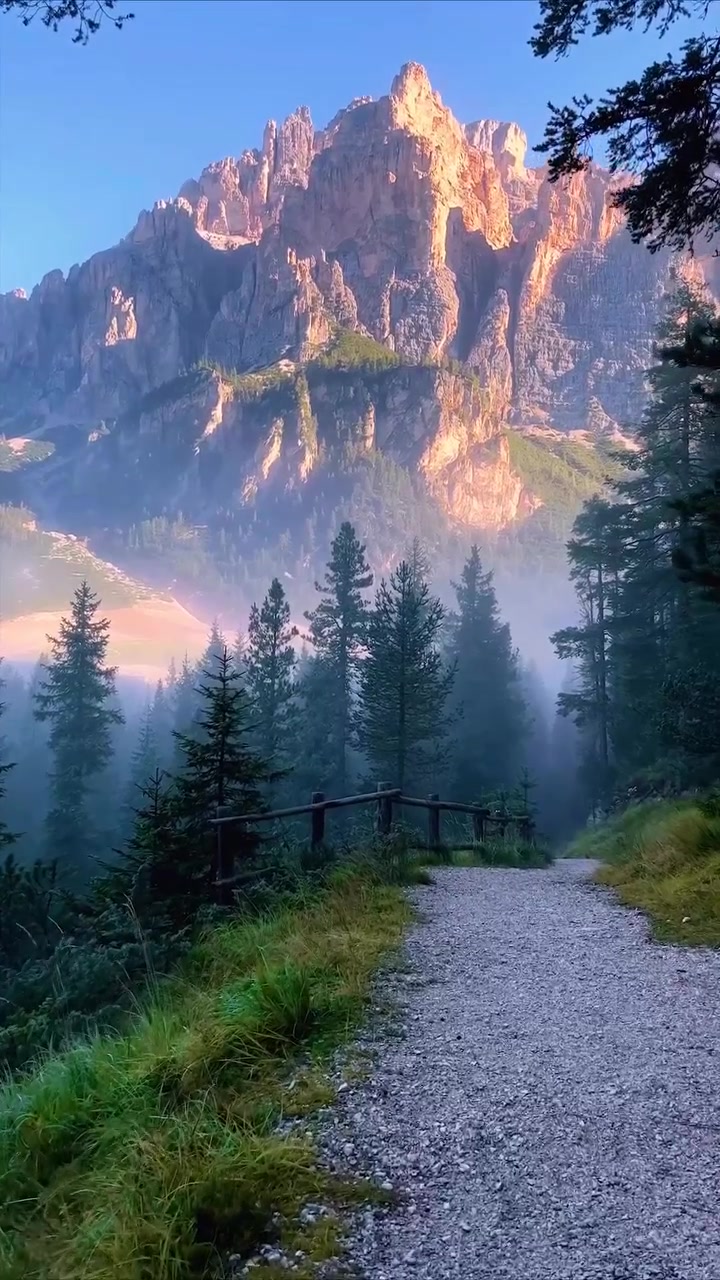
At first light, a whole mountain range becomes a warm golden hue. This isn't a dream or a painting, but a vivid capture in the moments of that sunrise lighting. This scene is not set in sepia tones but in the soft light of the morning, the rugged peaks of the mountains are clearly visible. This is a landscape photographer's sunrise. But sunrise photographs are not all alike—this particular image features a winding path through a dense forest in the foreground, leading the eye through the scene. The mist hanging in the crevices only adds to the serene atmosphere.
Mastering the Light: Why Sunrise Matters to the Landscape Photographer
Golden hour—when the sun is just rising—offers the best light of the day for a landscape photographer. It creates a soft, warm glow, helping them avoid the harsh shadows which are inevitable in the later part of the day. In this particular scene, the dramatic lighting means every detail of the rugged mountain range is accentuated. There's a certain magic to observing a misty forest at first light. The forest enshrouded in mist evokes both mystery and peace.
The Golden Hour: when the Photographer's World Wakes Up
Timing is critical. Every photography guide you consult will insist on waking up early, and it's not just for the dramatic lighting. That mist only forms at this time, sending silvery arcs into the valleys. The photographer's eye sees a world of shapes and texture that have been muted or missed in the haze of day and night. It appears the camera was positioned to capture the serene beauty of the natural environment. The golden morning light on the mountain range is accentuated by its contrast with the dense and dark forest and goden lighting. The photographer can't control the mist, but they can position themselves to capture it. The journey isn't the destination. The path through the forest can serve to frame the mountain range or simply provide a reference for the depth and texture.
Mountain Contours
How the camera frames the scene makes a big difference, since the photographer has to make it inviting for viewers to look at. It is not just about the position to take the shot but also the angles involved. Golden light reflects off the rugged surfaces of the mountain range. The primary mountain range catches the eye, while the more distant peaks serve as a backdrop. The camera doesn't move, giving viewers time to ponder the terrain. Even the foreground requires a careful examination. A winding path through the forest gives the eye room to travel, while the mist hanging in the valleys adds depth to the scene.
Foreground Subjects
The journey becomes as much as a focal point as the destination. The mist is not just a background layer, but a visible element that adds texture to the frame. The photographer doesn't ignore the foreground to get a better angle. This foreground adds depth, draws the eye back to the mountain range. It's not just about capturing it all, but giving the eye a journey of it's own. The mist is an opportunity to add an atmospheric element. How does it hang, how does it lift, and how can it add depth to the mountains?
The Final Details
Capture the moment right. Some people prefer to photograph during the sunrise to catch the radiant light. This scene uses the radiant light to add depth and texture to the mountains, showcasing the whole mountain range in all of it's splendor. The golden range of light at dawn offers a photographer a unique opportunity. It highlights the mountains and allows the photographer to add elements for depth. They also capture the landscape features such as valleys, forests, and mist. This photograph provides a breathtaking vista and an example of the natural beauty of the mountains.
What Makes a Photograph
Plan your visit to capture the perfect moment. Arrive early. Make sure you have enough light. Also, find the best frame for your image.
- Arrive Early: The best sunrises usually arrive early. Be patient and consider the time of year to find the best lighting.
- Frame Your Image: Every photo is about a frame, so think about the details you want in the foreground. Use your subject to help frame the scene.
- Check the Lighting: The first light of dawn can create a soft, warm glow on the landscape. Soft lighting in the morning is valuable. The magical light is only available for a short period of time. So, be ready.
- Be Patient and Find Your Path: The scene can become what you make of it.
Watch the Reel
Questions readers ask
What makes the light during sunrise so special for landscape photography?
Sunrise is crucial for landscape photography because it offers golden hour, a period when the sun is just rising, and the light is soft and warm. This light helps avoid harsh shadows and accentuates the details of the landscape, making it a photographer's dream to capture the rugged mountains and misty forests. The golden hue brings a warmth that only exists during these early hours. This is why photographers go to great lengths to wake up early and position themselves to capture this magical moment.
How does the mist affect the composition of a sunrise landscape photo?
Mist adds a layer of mystery and depth to a sunrise landscape photo. It forms during the early morning, creating silvery arcs in the valleys and hanging in the crevices, which enhances the serene atmosphere. The mist is not just a background element; it's a visible texture that can guide the viewer's eye through the scene, adding to the overall atmospheric quality of the image. The photographer's skill lies in positioning the camera to capture this fleeting phenomenon.
Why is the foreground important in a sunrise landscape photograph?
The foreground in a sunrise landscape photograph is vital because it provides depth and texture, drawing the viewer's eye back to the main subject, which is often the mountain range. Elements like a winding path through a forest can serve as a natural frame, making the scene more inviting. The foreground isn't just a distraction but an integral part of the composition, adding layers to the image and guiding the viewer's journey through the scene.
How does the positioning of the camera impact the final image?
The camera's positioning is crucial as it determines how the landscape is framed and perceived. The photographer must choose angles that accentuate the natural beauty and create a sense of depth. The camera should be positioned to capture the dramatic lighting, the mist, and the foreground elements, all of which contribute to the overall atmosphere. It's about more than just where to stand; it's about how to compose the shot to tell a story through the image.
Related deep dives
Similar reads based on topic and creator.


Recent articles
Fresh deep dives from the latest Reels we unpacked.


Comments
Be the first to comment.