Flood Risk Around the World
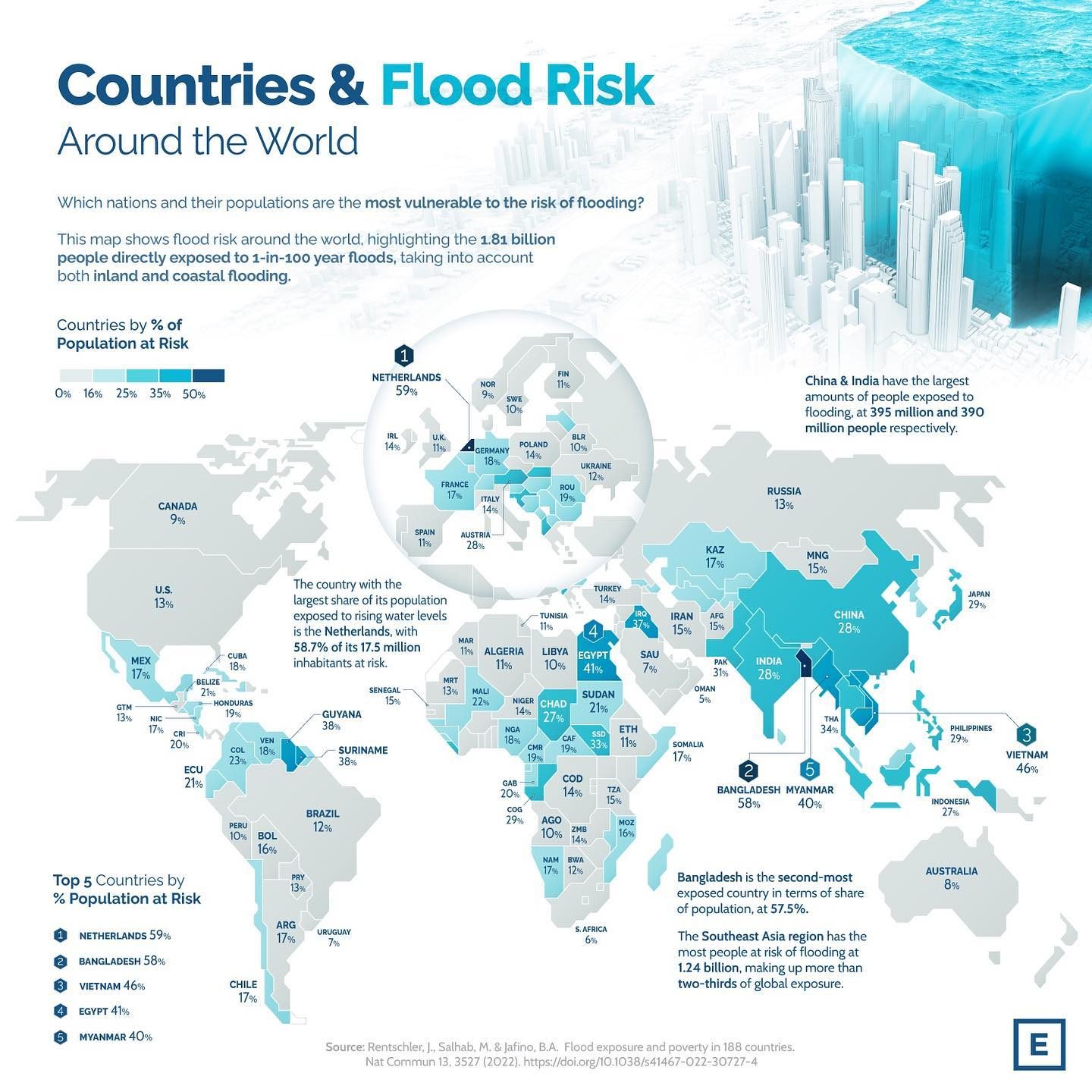
Flooding is a significant natural hazard that affects millions of people worldwide. The devastating floods in Pakistan this summer, which claimed over 1,400 lives and submerged one-third of the country, underscore the urgent need to understand which nations and their populations are most vulnerable to this risk. A recent study published in Nature provides valuable insights into global flood risk, highlighting the 1.81 billion people directly exposed to 1-in-100 year floods. This analysis takes into account both inland and coastal flooding, offering a comprehensive view of the threat.
Why This Matters
Understanding the global distribution of flood risk is crucial for several reasons. It helps in allocating resources for disaster preparedness, informs urban planning, and guides international efforts to mitigate the impacts of climate change. By identifying the most vulnerable populations, governments and organizations can develop targeted strategies to reduce the loss of life and property caused by floods.
Main Discussion
Global Flood Risk Overview
The study highlights that 67% of the world's population lives in areas exposed to at least one of the studied flood risks. This staggering figure underscores the widespread nature of the threat. The map produced by the study shows that several countries have a significant portion of their populations at risk. For instance, the Netherlands has the highest percentage of its population exposed to flooding, with 55% of its inhabitants at risk. Other countries with high exposure include Germany, China, India, Japan, Vietnam, Bangladesh, and Indonesia.
Countries with the Highest Exposure
- China and India: These two countries have the largest number of people exposed to flooding, with 390 million and 380 million people respectively. Both countries have extensive coastal regions and large inland river systems, making them particularly vulnerable to both types of flooding.
- Bangladesh and Indonesia: These countries have a significant percentage of their populations at risk, with 58% and 70% respectively. Bangladesh, in particular, is highly susceptible due to its low-lying topography and dense population.
- Vietnam: Vietnam has 46% of its population exposed to flooding. The country's extensive delta regions and coastal areas make it highly vulnerable to both inland and coastal flooding.
Regions with Significant Risk
While Asia dominates the list of countries most at risk, other regions also face significant threats. For example, 17% of Germany's population is exposed to flooding, primarily due to its extensive river systems and coastal areas. Australia has 27% of its population at risk, largely due to its coastal areas and inland river systems.
Understanding Inland and Coastal Flooding
- Inland Flooding: Inland flooding is typically caused by heavy rainfall, river overflow, or dam failures. It can affect large areas and cause significant damage to infrastructure and agriculture.
- Coastal Flooding: Coastal flooding is often the result of storms, tsunamis, or rising sea levels. It poses a threat to coastal communities and can lead to the destruction of homes and critical infrastructure.
Practical Tips
For Individuals
- Stay Informed: Keep up-to-date with weather forecasts and flood warnings in your area. Knowing when and where flooding is likely to occur can help you prepare and act quickly.
- Prepare an Emergency Kit: Have an emergency kit ready, including essential items like food, water, first-aid supplies, and important documents. This will help you be prepared in case of an evacuation.
- Know Your Risk: Understand the flood risk in your area. If you live in a flood-prone region, consider taking steps to flood-proof your home, such as installing flood barriers or elevating electrical systems.
For Governments and Organizations
- Invest in Infrastructure: Develop and maintain infrastructure that can withstand flooding, such as levees, dams, and floodwalls. Early warning systems and evacuation plans are also critical.
- Promote Sustainable Development: Encourage sustainable urban planning practices that reduce the risk of flooding, such as green spaces and permeable surfaces.
- International Cooperation: Work with international organizations and neighboring countries to share best practices, resources, and technology for flood management and mitigation.
Important Takeaways
- Global Impact: Flooding is a global issue that affects a significant portion of the world's population. Understanding the risk is the first step in mitigating its impact.
- Targeted Strategies: Different regions face unique challenges, and targeted strategies are needed to address these risks effectively. This includes both infrastructure development and sustainable development practices.
- Preparation is Key: Being prepared and informed can save lives and reduce the impact of flooding. Both individuals and organizations have a role to play in flood preparedness and mitigation.
Conclusion
Flooding is a pervasive and growing threat that affects billions of people worldwide. By understanding the global distribution of flood risk and taking proactive measures, we can mitigate its impact and protect vulnerable populations. Whether through individual preparedness, government action, or international cooperation, collective efforts are essential to address this critical challenge.
Watch the Reel
Questions readers ask
Which countries are most at risk from floods globally?
The countries most at risk from floods are China, India, and Indonesia. These nations have vast populations living in areas prone to both inland and coastal flooding, making them particularly vulnerable to severe floods.
How many people are directly exposed to severe floods worldwide?
Approximately 1.81 billion people are directly exposed to severe floods that occur once every 100 years. This figure underscores the widespread and significant impact of flooding on global populations.
What is the significance of the recent study published in *Nature*?
The study published in *Nature* provides a comprehensive analysis of global flood risk, considering both inland and coastal flooding. It highlights the urgency of understanding and mitigating flood risks, especially in countries with large exposed populations.
Why is it important to understand the global distribution of flood risk?
Understanding the global distribution of flood risk is crucial for effective resource allocation, disaster preparedness, and mitigating the impacts of climate change. It helps countries anticipate and respond to floods, ultimately saving lives and minimizing damage.
How do countries like the Netherlands compare to Pakistan in terms of flood risk and preparedness?
The Netherlands is known for its advanced flood management systems, including an extensive network of dikes and flood defenses, making it well-prepared for severe floods. In contrast, Pakistan's recent devastating floods highlight the need for enhanced preparedness and infrastructure to mitigate flooding impacts.
What are the main differences between inland and coastal flooding risks?
Inland flooding typically occurs due to heavy rainfall and river overflow, affecting areas far from the coast. Coastal flooding, on the other hand, is primarily caused by storm surges and high tides, impacting low-lying coastal regions. Both types of flooding pose significant threats and require tailored mitigation strategies.
What steps can countries take to mitigate the impacts of severe flooding?
Countries can mitigate the impacts of severe flooding through a combination of disaster preparedness, infrastructure development, and climate change adaptation. This includes improving early warning systems, building resilient infrastructure, and implementing effective flood management strategies to protect vulnerable populations.
Related deep dives
Similar reads based on topic and creator.


Recent articles
Fresh deep dives from the latest Reels we unpacked.




Comments
Be the first to comment.