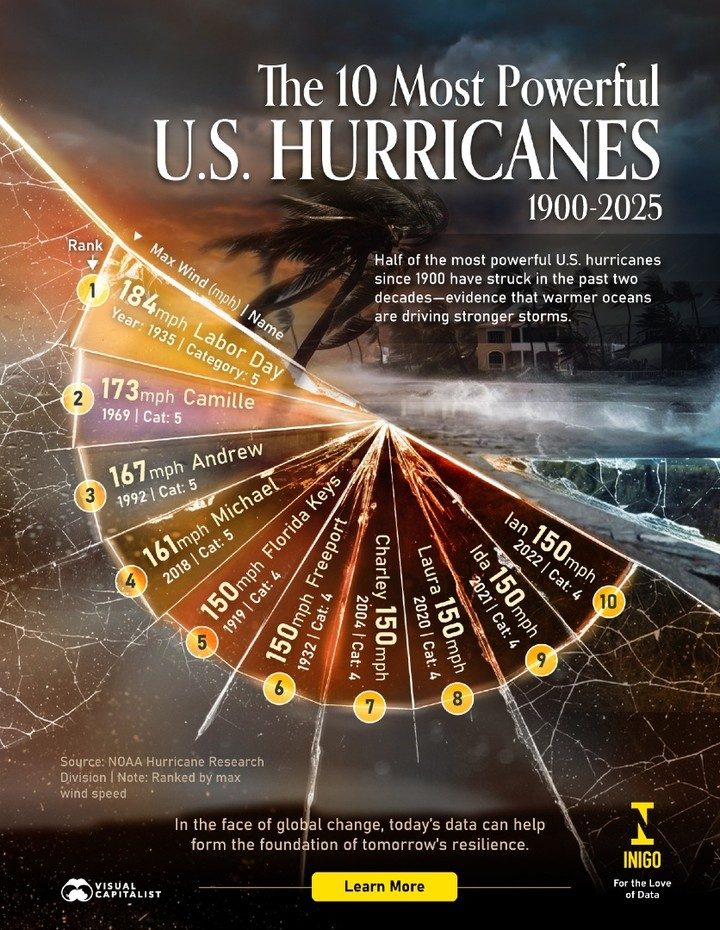
U.S. Hurricanes Ranked
Hurricanes are a powerful force of nature that significantly impact the U.S. climate, often leaving behind environmental, social, and economic devastation. By ranking the most powerful hurricanes, we can better understand the trends and patterns of these severe weather events. This ranking, created in partnership with NOAA, focuses on the most powerful hurricanes in U.S. history from 1900 to 2025.
Context / Why this matters
Hurricanes are not just powerful storms; they are complex weather systems that can reshape landscapes, disrupt communities, and challenge infrastructure. Understanding the historical context of these storms can provide valuable insights into the future. The National Oceanic and Atmospheric Administration (NOAA), a trusted source of climate and weather data, has compiled extensive research on hurricanes, offering a comprehensive view of their impact.
Main discussion
The Power of Hurricanes
Hurricanes are categorized based on their sustained wind speeds, with Category 5 being the most powerful. The ranking of hurricanes by wind speed helps illustrate the intensity and potential impact of these storms. Here are the top 10 most powerful hurricanes in U.S. history, as highlighted by the infographic:
| Hurricane Name | Year | Wind Speed (mph) | Category |
|---|---|---|---|
| Camille | 1969 | 184 | 5 |
| Andrew | 1992 | 173 | 5 |
| Michael | 2018 | 167 | 5 |
| Freeport | 1919 | 161 | 4 |
| Laura | 2020 | 150 | 4 |
| Ida | 2021 | 150 | 4 |
| Ian | 2022 | 150 | 4 |
| Publican | 1933 | 150 | 4 |
| Patricia | 1955 | 150 | 4 |
| Katrina | 2005 | 150 | 4 |
Historical Perspective
Camille (1969)
Camille, with winds reaching 184 mph, is the most powerful hurricane on record. It struck the Gulf Coast in 1969, causing widespread destruction and claiming over 250 lives. The storm's intense winds and storm surge left a lasting impact on the region, highlighting the devastation that Category 5 hurricanes can bring.
Andrew (1992)
Andrew, with winds of 173 mph, is another Category 5 hurricane that left a lasting mark. It made landfall in Florida and Louisiana in 1992, causing billions of dollars in damage and resulting in dozens of deaths. Andrew's impact underscored the need for better preparedness and infrastructure in hurricane-prone areas.
Michael (2018)
Michael, with winds of 167 mph, is one of the more recent powerful hurricanes. It made landfall in the Florida Panhandle in 2018, causing extensive damage and fatalities. Michael's rapid intensification before landfall serves as a reminder of the unpredictable nature of these storms.
Recent Trends
The infographic highlights an increasing frequency of powerful hurricanes in recent decades. This trend is consistent with broader observations of extreme weather events becoming more common and intense. Factors such as rising sea surface temperatures and changes in atmospheric conditions may contribute to this trend, making it crucial to monitor and study these storms.
The Role of NOAA
NOAA's Hurricane Research Division plays a critical role in understanding and predicting hurricanes. By analyzing historical data and conducting advanced research, NOAA provides valuable insights into hurricane formation, tracking, and impact. This information is essential for improving forecast accuracy, emergency response planning, and public awareness.
Practical tips
Preparing for Hurricane Season
Living in a hurricane-prone area requires proactive preparation. Here are some practical tips to help you stay safe and minimize damage:
- Stock Up on Supplies: Ensure you have an emergency kit with essentials such as water, non-perishable food, first aid supplies, flashlights, and batteries. Don't forget to include important documents, medications, and a plan for pets.
- Secure Your Home: Reinforce windows, doors, and roofs. Install hurricane shutters or plywood to protect windows from high winds and debris. Secure outdoor furniture and other loose items.
- Elevate Electrical Systems: Raise electrical panels, switches, outlets, and heating and cooling systems to higher levels in your home to prevent water damage.
- Stay Informed: Keep a battery-powered or hand-cranked radio to receive updates and instructions from local authorities. Sign up for emergency alerts and download weather apps for real-time information.
- Evacuation Plan: Know your evacuation route and have a plan for where to go if you need to leave your home. Stay with friends or family, or go to a designated shelter if necessary.
After the Storm
- Safety First: Return home only when authorities say it is safe. Be cautious of downed power lines, weakened structures, and floodwaters. Watch for gas leaks and report any signs of damage to your gas, water, or electric utility company.
- Inspect Your Home: Check for structural damage, roof leaks, and other hazards before re-entering your home. Take photos of any damage for insurance purposes.
- Document Damage: Take clear photos and videos of any damage to your property, including both the interior and exterior. Keep all receipts for any repairs or temporary housing expenses.
Important takeaways
Understanding the power and impact of hurricanes is essential for preparedness and resilience. By ranking the most powerful hurricanes, we can gain insights into their potential impact and the need for robust emergency planning. The increasing frequency of powerful hurricanes in recent decades underscores the importance of staying informed and prepared.
NOAA's research and data provide a valuable foundation for understanding hurricanes and their impacts. By leveraging this information, communities can better prepare for future storms, minimizing damage and loss of life. The historical context provided by NOAA's data helps us appreciate the evolving nature of these storms and the ongoing need for vigilance and preparation.
Conclusion
Hurricanes are a formidable force that requires our constant attention and preparedness. Ranking the most powerful hurricanes offers a unique perspective on their impact and the trends that shape our understanding of these events. By staying informed and proactive, we can better navigate the challenges posed by hurricanes and build more resilient communities. The information provided by NOAA and other reliable sources is invaluable in this endeavor, emphasizing the need for continued research and public awareness.
Watch the Reel
Questions readers ask
What criteria are used to rank the most powerful hurricanes in the U.S.?
The ranking of the most powerful hurricanes in the U.S. is primarily based on wind speed, with a specific focus on Category 5 storms which have winds exceeding 157 mph. Other factors like storm surge, rainfall, and overall destruction also contribute to their ranking.
Why is it important to study the history of hurricanes in the U.S.?
Examining the history of hurricanes in the U.S. provides crucial insights into patterns and trends, helping meteorologists and communities better prepare for future events. This historical data can inform infrastructure improvements, evacuation planning, and overall resilience strategies.
What role does NOAA play in hurricane research and ranking?
The National Oceanic and Atmospheric Administration (NOAA) is a key partner in compiling and analyzing hurricane data. NOAA provides detailed records and analysis of historical hurricanes, ensuring the accuracy and reliability of rankings and trends.
How have hurricanes impacted the U.S. landscape and infrastructure?
Hurricanes have significantly reshaped U.S. landscapes through flooding, erosion, and storm surges. They have also challenged infrastructure, causing extensive damage to buildings, roads, and utilities, which can take years and substantial resources to repair.
What are some of the most notable Category 5 hurricanes in U.S. history?
Some of the most notable Category 5 hurricanes in U.S. history include Hurricane Andrew (1992), Hurricane Katrina (2005), and Hurricane Michael (2018). These storms are remembered for their devastating impact, high wind speeds, and the profound effects they had on communities.
How do hurricanes influence climate change discussions?
Hurricanes contribute to climate change discussions by serving as stark examples of extreme weather events. The increasing intensity and frequency of powerful hurricanes, such as those exceeding 157 mph, raise concerns about the impact of climate change and the need for robust preparedness and mitigation strategies.
What are the potential future effects of powerful hurricanes on the U.S.?
As climate patterns continue to evolve, powerful hurricanes are expected to become more frequent and intense. This could lead to increased environmental damage, economic losses, and social disruption, making it crucial for communities to enhance their resilience and preparedness measures.
Related deep dives
Similar reads based on topic and creator.



Recent articles
Fresh deep dives from the latest Reels we unpacked.




Comments
Be the first to comment.