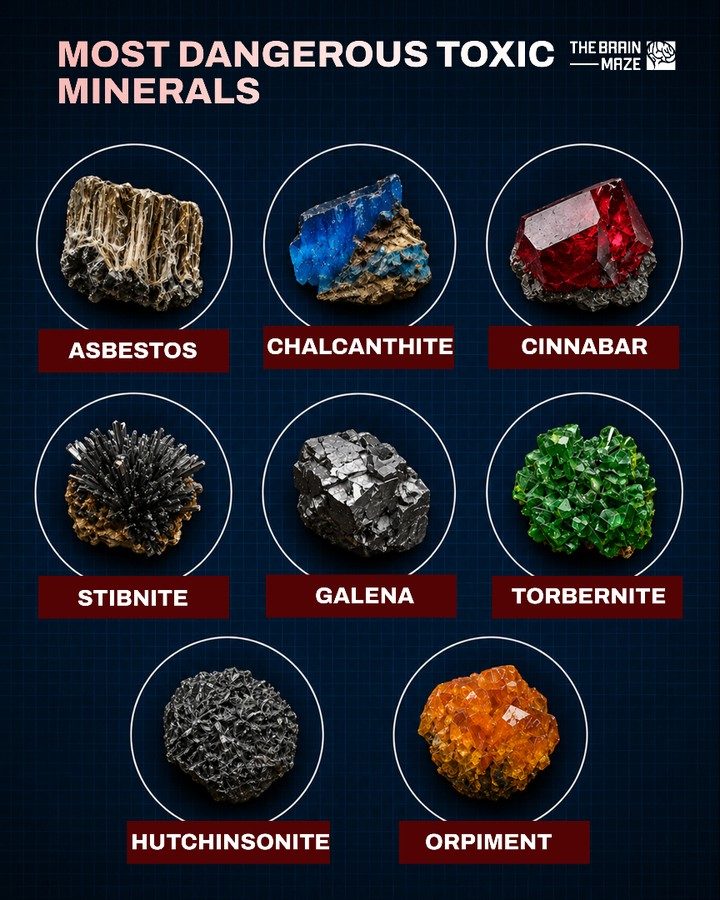
Toxic Minerals
Minerals are often admired for their stunning beauty and geological significance, but some are as dangerous as they are beautiful. Knowing which minerals pose health risks is crucial for anyone handling or encountering them. Here is a look at some of the most hazardous minerals, including asbestos, cinnabar, and galena.
Context: Why this matters
Understanding the dangers of these minerals is essential for anyone who works in mining, geological research, or even casual rockhounding. Exposure to these minerals can lead to severe health issues, including respiratory diseases, poisoning, and radiation exposure. Recognizing these minerals can help prevent accidental exposure and ensure safety in various environments.
Main discussion
Asbestos
Asbestos is a naturally occurring mineral that was once widely used in construction due to its fire-resistant properties and durability. However, it is now well-known for causing serious lung diseases, including asbestosis and mesothelioma. Asbestos fibers, when inhaled, can become lodged in the lungs, leading to inflammation and scarring over time. This mineral's hazardous nature has led to its ban in many countries for most uses.
Chalcanthite
Chalcanthite, also known as blue copper vitriol or blue copper sulfate, is a hydrated copper sulfate mineral. While it is not as widely recognized as other toxic minerals, chalcanthite can cause significant health issues. It is highly soluble in water, which means it can leach into groundwater and contaminate water sources. Exposure to chalcanthite can lead to copper poisoning, resulting in symptoms such as nausea, vomiting, and abdominal pain.
Cinnabar
Cinnabar is a bright red mineral composed primarily of mercury sulfide. It has been prized for centuries for its vibrant color and was often used in pigments and jewelry. However, cinnabar contains toxic mercury, which can be released when the mineral is heated or ground. Exposure to mercury can cause neurological problems, kidney damage, and respiratory issues. Handling cinnabar requires careful precautions to prevent mercury poisoning.
Stibnite
Stibnite, also known as antimony glance, is a mineral that contains antimony sulfide. It is primarily used in the production of antimony metal, which has various industrial applications. Stibnite is considered toxic due to the potential for antimony to cause health issues, including respiratory problems, skin irritation, and gastrointestinal discomfort. Workers in industries that use or produce antimony should take proper safety measures.
Galena
Galena is a lead sulfide mineral and is the primary ore of lead. It has been used for thousands of years in various applications, from cosmetics to ammunition. However, galena is a major source of lead, a highly toxic metal. Lead poisoning can cause severe health problems, including neurological damage, kidney failure, and reproductive issues. Children are particularly vulnerable to the effects of lead, making it crucial to avoid exposure.
Torbernite
Torbernite is a green uranium-containing mineral that is highly radioactive. It is often found in uranium-rich deposits and can pose significant health risks due to its radioactive properties. Exposure to torbernite can lead to radiation sickness, which includes symptoms such as nausea, vomiting, and hair loss. Long-term exposure can increase the risk of cancer and other serious health issues.
Hutchinsonite
Hutchinsonite is a rare mineral that contains arsenic and thallium. It is highly toxic and can cause severe health problems if ingested or inhaled. Symptoms of arsenic poisoning include nausea, vomiting, and diarrhea. Prolonged exposure to arsenic can lead to chronic health issues, including skin lesions, nerve damage, and an increased risk of cancer. Thallium is also highly toxic, causing symptoms such as hair loss, gastrointestinal distress, and neurological problems.
Orpiment
Orpiment is a bright yellow arsenic sulfide mineral that has been used in pigments and jewelry. Like hutchinsonite, orpiment contains poisonous arsenic, making it dangerous to handle. Arsenic poisoning can lead to a range of health issues, from acute symptoms like stomach pain and vomiting to chronic conditions such as skin lesions and cancer. Proper safety measures must be taken when handling orpiment to prevent exposure to arsenic.
Other Toxic Minerals
Other minerals that pose significant health risks include:
- Calaverite: A gold telluride mineral that is toxic due to its tellurium content. Exposure can lead to symptoms such as nausea, vomiting, and respiratory issues.
- Autunite: A uranium-containing mineral used in pigments. It is radioactive and can cause radiation sickness and long-term health issues.
Practical tips
When handling or encountering these minerals, it is essential to take several precautions to ensure safety:
- Wear Protective Gear: Always wear gloves, goggles, and a mask when handling toxic minerals to prevent inhalation, ingestion, or skin contact.
- Work in a Well-Vented Area: Ensure that the workspace is well-ventilated to minimize the risk of inhaling toxic particles.
- Use Proper Storage: Store these minerals in a sealed container to prevent contamination and accidental exposure.
- Wash Hands: Thoroughly wash your hands after handling these minerals to remove any residual toxins.
- Seek Medical Attention: If you experience any symptoms of poisoning or radiation sickness, seek medical attention immediately.
Important takeaways
- Awareness: Be aware of the toxic minerals in your environment and take appropriate precautions.
- Safety Measures: Always use protective gear and follow safety protocols when handling these minerals.
- Health Risks: Recognize the health risks associated with each mineral and seek medical attention if symptoms of poisoning or radiation sickness occur.
- Environmental Impact: Think about the environmental impact of mining and processing these minerals and the importance of responsible disposal.
Conclusion
While the beauty and geological significance of minerals can be fascinating, it is crucial to recognize the potential dangers they pose. Minerals like asbestos, cinnabar, and galena, among others, can cause severe health issues if not handled correctly. By understanding the risks and taking appropriate safety measures, we can appreciate the wonders of nature while ensuring our health and safety.
Watch the Reel
Questions readers ask
What are the most dangerous minerals for miners and geologists to handle?
Some of the most dangerous minerals for miners and geologists include asbestos, which can cause respiratory diseases, and cinnabar, which contains mercury and can lead to mercury poisoning. Galena, another hazardous mineral, can also pose health risks due to its lead content. Other minerals to avoid include those with high levels of radioactivity.
Which minerals should rockhounders avoid to prevent lung disease?
Rockhounders should avoid minerals like asbestos, which can cause severe lung diseases such as asbestosis and lung cancer. Other minerals to avoid include those with high levels of silica, as prolonged exposure can lead to silicosis, a serious respiratory disease.
What are the primary health risks associated with cinnabar?
Cinnabar, a bright red mineral, contains mercury, making it extremely toxic. Inhaling or ingesting cinnabar can lead to mercury poisoning, which affects the nervous system and can cause a range of symptoms, including tremors, emotional changes, and kidney damage. Handling cinnabar requires appropriate safety measures to prevent exposure.
Why is galena considered a dangerous mineral in mining and geological research?
Galena is a lead sulfide mineral that can release lead dust and fumes during mining and handling. Exposure to lead can cause serious health issues, including damage to the brain and nervous system, as well as kidney problems. Workers in mining and geological research should take precautions to avoid inhalation or ingestion of galena particles.
What precautions should be taken when handling minerals containing mercury?
Handling minerals containing mercury, such as cinnabar, requires careful precautions to prevent inhalation, ingestion, or skin contact. Use appropriate personal protective equipment, such as gloves, safety glasses, and respirators, and work in a well-ventilated area. Always wash hands thoroughly after handling and dispose of waste materials responsibly.
Are there any minerals that pose radiation risks?
Yes, some minerals, such as autunite and carnotite, contain uranium and other radioactive elements, posing a significant radiation risk. These minerals can emit harmful levels of radiation, which can cause various health issues, including cancer. Handling these minerals requires specialized knowledge and equipment to ensure safety.
Recent articles
Fresh deep dives from the latest Reels we unpacked.




Comments
Be the first to comment.