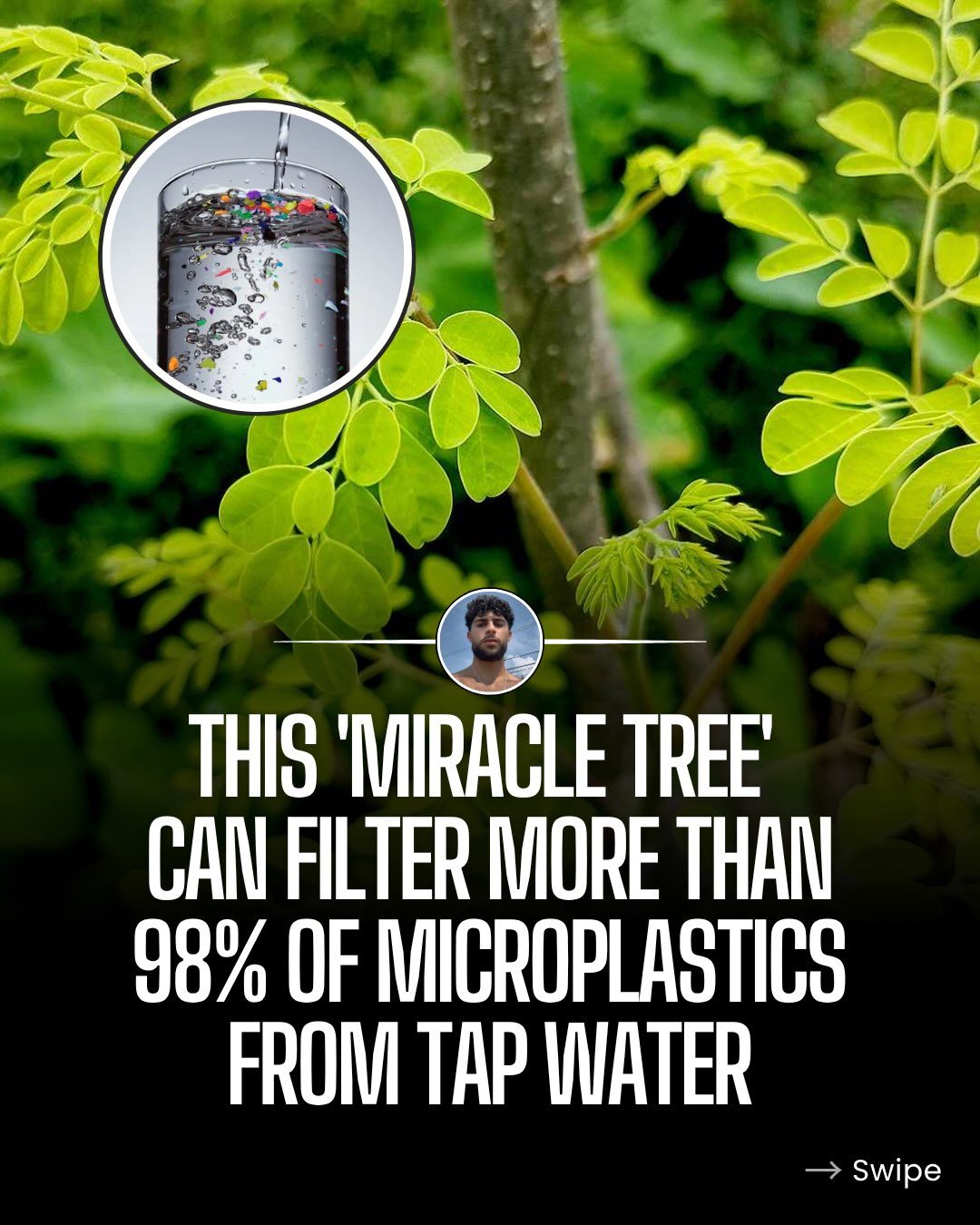
Moringa Oleifera: The Miracle Tree for Filtering Microplastics
Moringa oleifera, often called the "miracle tree," has garnered significant attention for its numerous health benefits. However, recent discoveries have revealed another remarkable use for this extraordinary plant: its seeds can effectively filter microplastics from tap water. This natural solution offers a promising approach to combating the growing problem of plastic pollution in our water supplies.
Why This Matters
Microplastics, tiny plastic particles less than five millimeters in size, are increasingly found in water sources worldwide. They originate from various sources, including the breakdown of larger plastic items, microbeads in personal care products, and synthetic fibers from clothing. These minuscule particles pose significant environmental and health risks, as they can be ingested by aquatic life and eventually make their way into the human food chain. Finding effective and sustainable ways to remove microplastics from water is crucial for safeguarding both environmental and human health.
The Science Behind Moringa Oleifera's Filtering Abilities
Moringa oleifera seeds contain positively charged proteins that bind with negatively charged microplastic particles in water. This binding process forces the tiny plastic pieces to clump together, forming larger particles that can be easily filtered out using standard water filtration systems. Lab tests have confirmed the effectiveness of this natural filtration method, demonstrating that Moringa oleifera seed powder can remove over 98% of microplastics from water.
The Binding Process
The positively charged proteins in Moringa oleifera seeds play a pivotal role in the filtration process. When these proteins come into contact with the negatively charged microplastic particles, they adhere to each other, effectively clumping the plastic pieces together. This clumping action is critical because it transforms the microscopic particles into larger, more manageable sizes that can be easily trapped by standard water filters.
Laboratory Confirmation
Researchers have conducted extensive lab tests to validate the effectiveness of Moringa oleifera seeds in filtering microplastics. These studies have consistently shown that the seed powder can remove over 98% of microplastic particles from water. The results are compelling, as they demonstrate the potential of this natural solution to address the growing problem of plastic pollution in water supplies.
Practical Applications
The practical applications of using Moringa oleifera seeds for filtering microplastics are numerous. This natural method can be integrated into existing water treatment systems, providing an additional layer of protection against microplastic contamination. It can also be used in household water filtration systems, allowing individuals to purify their tap water more effectively.
Practical Tips for Using Moringa Oleifera Seeds
If you're interested in using Moringa oleifera seeds to filter microplastics from your water, here are some practical tips to help you get started:
Sourcing the Seeds
First, you need to obtain high-quality Moringa oleifera seeds. Look for seeds from reputable sources to ensure their effectiveness. You can find these seeds in health food stores, online marketplaces, or directly from suppliers who specialize in Moringa products.
Preparing the Seeds
Once you have the seeds, you'll need to prepare them for use. Grind the seeds into a fine powder using a grinder or mortar and pestle. The finer the powder, the more effective it will be at clumping the microplastic particles together.
Using the Seed Powder
To use the seed powder, simply add it to your water and stir gently. Allow the mixture to sit for a few minutes to give the proteins time to bind with the microplastic particles. After the binding process is complete, you can filter the water through a standard water filter to remove the clumped plastic particles.
Additional Tips
For best results, use the seed powder in conjunction with other filtration methods to ensure comprehensive water purification. Regularly clean and maintain your filters to ensure they remain effective at trapping the clumped plastic particles.
Important Takeaways
Moringa oleifera seeds offer a natural and effective solution for filtering microplastics from tap water. The positively charged proteins in the seeds bind with negatively charged microplastic particles, forcing them to clump together and making them easier to filter out. Lab tests have confirmed the effectiveness of this method, demonstrating that Moringa oleifera seed powder can remove over 98% of microplastics from water.
Conclusion
In an era where plastic pollution is a pressing environmental concern, exploring natural solutions like Moringa oleifera seeds provides a sustainable and effective approach to water purification. By harnessing the power of this "miracle tree," we can take significant strides toward reducing the presence of microplastics in our water supplies, ensuring a cleaner and healthier future for all.
Watch the Reel
Questions readers ask
How do Moringa oleifera seeds remove microplastics from water?
Moringa oleifera seeds contain positively charged proteins that attract and bind to the negatively charged microplastics, effectively removing them from water. This process is a natural and chemical-free way to filter these tiny particles.
What size of microplastics can Moringa oleifera seeds filter?
Moringa oleifera seeds can filter microplastics that are less than five millimeters in size, which is the typical size of microplastics found in water sources. These tiny particles often come from the breakdown of larger plastic items and other sources.
Can Moringa oleifera seeds filter microplastics from tap water?
Yes, Moringa oleifera seeds can effectively filter microplastics from tap water. This makes it a viable solution for treating water supplies in households and communities, addressing the issue of microplastic contamination directly at the source.
Is the process of using Moringa oleifera seeds for water treatment sustainable?
Using Moringa oleifera seeds for water treatment is a sustainable process. The seeds are a renewable resource, and the process of removing microplastics does not require additional chemicals, which makes it an eco-friendly solution for water treatment.
What are the additional benefits of using Moringa oleifera for water treatment?
Beyond filtering microplastics, Moringa oleifera has other benefits. The seeds can also help remove other impurities, such as bacteria and heavy metals, from water. Additionally, the process can improve the overall quality and taste of the water.
How does the microbial filtration process using Moringa oleifera seeds work?
The microbial filtration process using Moringa oleifera seeds involves a simple method where the seeds are crushed and added to water. As the seeds bind to the microplastics, the water is strained, leaving behind the microplastic-contaminated seeds and providing clean water.
Can Moringa oleifera seeds be reused for filtering microplastics?
Currently, the typical process involves using the seeds once and then disposing of them, as the seeds become contaminated with microplastics. However, research is ongoing to determine if the seeds can be effectively cleaned and reused for further filtration.
Related deep dives
Similar reads based on topic and creator.



Recent articles
Fresh deep dives from the latest Reels we unpacked.




Comments
Be the first to comment.