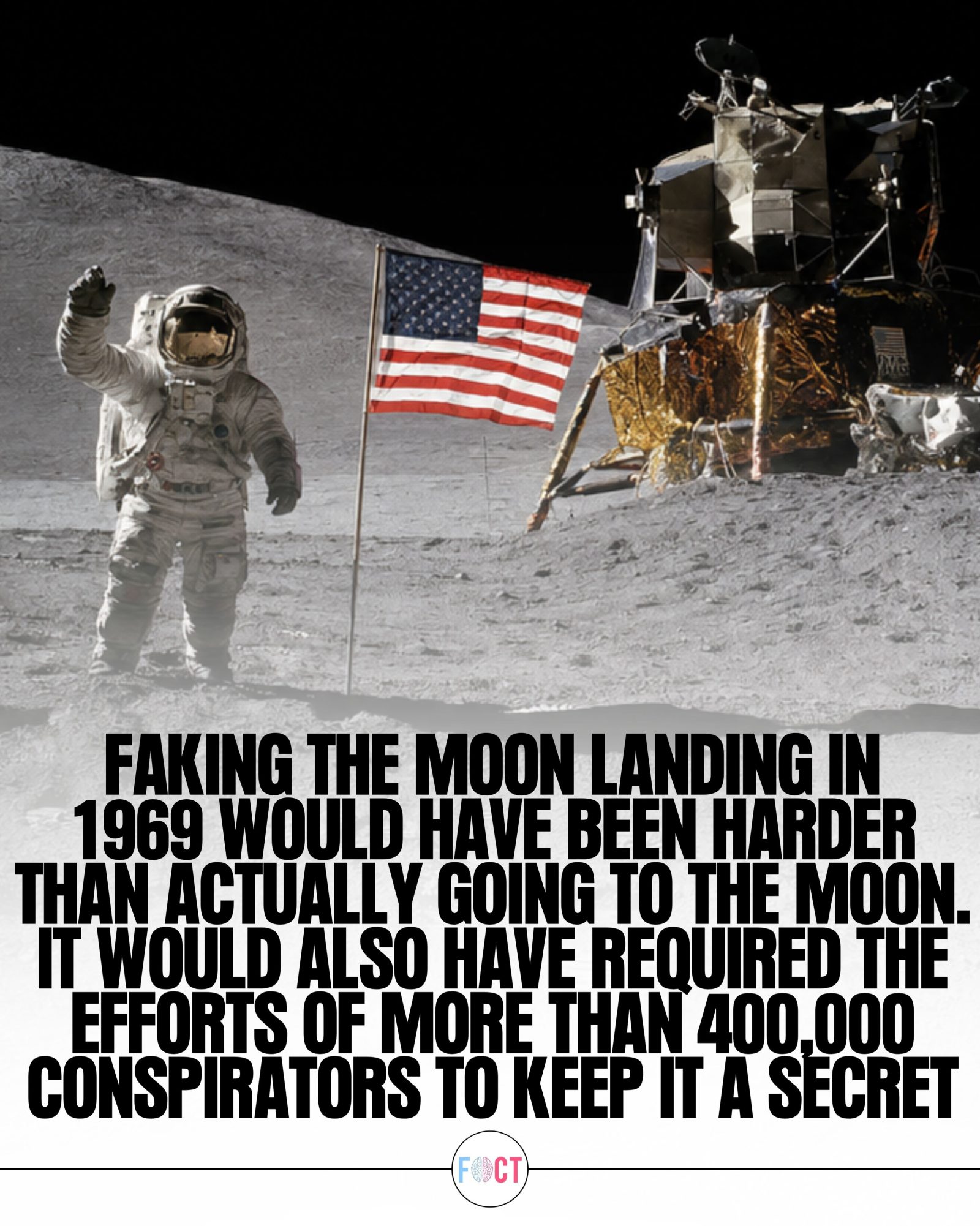
Moon Landing Conspiracy
The moon landing conspiracy is one of the most enduring and debated topics in modern history. This theory suggests that the 1969 Apollo 11 mission was a hoax, staged by NASA. However, numerous experts and evidence point to the immense challenges and impracticalities of such a deception.
Why This Matters
The Apollo 11 mission was a monumental achievement for humanity, marking the first time humans set foot on another celestial body. The conspiracy surrounding this event raises questions about trust in scientific institutions, the veracity of historical events, and the nature of evidence. Understanding the arguments for and against the moon landing conspiracy can offer valuable insights into the intricacies of historical verification and the role of skepticism in scientific inquiry.
Main Discussion
Historical Context
The Apollo program was a massive undertaking, involving around 400,000 engineers, scientists, technicians, contractors, and support staff. These individuals worked across thousands of facilities throughout the United States. The sheer scale of the operation is one of the strongest arguments against the moon landing being a hoax. Coordinating such a vast number of people to maintain a secret of this magnitude for decades without any credible evidence emerging is implausible.
Independent Evidence
Beyond the human challenge, the missions produced a plethora of independent evidence. This includes telemetry data, Moon rocks, photographs, and tracking records. These pieces of evidence were observed by scientists and observatories around the world, including those in countries that were geopolitical rivals of the United States. Independent verification from various sources adds layers of credibility to the authenticity of the moon landings.
The Scale of the Operation
The idea that faking a moon landing would have been more difficult than actually going to the moon is supported by the logistics of the mission. The Apollo program required meticulous planning, precise engineering, and cutting-edge technology. Faking such an event would have involved replicating these aspects with flawless precision, a task that would be nearly impossible to achieve without detection.
Public and Geopolitical Pressure
The public and geopolitical pressure during the Cold War era also played a significant role in the authenticity of the moon landing. The United States and the Soviet Union were engaged in a fierce space race, and the successful moon landing was a major victory for the U.S. The political and social stakes were incredibly high, making it unlikely that NASA would risk such a monumental deception. The scrutiny from both domestic and international observers further complicates the possibility of a hoax.
Independent Verification
One of the key pieces of evidence that supports the authenticity of the moon landing is the Lunar Reconnaissance Orbiter (LRO). Launched in 2009, the LRO has taken high-resolution images of the Apollo landing sites. These images show the landing modules, rovers, and footpaths left by the astronauts, providing visual proof of the missions.
Geopolitical Implications
The geopolitical rivalry between the United States and the Soviet Union during the Cold War added another layer of complexity to the moon landing. Any attempt to fake the moon landing would have been scrutinized by the Soviet Union, which had its own space program and advanced surveillance capabilities. The lack of credible evidence from the Soviets to support the conspiracy theory further undermines the argument that the landings were staged.
Practical Tips
While it's important to approach historical events with a critical eye, it's equally important to base conclusions on tangible evidence. Here are some practical tips for evaluating conspiracy theories:
Evaluate Evidence
When examining a conspiracy theory, carefully evaluate the evidence presented. Look for independent verification from multiple sources. Evidence that comes from a single, biased, or untrusted source should be approached with caution.
Consider the Logistics
Consider the logistical challenges involved in the theories. The feasibility of maintaining a large-scale deception across decades and involving thousands of people should be examined. If the logistics of the proposed deception are highly implausible, the theory may be flawed.
Seek Expert Opinions
Consult experts in the relevant fields. Their insights can provide valuable context and help separate fact from fiction. Experts can also offer perspectives on the credibility of the evidence and the plausibility of the conspiracy.
Look for Bias
Be mindful of potential biases in the sources of information. Some sources may have an agenda or bias that influences their presentation of the evidence. Look for multiple, independent sources to corroborate the claims.
Understand the Motivation
Consider the motivations behind a conspiracy theory. What would be the driving force behind a deception of such magnitude? Understanding the motivation can help assess the credibility of the theory.
Important Takeaways
A Complex Operation
The Apollo program was an incredibly complex operation that involved hundreds of thousands of people. The logistical challenges of faking such an event make it highly implausible.
Independent Evidence
The missions produced vast amounts of independent evidence, including telemetry data, Moon rocks, and photographs, observed by scientists and observatories around the world.
The Cold War Context
The geopolitical context of the Cold War adds another layer of scrutiny to the moon landing. The intense rivalry between the United States and the Soviet Union made it unlikely that a hoax could have been maintained without detection.
Public Scrutiny
The public and geopolitical pressure during the Cold War era also played a significant role. The high stakes involved made it unlikely that NASA would risk such a monumental deception.
The Role of Independent Verification
Independent verification, such as the images from the Lunar Reconnaissance Orbiter, provides visual proof of the missions, further undermining the conspiracy theory.
Conclusion
The moon landing conspiracy theory, while intriguing, is undermined by the immense logistical, scientific, and geopolitical challenges involved in faking such an event. The Apollo program's sheer scale, the extensive independent evidence, and the geopolitical context of the Cold War make it highly implausible that the moon landings were a hoax. By carefully evaluating the evidence and considering the practical challenges, one can gain a clearer understanding of the authenticity of the moon landings and the complexities of historical verification.
Watch the Reel
Questions readers ask
How many people were involved in the Apollo 11 mission, making a hoax highly implausible?
The Apollo 11 mission involved approximately 400,000 people, including scientists, engineers, and support staff. The sheer number of individuals involved makes the idea of a coordinated hoax incredibly difficult to sustain. Keeping such a large group silent and deceived would be nearly impossible.
What kind of evidence supports the authenticity of the 1969 moon landing?
There is a vast amount of evidence supporting the authenticity of the 1969 moon landing. This includes physical samples of moon rock, reflective panels left on the moon's surface, and data from seismic experiments. Additionally, the moon landing was observed and tracked by independent sources worldwide, such as tracking stations and amateur astronomers.
Why is the scale of the Apollo mission a strong argument against the moon landing hoax?
The scale of the Apollo mission is a strong argument against the moon landing hoax because it involved not only NASA but also numerous international partners and independent observers. The mission's complexity and the widespread involvement of global scientific communities make it highly unlikely that such a vast operation could be faked without detection.
How did independent sources contribute to verifying the moon landing events?
Independent sources around the world contributed to verifying the moon landing events by tracking the mission in real-time. For example, tracking stations in various countries monitored the Apollo 11 spacecraft's journey to the moon and back. Additionally, amateur astronomers observed the lunar module's descent and ascent, providing further independent verification.
What specific details of the Apollo 11 mission make it impossible to fake?
The specific details of the Apollo 11 mission that make it impossible to fake include the precise calculations required for lunar orbit, the moon's low gravity, and the harsh lunar environment. The mission also involved complex technological feats, such as the Lunar Module's descent and ascent, which would be impossible to replicate in a studio setting, especially with the technology available in 1969.
How did the Apollo 11 mission's global scrutiny help debunk the moon landing conspiracy?
The Apollo 11 mission's global scrutiny helped debunk the moon landing conspiracy by ensuring that every aspect of the mission was subject to intense public and scientific examination. The involvement of international tracking stations, independent observers, and the extensive media coverage made it virtually impossible to conceal any evidence of a hoax.
What are the key reasons why the moon landing hoax is considered implausible?
The moon landing hoax is considered implausible due to the overwhelming amount of evidence supporting the actual event, the vast number of individuals involved, and the global scrutiny the mission received. The complexity of the mission, the technological achievements, and the independent verification from around the world all point to the authenticity of the 1969 moon landing.
Related deep dives
Similar reads based on topic and creator.



Recent articles
Fresh deep dives from the latest Reels we unpacked.




Comments
Be the first to comment.