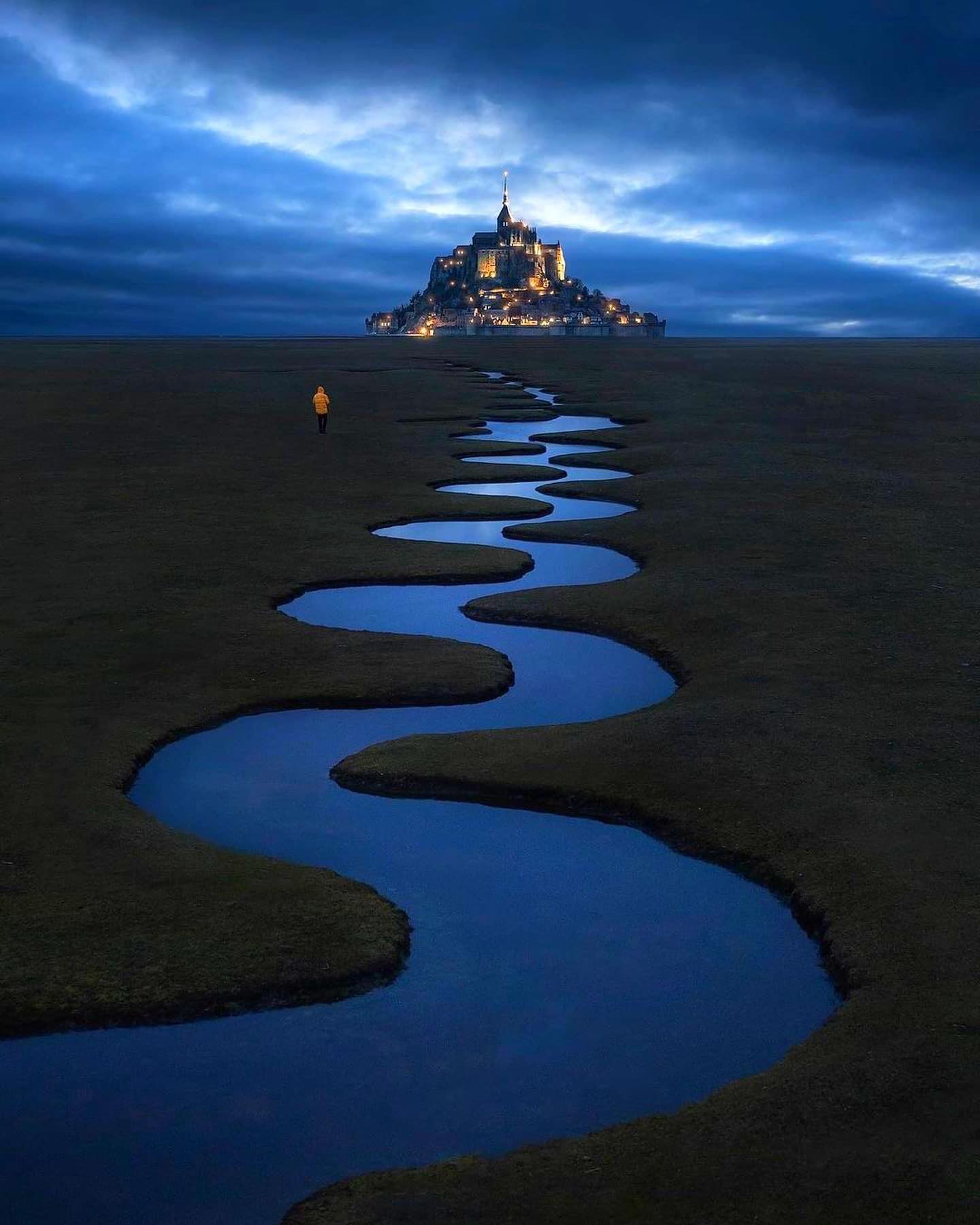
It is home to history, epic vistas, and ever-shifting landscapes. Mont Saint-Michel lies on a tidal island, where France’s sea meets the Normandy countryside — and its beauty is not just a marvel for visitors, but a challenge for photographers. Photographer Sebastien Nay captures more than vistas and monuments, he showcase this magical destination. Here, a tide schedule is as crucial as a camera.
A tidal island unlike any other
Mont Saint-Michel, France, is an island commune in Normandy. It is most famous for its abbey, a medieval structure perched atop a rock, encircled by dramatic walls. But unlike other islands, Mont Saint-Michel is tidal. That means its land connection to mainland France regularly disappears during high tide, leaving it surrounded by sea — a unique phenomenon that makes the island a challenge for both visitors and photographers. This island is part of the reason that Mont Saint-Michel has a unique aesthetic. Its physical appearance changes with the tides. Its main appeal comes from the juxtaposition of the abbey’s stately stone, the rugged sea cliffs and the constant movement of water. The offshore causeway crossing the muddy coastal flats to Mont Saint-Michel creates a unique challenge for visitors and photographers. The causeway is only passable at low tide, posing an extra challenge of timing when and how long to stay on the island. Photographers seek out Mont Saint-Michel for its unique conditions, but these conditions present a variety of challenges — and opportunities. The highest tides can catch unsuspecting visitors off guard, leaving them stranded against the harsh architectural backdrop.
The intersection of beauty and peril
Landscape photography at Mont Saint-Michel requires more than just an appreciation for natural and man-made beauty. Technical considerations, namely weather and tides, play crucial roles in how and when you experience the island. Representing those two elements together is all part of the allure. During the highest tides, low-lying areas are submerged. But to frame this unique destination well, you should be aware of tides. The tides are the first major factor. Official tide schedules mean everything at Mont Saint-Michel. Officious tide schedules will make or break your visit, depending on when you arrive and how long you plan to stay. High tides can render the causeway dangerous, or even impassable; these tides can force those stranded to wait at the hostels of the abbey. In addition to a tide schedule, weather conditions are important. Weather conditions interact with the tide. The most dramatic photos emerge from storms, which can greatly enhance the area’s atmosphere. But they make timing even more crucial.
Under the abbey’s own shadow
Mont Saint-Michel’s religious architecture is as unique as its geography. The abbey’s austere stone construction complements the rugged, natural terrain of surrounding areas. The structure features tall, slender towers and a grand chapel, although photographer Sebastien Nay focuses less on the abbey’s interior and more on its iconic exterior in relation to the unique setting. The semblance of the abbey towers aglow at dusk with the last remaining members of the day’s travelers brings an awe-inspiring look to the character of the abbey. Combined with cloudy skies or storm clouds, the abbey emerges as a greater-than-life structure.
The towering heights
The architecture of Mont Saint-Michel’s abbey boasts medieval craftsmanship. Its location within the Gallo-Roman walls, leads viewers wondering about the building process during placements of the abbey. The abbey’s cobbled ground plan is essential for understanding the structure of the city. The buildings are composed of organic, natural stone — a rugged exterior meant to withstand the ocean’s weathering. Inside, the abbey’s layout features austere stone construction. Balancing medieval architecture with rugged nature makes both elements easier to focus on. The abbey’s main alley provides a view of its towers. Because of the cloud cover at Mont Saint-Michel, the shades of the buildings often blend with the sky. The abbey’s architecture not only complements the surroundings but also benefits them.
The view from the top
The abbey’s vantage point provides a contrasting view of Mont Saint-Michel. The abbey’s ground plan is essential for understanding the city; while views from the ground show the entire structure. Consider the tactile nature of the abbey. The abbey functions as a sanctuary and a fortress, with a formidable perimeter. The abbey’s inner structure features interactive and immersive exhibits. A vantage provides an interesting balance of the abbey and surrounding area; it is essential for understanding the city.
Mont Saint-Michel Close Up
Alternate perspective
Visitors often want to maximize the scope of their visit, but getting up close to Mont Saint-Michel's abbey reveals details that scale doesn't. The 9th-century abbey is an extant part of the World Heritage Site, so its upkeep is meticulous. That’s evident from the mosaics, ornate statues, stained glass, and towering stone walls. The abbey’s architecture is another focus of interest. The abbey shows intricate details up close and how it changed over the centuries. One must keep in mind that the island has changed size and shape over the years, but the architecture stays the same, creating a beautiful contrast.
Muddy shores
There are several parts of the abbey, including a hilltop exposed during low tide. This hilltop reveals the mudflats and tidal pools. Because of these tides, Mont Saint-Michel is nearly an island at night. Sebastien Nay also frames Mont Saint-Michel’s landscape with its ever-shifting terrain. Its landscape includes a mix of earth and sea, which reflects the seasonal changes. The muddy terrain surrounding Mont Saint-Michel reveals itself during the hours of low tide. The highest tides produce a stunning terrain, particularly when the sun reflects off the pools’ surfaces. A muddy terrain also reflects how the tides are an introduction to the area's unique characteristics. Visitors will not only take in the island’s unique infrastructure, but also the changing terrain.
Get there early, stay safe
Mont Saint-Michel is a landscape photographer’s dream. Here are practical tips for experiencing the area, the abbey, and the surrounding tidal area.
- Timing the tides: Check out Mont Saint-Michel’s official tourism website for the tide schedule and a list of tide-related events. Leave enough time to reach the island, and allow ample time to return from it.
- Weather conditions: Schedule the trip based on possible weather conditions. Nights with high tides make the island a sanctuary from the rest of the world, while stormy weather clouds can provide the perfect frame.
- Camera types: Using a wide-angle lens is recommended for capturing the abbey and surrounding landscape. Capture the abbey’s architecture in the context of its natural surroundings. With Mont Saint-Michel, a camera is necessary for getting the most accurate representation of the island.
- Venturing out: The mud can be challenging to navigate, and straying too far is not advised. Be cautious when the area is under water, as the water level can change at any time. The mud can also be very difficult to navigate. For most travelers, Mont Saint-Michel's precise region in the France is just one of several unique destinations it has to offer. Looking closely at the abbey and the muddy shores of the tidal island reveals not only a unique destination but the history of Normandy, France.
Watch the Reel
Questions readers ask
What makes Mont Saint-Michel a unique challenge for photographers?
Mont Saint-Michel's tidal nature means that its access is dependent on the tide. As a tidal island, its causeway becomes impassable during high tide, and photographers must time their visits accordingly. This dynamic landscape also presents unique opportunities for capturing dramatic scenes, but it requires careful planning and awareness of tide schedules.
How do tides affect photography at Mont Saint-Michel?
The tides at Mont Saint-Michel significantly influence when and how you can photograph the island. High tides can submerge low-lying areas and make the causeway impassable, potentially stranding visitors. Photographers need to plan their visits around tide schedules to ensure they can capture the best shots safely. Additionally, the interaction between weather and tides can create dramatic conditions, enhancing the island’s atmospheric appeal.
What are some practical tips for photographing Mont Saint-Michel?
Photographers should start by checking the tide schedules to ensure they can safely access and exit the island. Arriving early or staying late can offer unique lighting conditions, especially during dusk when the abbey’s towers are illuminated. Additionally, being prepared for changing weather conditions can enhance the dramatic feel of the photos, so packing appropriate gear is essential.
Can I visit Mont Saint-Michel without worrying about the tides?
It is not advisable to visit Mont Saint-Michel without considering the tides. The island's causeway is only passable at low tide, and high tides can leave visitors stranded. Checking the tide schedules and planning your visit accordingly is crucial to ensure a safe and enjoyable experience.
What makes the abbey at Mont Saint-Michel unique for photography?
The abbey's austere stone construction and its iconic towers create a striking contrast with the rugged, natural terrain of the surrounding areas. Photographers like Sebastien Nay often focus on the abbey’s exterior, capturing its relationship with the ever-changing landscape and dramatic sea views.
Is it safe to photograph Mont Saint-Michel during a storm?
Photographing Mont Saint-Michel during a storm can yield dramatic and atmospheric results, but it also poses significant safety risks. The combination of high tides and storms can make the causeway impassable and increase the chance of being stranded. If you plan to photograph during a storm, make sure you have a solid understanding of the tide schedules and weather forecasts to avoid any dangerous situations.
Related deep dives
Similar reads based on topic and creator.
Recent articles
Fresh deep dives from the latest Reels we unpacked.

Comments
Be the first to comment.