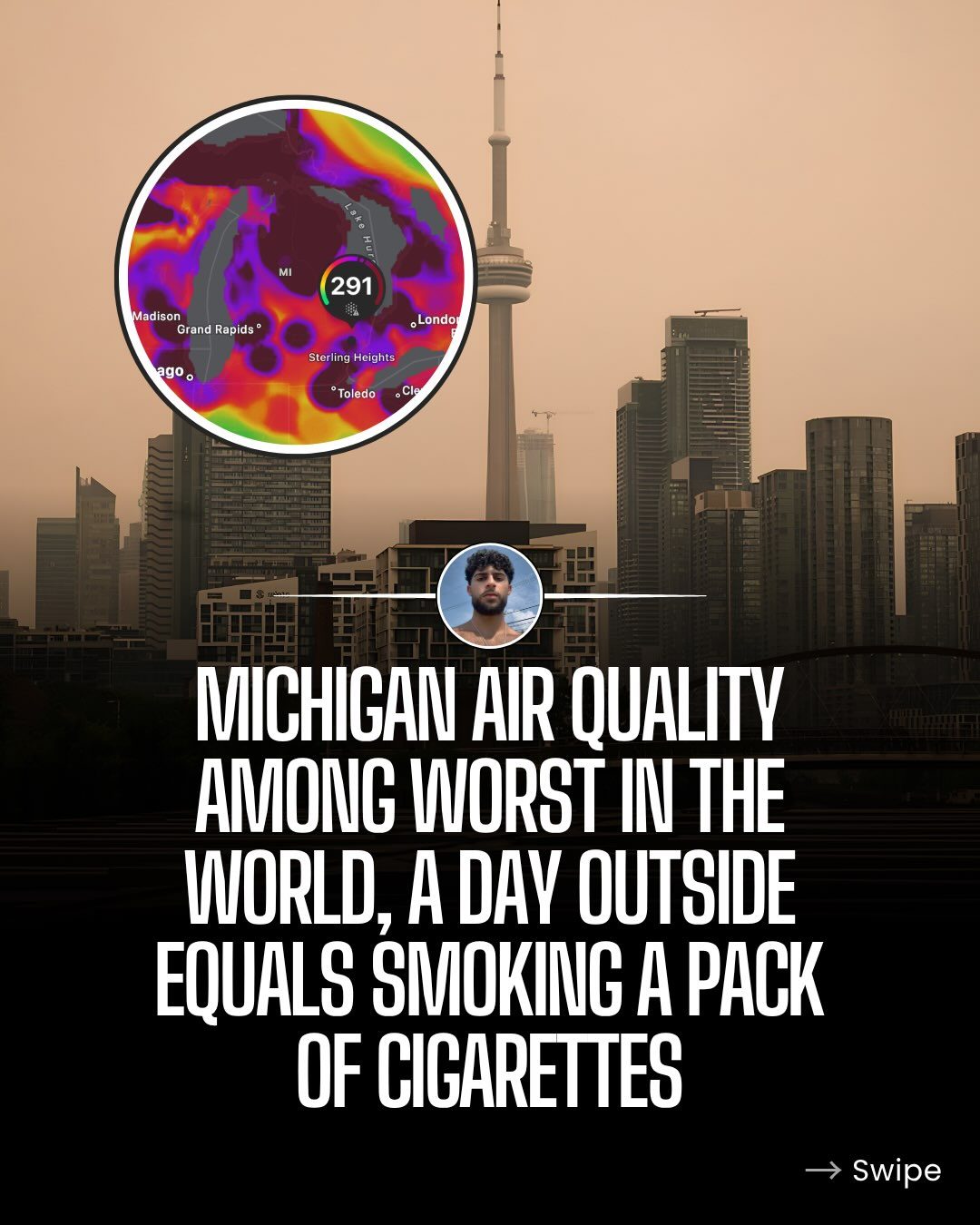
Michigan's Air Quality Crisis: Canadian Wildfires and Beyond
Michigan is currently facing one of the worst air quality crises in recent times. The state is shrouded in a thick haze of smoke from massive Canadian wildfires, pushing the Air Quality Index (AQI) past 500 in many areas. This hazardous air is equivalent to smoking a pack of cigarettes a day, posing significant health risks to residents.
Why This Matters
Air quality is a critical factor in public health. Prolonged exposure to hazardous air can lead to various respiratory issues, cardiovascular problems, and even premature death. The current situation in Michigan underscores the urgency of addressing environmental concerns and the need for effective air quality management strategies.
The Impact of Canadian Wildfires
The Current Crisis
The air quality across much of Michigan has reached hazardous levels. The smoke from Canadian wildfires has blanketed the state, making it difficult for residents to breathe. The AQI, which measures the level of pollutants in the air, has spiked past 500, a level considered extremely dangerous. For context, an AQI of 301-500 is deemed "hazardous," and anything above 500 is off the charts.
Health Implications
Breathing this contaminated air for extended periods is equivalent to smoking a pack of cigarettes a day. This comparison highlights the serious health risks posed by the current air quality crisis. Residents are advised to stay indoors, keep windows closed, and run HEPA air purifiers to mitigate the effects of the hazardous air.
Statewide Alert
A statewide alert has been issued, warning residents to take precautions. The alert is in effect through Friday, and residents are urged to monitor local air quality updates and follow safety guidelines to protect their health.
Beyond Wildfires: Other Environmental Concerns
While the immediate crisis is due to the wildfires, Michigan is also grappling with other environmental issues. These concerns highlight the broader challenges the state faces in maintaining a healthy environment.
Data Centers and Energy Consumption
The construction of new data centers in the state raises concerns about energy consumption and its environmental impact. Data centers require significant amounts of energy to operate, contributing to carbon emissions and exacerbating air pollution. As the demand for digital services grows, so does the need for sustainable solutions to power these infrastructures.
Food Safety and Contamination
The issue of food poisoning is another critical concern. Contaminated food can lead to severe health problems, including gastrointestinal illnesses and systemic infections. Ensuring food safety involves vigilant monitoring and strict regulatory measures, which are essential for public health.
Microplastics in Water
Microplastics, tiny plastic particles found in water sources, pose a growing threat to environmental and human health. These particles can enter the food chain, contaminating fish and other marine life, and ultimately affecting human consumers. Addressing microplastic pollution requires comprehensive waste management and pollution control strategies.
Pesticide Use and Environmental Impact
Pesticides, while essential for agricultural productivity, can have harmful effects on the environment and human health. Pesticides can contaminate soil, water, and air, leading to a variety of health issues, including cancer, neurological disorders, and developmental problems. Balancing agricultural needs with environmental safety is a critical challenge.
Long-Term Solutions
Addressing these environmental issues requires a multi-faceted approach. This includes investing in renewable energy sources, implementing stricter regulations on data center operations, improving food safety measures, and reducing microplastic and pesticide use. Public awareness and community involvement are also crucial in driving these changes.
Practical Tips for Residents
During the air quality crisis, residents can take several practical steps to protect their health:
- Stay Indoors: Limit your exposure to outdoor air as much as possible.
- Keep Windows and Doors Closed: Ensure that your living space is well-sealed to prevent the entry of contaminated air.
- Run HEPA Air Purifiers: These devices can filter out harmful pollutants and improve indoor air quality.
- Wear a Mask: If you must go outside, wear a mask designed to filter out fine particles.
- Monitor Local Updates: Stay informed about the latest air quality reports and health advisories.
Important Takeaways
- Health Risks: Prolonged exposure to hazardous air can lead to serious health problems, including respiratory and cardiovascular issues.
- Environmental Concerns: Beyond the current crisis, Michigan faces a range of environmental challenges, including air and water pollution, food safety, and sustainable energy use.
- Public Health Measures: Residents and local authorities must take proactive steps to mitigate the risks associated with poor air quality, ensuring a healthy environment and public safety.
Conclusion
Michigan's current air quality crisis underscores the urgent need for effective environmental management. Addressing the immediate threat from Canadian wildfires and the broader issues of data center energy use, food safety, microplastics, and pesticides requires a comprehensive and holistic approach. By taking proactive measures and staying informed, residents and authorities can work together to protect public health and the environment.
Watch the Reel
Questions readers ask
What causes the severe air pollution in Michigan right now?
The severe air pollution in Michigan is primarily caused by smoke from massive wildfires burning in Canada. The smoke has traveled across the border, blanketing many parts of Michigan in a thick haze and leading to extremely high levels of air pollution.
How does wildfire smoke affect the Air Quality Index (AQI) in Michigan?
Wildfire smoke significantly increases the AQI in Michigan. In many areas, the AQI has surpassed 500, which is considered hazardous. This level of air pollution poses serious health risks to residents, similar to the effects of smoking a pack of cigarettes per day.
What are the immediate health risks associated with exposure to wildfire smoke in Michigan?
Exposure to wildfire smoke can lead to various respiratory issues, such as coughing, wheezing, and shortness of breath. It can also exacerbate conditions like asthma and bronchitis and increase the risk of cardiovascular problems. Prolonged exposure can be particularly dangerous for vulnerable populations, including children, the elderly, and those with pre-existing health conditions.
How can residents of Michigan protect themselves from the harmful effects of wildfire smoke?
Residents should stay indoors as much as possible and keep windows and doors closed. Using air purifiers and filters can help remove smoke particles from indoor air. It is also advisable to avoid outdoor activities, especially during peak pollution hours, and to wear N95 masks when venturing outside.
What is the air quality index and how is it measured?
The Air Quality Index (AQI) is a measure of how clean or polluted the air is, and what associated health effects might be of concern. It is calculated based on the concentration of five major air pollutants regulated by the Clean Air Act: ground-level ozone, particulate matter, carbon monoxide, sulfur dioxide, and nitrogen dioxide. The AQI ranges from 0 to 500, with higher values indicating greater levels of pollution and associated health risks.
What is the long-term impact of such air pollution events on Michigan's environment and health systems?
Long-term impacts of frequent air pollution events can include increased strain on healthcare systems due to a rise in respiratory and cardiovascular cases. Environmental impacts may include damage to ecosystems, reduced visibility, and potential long-term effects on climate and weather patterns. Effective air quality management and environmental policies are crucial to mitigate these impacts.
Where can I find the most current air quality alerts and advisories for Michigan?
The most current air quality alerts and advisories for Michigan can be found on the Michigan Department of Environment, Great Lakes, and Energy (EGLE) website, as well as on local news channels and weather websites. These sources provide real-time updates on AQI levels, health advisories, and recommendations for protecting yourself during air pollution events.
Related deep dives
Similar reads based on topic and creator.



Recent articles
Fresh deep dives from the latest Reels we unpacked.




Comments
Be the first to comment.