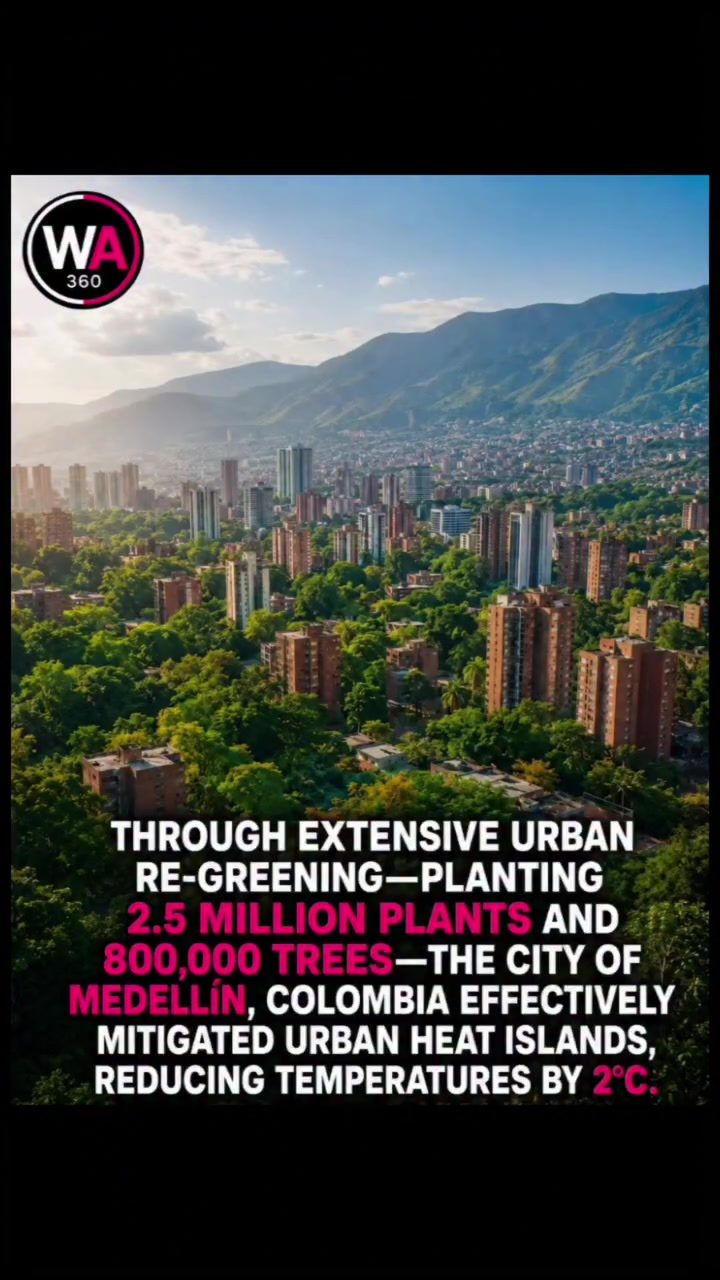
Urban Greening in Medellín
Medellín's initiative of planting 2.5 million plants and 800,000 trees is a world-class example of urban greening. But why does it matter? This transformation is an effective urban heat island mitigation strategy. Understand the Green Corridors project and how Medellín has improved local conditions.
Why this matters
The urban heat island effect is a reality of urban life. Extensive urbanization leads to higher temperatures in cities. Air pollution and lack of vegetation are major contributors. Medellín's case demonstrates how investing in green spaces can significantly reduce local temperatures, improving air quality and fostering urban biodiversity.
Nature-based solutions and urban climate challenges
The Green Corridors project
Medellín's initiative primarily revolves around the Green Corridors project. This project focuses on planting trees and plants in major roads and urban spaces. This changes the landscape from a concrete jungle to an urban paradise.
Impact on temperature and air quality
The Green Corridors project didn't just beautify Medellín. By planting 2,500,000 plants and 800,000 trees, Medellín effectively mitigated the urban heat island effect. Local temperatures have dropped by 2°C. This is a massive reduction, significantly improving air quality and enhancing urban biodiversity.
Key environmental benefits
Mitigating the urban heat island effect
The urban heat island effect is when a city experiences much higher temperatures than its rural surroundings. This happens because urban areas have more heat-absorbing surfaces and less vegetation. Medellín's initiative has significantly mitigated this effect. By planting trees and plants, Medellín has reduced local temperatures by 2°C.
Improving air quality
One of the direct benefits of Medellín's initiative is improved air quality. Trees and plants absorb pollutants, carbon dioxide, and other harmful gases. This makes Medellín's air cleaner and healthier.
Enhancing urban biodiversity
Medellín's extensive urban greening has also led to a significant increase in urban biodiversity. Trees and plants create habitats for various wildlife. This includes birds, insects, and small mammals. By fostering urban biodiversity, Medellín has created a greener, more vibrant city.
Practical tips for other cities
Urban greening initiatives
Medellín's case shows how nature-based solutions can transform our urban landscapes. Other cities can replicate this success by implementing similar initiatives. This involves planting trees and plants in urban spaces and along major roads.
Taking it to the next level
To take urban greening to the next level, cities should aim to go beyond conventional landscaping. This means integrating green spaces into building designs, using green roofs, and implementing vertical gardens.
Important takeaways
-
Medellín's initiative of planting 2,500,000 plants and 800,000 trees is an excellent example of urban greening.
-
Trees and plants absorb pollutants and carbon dioxide, improving air quality.
-
Medellín's initiative has enhanced urban biodiversity, making the city a greener, more vibrant place.
Conclusion
Medellín's transformation serves as a powerful case study in urban greening. The city's innovative approach to tackling the urban heat island effect and improving air quality is a model for other cities to follow. By implementing similar initiatives, cities around the world can transform their urban landscapes and fight urban climate challenges.
Watch the Reel
Questions readers ask
What is the urban heat island effect and how does Medellín's urban greening effort combat it?
The urban heat island effect refers to the phenomenon where cities experience higher temperatures than their surrounding rural areas due to human activities and lack of vegetation. Medellín's urban greening effort combats this effect by planting 2.5 million plants and 800,000 trees, creating extensive green corridors that help cool the city by 2°C. These green spaces absorb heat, release oxygen, and improve air quality, mitigating the impact of the urban heat island effect.
What are green corridors and why are they important in Medellín's urban greening initiative?
Green corridors are continuous green spaces, such as parks, gardens, and tree-lined avenues, that connect different parts of a city. In Medellín, these corridors are crucial for reducing temperatures, enhancing air quality, and promoting biodiversity. By linking green areas, these corridors create a network that not only improves the local environment but also provides habitats for various species, fostering a healthier and more sustainable urban ecosystem.
How does Medellín's urban greening effort contribute to sustainable urban development?
Medellín's urban greening effort contributes to sustainable urban development by addressing multiple urban challenges simultaneously. Through extensive planting, the city has improved air quality, reduced local temperatures, and enhanced biodiversity. These initiatives create a more livable urban environment, support the well-being of residents, and set an example for other cities aiming to implement effective urban cooling strategies and combat heat islands.
What role do the 800,000 trees play in Medellín's urban greening strategy?
The 800,000 trees planted as part of Medellín's urban greening strategy play a pivotal role in cooling the city and mitigating the urban heat island effect. Trees provide shade, absorb and store carbon dioxide, and release oxygen, which helps to purify the air. Additionally, trees contribute to the aesthetic appeal of the city, create habitats for wildlife, and offer recreational spaces for residents, enhancing the overall quality of life in Medellín.
What other benefits have resulted from Medellín's urban greening initiatives besides cooling the city?
Besides cooling the city, Medellín's urban greening initiatives have led to several other benefits. These include improved air quality due to the absorption of pollutants by plants, enhanced urban biodiversity by creating habitats for various species, and better mental and physical health for residents who have access to green spaces. Additionally, these initiatives have contributed to the city's aesthetic appeal, making Medellín a more attractive and livable place to live and work.
Related deep dives
Similar reads based on topic and creator.


Recent articles
Fresh deep dives from the latest Reels we unpacked.




Comments
Be the first to comment.