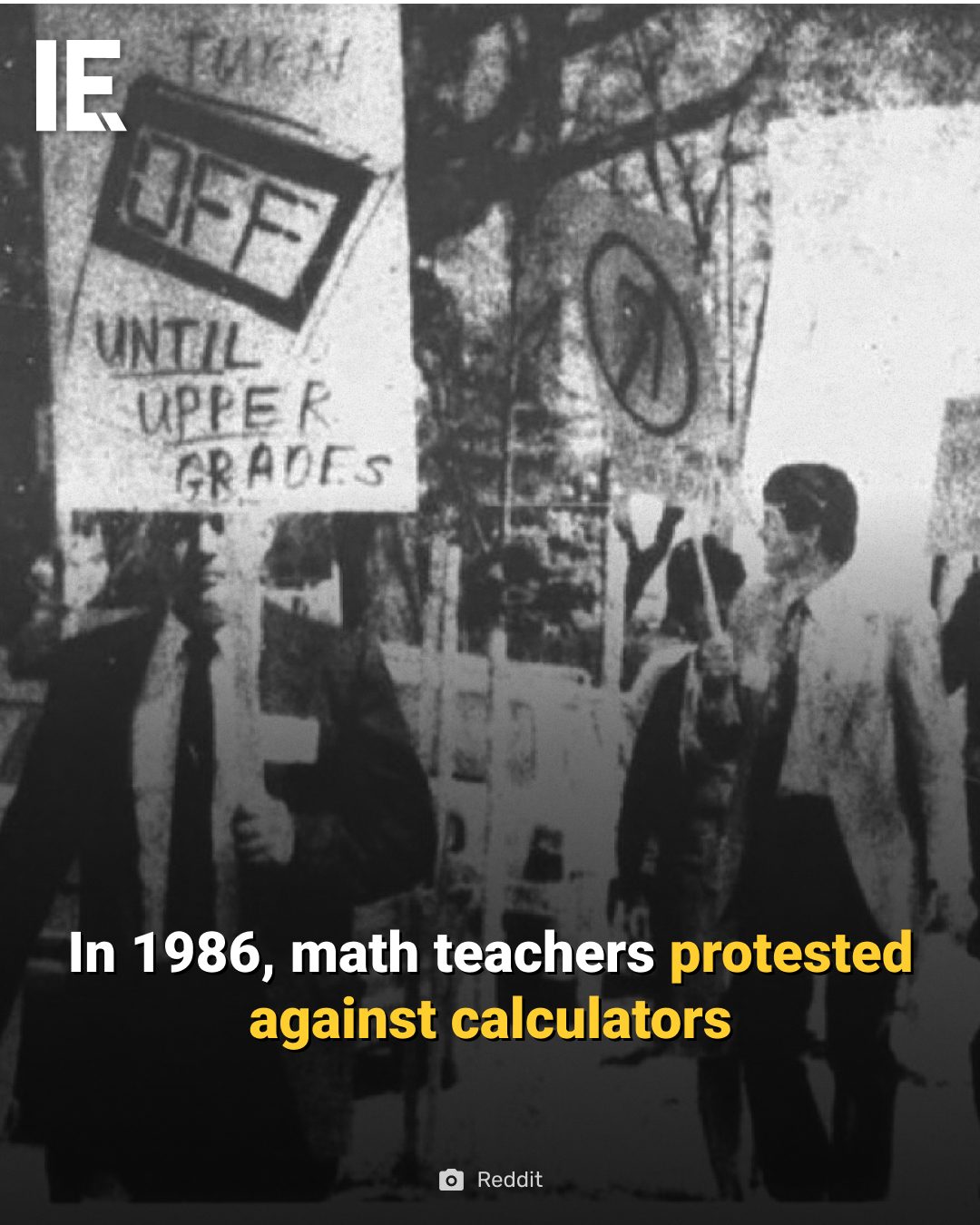
Historical Math Teacher Protests Against Calculators
Between 1986 and 1988, a group of math teachers in Washington, D.C., took to the streets to protest a policy recommending the widespread integration of calculators into math curricula. The teachers’ primary concern was that the new technology would hinder students’ learning. The debate over whether to embrace or resist this new tool is a fascinating glimpse into a pivotal moment in educational history.
Historical Context
The late 1980s marked a period of rapid technological advancement. Calculators, which had once been expensive and relatively rare, were becoming more affordable and accessible. The policy to integrate them into math curricula was part of a broader effort to modernize education. However, many teachers saw this as a threat to the traditional methods of teaching mathematics, fearing that calculators would make students overly reliant on technology and discourage the development of foundational skills.
The protest sign, which read "OFF until upper grades," underscored the teachers' belief that calculators should not be introduced until higher grades, where students had already mastered basic arithmetic. This stance reflected a widespread concern that students would become too dependent on the devices, leading to a decline in fundamental math skills.
The protest highlights a critical moment in the evolution of educational technology. While the teachers' concerns were valid at the time, history has shown that calculators became indispensable tools in mathematics education. They allowed students to focus on more complex concepts and problem-solving skills, rather than getting bogged down by basic calculations.
The Impact of the Protest
The backlash from the teachers caused a significant slowdown in the widespread adoption of calculators in schools. However, over time, as the benefits of calculators became clear, their integration into the curriculum became more prevalent. The protests, therefore, served as a cautionary reminder of the importance of carefully considering the integration of new technologies in education.
The AI Dilemma Today
Today, educators are grappling with a similar dilemma over the integration of artificial intelligence (AI) in education. Just as calculators were once seen as a potential threat to traditional teaching methods, AI is now viewed with a mix of optimism and skepticism. The questions remain: Should schools embrace AI, resist it, or find a middle ground by regulating its use?
Embracing AI
Those in favor of embracing AI argue that it can enhance the learning experience by providing personalized learning paths, adaptive assessments, and real-time feedback. AI-powered tools can analyze student performance and tailor instruction to meet individual needs, making learning more efficient and effective.
Regulating AI
A regulatory approach involves setting guidelines and standards for the use of AI in education. This can help mitigate potential risks, such as data privacy concerns or over-reliance on technology, while still allowing educators to leverage the benefits of AI. This balanced approach aims to integrate AI in a way that complements traditional teaching methods rather than replacing them.
Resisting AI
Some educators and policymakers advocate for resistance to AI, citing concerns about job displacement, lack of human interaction, and the potential for AI to perpetuate biases. The fear is that over-reliance on AI might lead to a decline in critical thinking and social skills, just as some teachers feared calculators would lead to a decline in basic arithmetic.
Practical Tips for Educators
Navigating the integration of new technologies in education requires careful consideration and a balanced approach. Here are some practical tips for educators:
Assess the Benefits and Risks
Before introducing any new technology, assess its potential benefits and risks. Understand how the technology can enhance learning and identify potential challenges. This will help in making informed decisions about its integration.
Provide Training and Support
Ensure that teachers are adequately trained and supported in using new technologies. This includes providing resources, professional development opportunities, and ongoing support to help teachers effectively integrate the technology into their classroom practices.
Encourage a Balanced Approach
Promote a balanced approach to using new technologies, ensuring that they complement traditional teaching methods rather than replacing them. This can involve incorporating technology into specific aspects of the curriculum while maintaining a focus on foundational skills and critical thinking.
Engage with the Community
Engage with parents, students, and other stakeholders to gather their input and address their concerns. This will help in creating a supportive environment for the successful integration of new technologies in the classroom.
Important Takeaways
The historical protest against calculators highlights the ongoing tension between tradition and innovation in education. It underscores the importance of carefully considering the integration of new technologies and the need for a balanced approach that leverages the benefits while mitigating potential risks.
Conclusion
The debate over the use of calculators in the 1980s and the current discussion around AI in education reveal a consistent theme: the need for thoughtful and informed decision-making. By learning from past experiences and engaging with the community, educators can navigate the challenges and opportunities presented by new technologies, ensuring that they enhance rather than hinder the educational experience.
Watch the Reel
Questions readers ask
What sparked the calculator controversy in 1980s math classrooms?
In the 1980s, a policy recommendation to integrate calculators into math curricula sparked controversy. Many teachers, particularly in Washington, D.C., protested this move, arguing that the widespread use of calculators would hinder students' ability to develop fundamental math skills.
Why did math teachers protest the integration of calculators in the 1980s?
Math teachers protested the integration of calculators in the 1980s due to concerns that students would become overly reliant on the devices, potentially leading to a decline in their basic arithmetic and problem-solving skills. They believed that the overuse of calculators could prevent students from gaining a deeper understanding of mathematical concepts.
What was the historical context of the 1980s calculator controversy?
The late 1980s was a time of significant technological advancement, making calculators more affordable and accessible. The integration of calculators into math curricula was part of a broader effort to modernize education, but many teachers saw this as a threat to traditional teaching methods and student learning.
How did the Washington, D.C., teacher protest impact the debate on calculator use in math classrooms?
The protests in Washington, D.C., highlighted the concerns of many teachers nationwide regarding the impact of calculators on learning. While the protests did not stop the integration of calculators, they sparked an ongoing debate about the appropriate use of technology in math classrooms and the importance of balancing tool use with foundational skill development.
What was the outcome of the 1980s math teacher protests against calculators?
The outcome of the 1980s math teacher protests against calculators was a more nuanced approach to integrating technology in classrooms. Though calculators were still incorporated, many schools and teachers began to emphasize the importance of teaching students when and how to use calculators effectively, rather than relying on them solely for basic arithmetic.
Related deep dives
Similar reads based on topic and creator.



Recent articles
Fresh deep dives from the latest Reels we unpacked.




Comments
Be the first to comment.