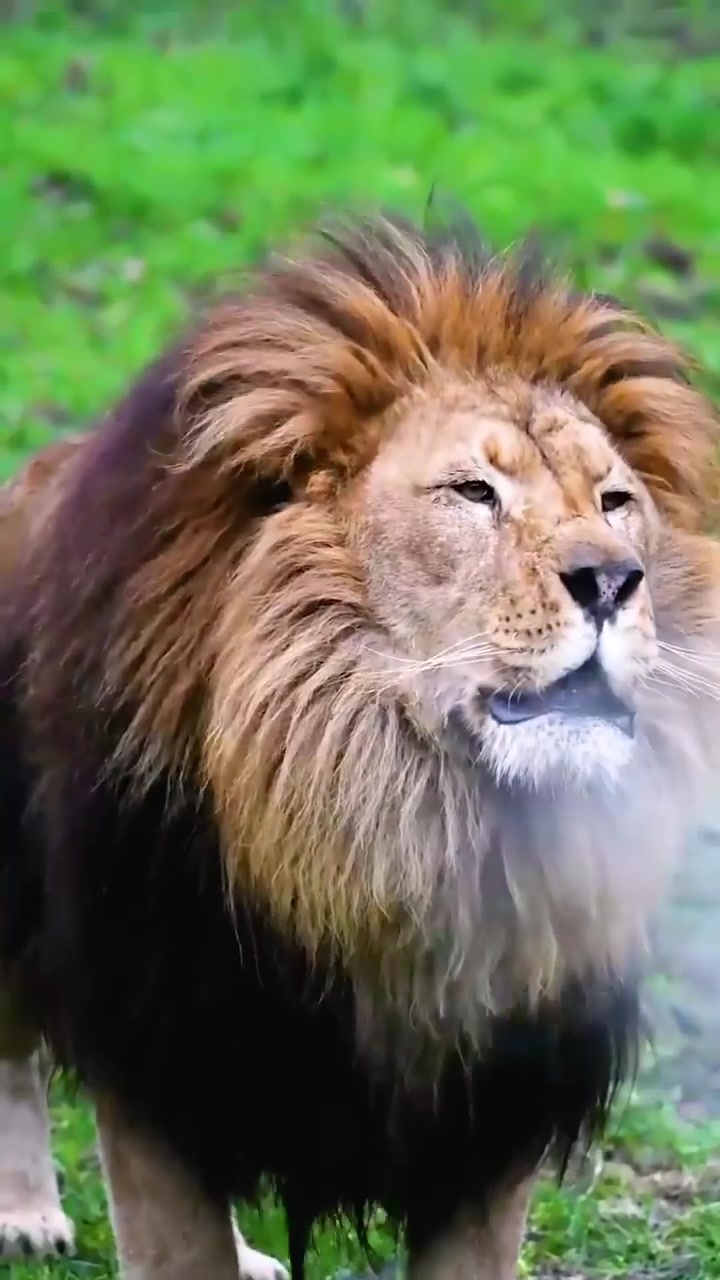
A male lion, mane ruffling in the breeze, opens his mouth wide and roars. This isn’t a fleeting growl, but a thunderous bellow that echoes across the grassland. The lion's roar, a symphony of power and communication. The Serengeti’s most iconic vocalization is a roar that embodies its dominance and prowess.
The Lion’s Roar: A Symphony of Might and Communication
A lion's roar is an auditory statement that straddles both power display and intricate communication. The roar is unique to the lion species and is not a casual sound but a purposeful vocalization. The mane, which is exclusive to male lions, heightens the visual impact of the roar by signaling the lion's dominance to both rivals and potential mates.The roar not only showcases the lion's prowess but also serves as a crucial communication tool. It is a way for these big cats to convey their territory, mark their dominance, and even attract mates—all without moving from their spot in the grasslands. Male lions are the primary roars for a reason. Their powerful vocalizations can carry for miles, acting as a territorial warning to other prides and impressing potential mates. The lion's mane, a distinctive feature, amplifies the visual impact of the roar by signaling the lion's dominance. This is why the sight of a mane-covered lion roaring is both awe-inspiring and intimidating. Roaring is not just a sound; it's a statement.
The Roar as a reflection of Evolution and Ecology
The lion's roar is not just a random vocalization. It is a carefully evolved tool in the lion's complex social and ecological system. This vocal expression has been honed over time to serve multiple purposes in the lion’s environment. Roaring is a behavior that has deep roots in the social hierarchy of lions.This behavior is a reflection of the lions' position within their hierarchy. It is a tool for communication, a means of territorial marking and a symbol of power that echoes through the African savannahs. The roar's power is also reflected in the way it travels through the landscape. The roar is a long, resonant sound that can travel over long distances. This enables lions to communicate effectively across vast territories, warning off intruders and coordinating movements within their pride.
The Anatomy of a Roar: How Lions Produce Their Powerful Vocalizations
Lions are uniquely built to produce their distinctive roars. The lion's robust physiology, including its powerful lungs and vocal chords, allows it to produce the deep, resonant sounds that characterize its roar. This vocalization starts deep within the lion's throat, where specialized vocal folds vibrate to create the powerful sound. The roar is not just a single sound. It is a complex vocalization that changes in pitch and volume. This makes it a powerful tool for communication. Lion vocalizations aren’t mere sounds. They’re resonating tools that signal the lion’s mood, intentions, and social status.
The Power of Long-Distance Communication
Lions use their roars to communicate over vast distances. This is particularly useful in the open grasslands of Africa, where visibility can be excellent but distances are immense. The roar, with its resonant qualities, can carry far and wide, making it an effective communication tool. This capability to communicate over long distances is crucial for lions, as it helps them maintain their territory and warn off potential intruders. Roaring is also a way for lions to coordinate their movements within the pride. A loud roar can signal the location of the roaring individual and can guide the movements of other lions in the pride. This is crucial in the complex social dynamics of lion prides.
The Difference Between a Roar and a Growl
While a roar is a potent display of power and communication, not all lion vocalizations are as powerful and purposeful. A growl, for instance, is typically a more subdued sound. It is often used in closer encounters, serving as a warning to other animals or even to members of the pride. The growl is just one of the many types of vocalizations that lions use in their complex communication system. The roar, on the other hand, is the lion’s most powerful and distinctive vocalization. It is a multifaceted vocalization that not only carries over long distances but also conveys a multitude of messages, from territorial claims to mating calls. The lion’s roar is more than just a display of power. It is a communication mechanism that conveys complex messages. Understanding this helps in appreciating the lion's social and ecological significance.
The Lion Roar in Human Culture and Conservation
Despite being a subject of many myths and stories, the lion's roar has a profound connection with conservation efforts. It is a potent symbol of wildlife and conservation in Africa. With lions facing numerous threats, including habitat loss and poaching, their roar serves as a reminder of the need for conservation efforts. This potent roar helps people learn the importance of wildlife conservation. This is evident in various conservation programs that use the lion as a symbol and a rallying point for protecting Africa’s natural heritage. The roar also serves as an important tool for researchers. By studying the roar, they can gather insights into the behavior and health of lion populations. This can help in devising strategies to protect these magnificent creatures. While the roar is a powerful vocalization, it is also a tool that highlights the importance of conservation and a symbol of the need to protect these majestic animals.
Capturing the Roar: Experiencing the Power Firsthand
Trying to capture the lion’s roar is an experience that few people forget. Whether in a national park or a wildlife reserve in Africa, experiencing a lion’s roar firsthand is a thrilling experience that showcases the animal's power and majesty. The stakes are high, and the moment can be intense. The first time a lion’s roar echoes through the savannah, it’s an experience of a lifetime.
- Preparation: Understand the basics of wildlife viewing and the dangers involved. Hire a knowledgeable guide if possible.
- Patience: The lion’s movements can be unpredictable. Patience is essential.
- Respect: Always maintain a safe distance from lions. It’s crucial to keep a safe distance from the animal. Lose sight of them if this becomes a problem.
Watch the Reel
Questions readers ask
What makes a lion's roar so powerful and distinctive?
A lion's roar is powerful due to its robust physiology, including strong lungs and vocal chords that produce deep, resonant sounds. The roar starts deep within the throat, where specialized vocal folds vibrate to create the signature sound. This complex vocalization changes in pitch and volume, making it a powerful communication tool.
Why do male lions have a mane, and how does it relate to their roaring?
The mane is exclusive to male lions and serves as a visual signal of dominance. When a male lion roars, the mane heightens the visual impact, making the roar more intimidating and awe-inspiring to both rivals and potential mates. It amplifies the message of power and dominance that the roar conveys.
How does a lion's roar help in marking territory and attracting mates?
A lion's roar can travel for miles, acting as a territorial warning to other prides and signaling dominance. This powerful vocalization helps in marking territory and impressing potential mates, all without the lion having to move from its spot in the grasslands. It’s a key communication tool for maintaining social order and territorial boundaries.
Can female lions roar as powerfully as male lions?
While female lions can roar, their vocalizations are not as powerful or resonant as those of male lions. Male lions are the primary roars due to their more robust physiology, which allows them to produce deeper and more resonant sounds. This makes the male roar more effective for territorial marking and communication.
How does the lion's roar reflect its position in the social hierarchy?
The roar is deeply rooted in the social hierarchy of lions. It serves as a tool for communication, marking dominance, and coordinating movements within the pride. A lion's roar is a symbol of power that echoes through the savannah, reflecting its position and status within the pride.
Related deep dives
Similar reads based on topic and creator.




Recent articles
Fresh deep dives from the latest Reels we unpacked.



Comments
Be the first to comment.