The Geology of the Fox Islands
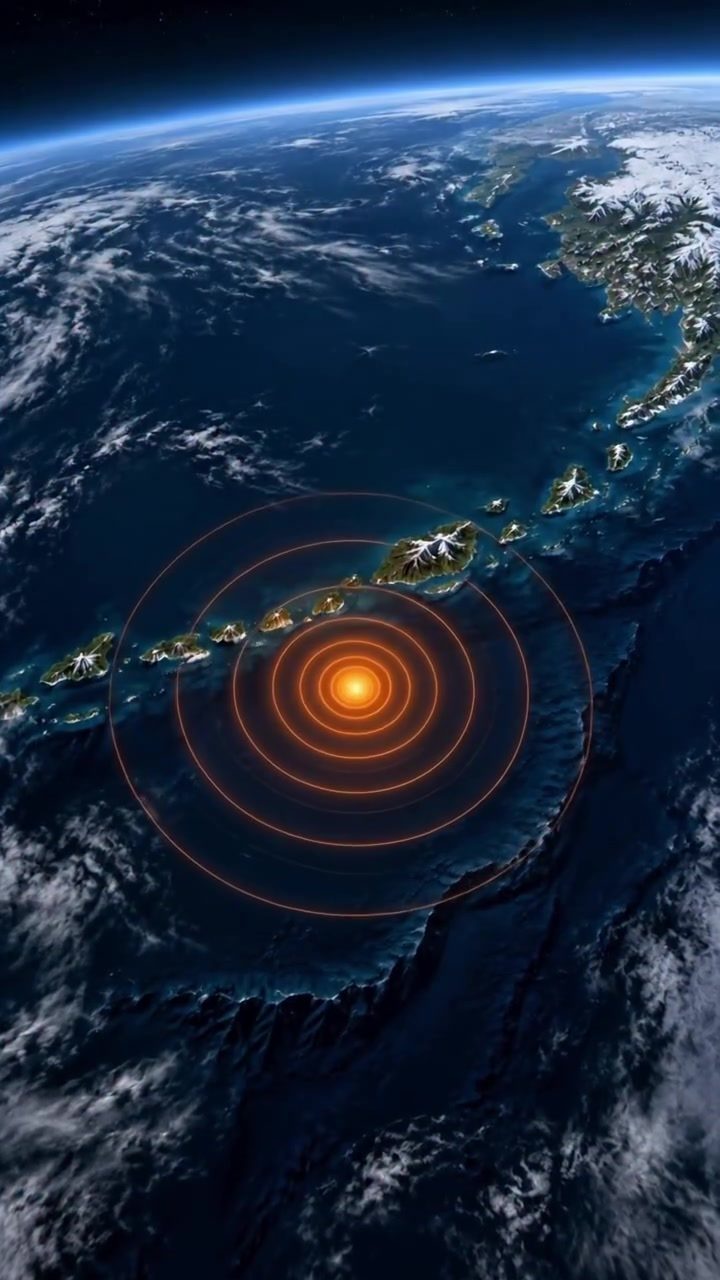
The Fox Islands, located west of Nikolsky, are a string of islands that stretch along the Aleutian Arc. This remote and sparsely populated region lies in the heart of the Pacific Ring of Fire, a vast area where the majority of the world's earthquakes and volcanic activity occur. The islands' unique location makes them particularly susceptible to seismic activity. A recent earthquake measuring 6.5 on the Richter scale struck this area. This event underscores a crucial aspect of the planetary physics of the ring: the region's constant geological unrest. The Aleutian Arc is part of the broader Pacific Ring of Fire, a horseshoe-shaped zone of tectonic activity that encompasses approximately 40,000 kilometers and includes more than 452 volcanoes. The arc results from the subduction of the Pacific tectonic plate beneath the North American plate, forming shallow earthquakes and deep volcanoes. This ongoing geological drama highlights the relentless nature of Earth's tectonic processes. Understanding this geological context is vital for comprehending the seismic activity that shook the Fox Islands.
The Science Behind the Simulation
The visualization of the earthquake waves provides a stark reminder of the sheer power of Earth's tectonic forces. The simulation shows a bright orange circle expanding outward, depicting the stress and energy radiating from the earthquake's epicenter. This depiction of a geological event distills complex seismological theories: like a stone dropped in water, the epicenter serves as the focal point for a cascade of energy that moves through and impacts the surrounding environment. Moreover, the concentric circles visually represent the propagation of seismic waves. This geological dance of destructive power unfolds unpredictably. The simulation provides further insight into the Earth's dynamics. The simulation emphasizes the connectivity and interconnectedness between Earth's different spheres: the solid Earth, the atmosphere, and the hydrosphere. All spheres are intricately linked, allowing seismic forces to propagate across vast distances and affect diverse regions.
The Challenge of Prediction
The recent earthquake in the Fox Islands has brought into sharp focus the challenges and complexities of earthquake prediction. While the simulation provides a clear visual representation of the earthquake's impact, predicting such events remains an elusive goal for scientists. The lack of a tsunami warning after the magnitude 6.5 earthquake underscores the uncertainty and unpredictability of these events. Earthquake prediction involves multiple scientific disciplines, including seismology, geology, and geophysics. Seismic activity prediction requires a deep understanding of the Earth's crust, tectonic plates, and seismic waves. Scientists must piece together data from various sources to anticipate future earthquakes. The unpredictable nature of earthquakes highlights the difficulty of preparing for inevitable occurrences. The adjacent Pacific Ocean adds another layer of complexity to the situation, as earthquakes along the Ring of Fire can trigger tsunamis. In the case of the Fox Islands, the absence of a tsunami warning reflects a cautious approach to ensure public safety.
Watching And Waiting
As geologists and seismologists continually watch for updates, the recent earthquake in the Fox Islands serves as a reminder of the Earth’s unyielding geologic forces. The simulation visually represents the earthquake, but the work continues to predict future events. In the absence of immediate tsunami warnings, communities along the Pacific Ring of Fire remain vigilant, ready to respond to any seismic changes that may come. For geologists, the task is clear. “We're watching for updates,” as well as preparing comprehensive infrastructure to minimize the effects of natural disasters.
Watch the Reel
Related deep dives
Similar reads based on topic and creator.

Recent articles
Fresh deep dives from the latest Reels we unpacked.

Comments
Be the first to comment.