Lithium Production Trends
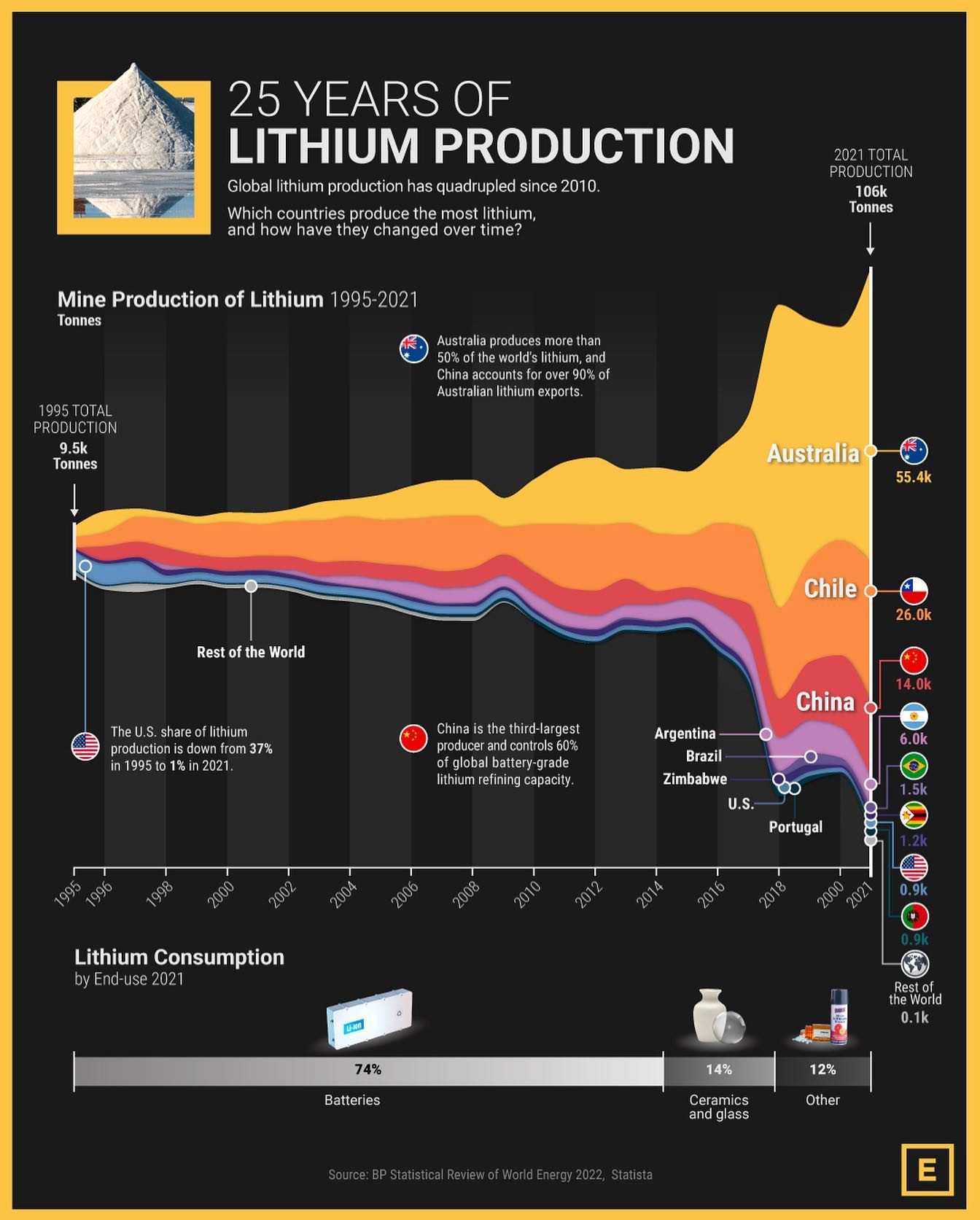
Lithium, a critical component in lithium-ion batteries, has seen a significant surge in production due to the increasing adoption of electric vehicles (EVs). This rise is evident in the trends over the past 25 years, from 1995 to 2021, with Australia, Chile, China, and other countries playing pivotal roles in global lithium production.
Why This Matters
Lithium is essential for the cathodes in lithium-ion batteries, which power a wide range of devices, from smartphones to electric vehicles. Understanding the trends in lithium production is crucial for grasping the broader context of EV adoption, battery technology advancements, and global energy transitions.
Global Lithium Production Overview
Key Producing Countries
Australia leads the way in lithium production, accounting for over 50% of the world's total output. This dominance is further underscored by the fact that China imports over 90% of Australia's lithium exports. Chile, another significant player, is renowned for its rich lithium deposits, particularly in the Salar de Atacama, one of the world's largest salt flats.
Production Trends
Lithium production has quadrupled since 2010, reaching a total of 160,000 tonnes in 2021, up from 9,500 tonnes in 1995. This dramatic increase is driven by the growing demand for lithium-ion batteries, which are integral to the EV revolution. The United States, once a major producer, has seen its share of global lithium production decline from 37% in 1995 to just 1% in 2021. This shift highlights the changing dynamics in the global lithium market and the increasing influence of countries like Australia and Chile.
Lithium Consumption by Sector
Batteries are the dominant sector in lithium consumption, accounting for 74% of the total. This includes batteries for consumer electronics, EVs, and energy storage systems. Ceramics and glass make up 12%, while other sectors, including lubricating greases and air conditioning, account for the remaining 14%. The dominance of the battery sector underscores the importance of lithium in the transition to renewable energy sources and the electrification of transportation.
Key Players in the Lithium Market
Australia: The Global Leader
Australia's dominance in lithium production is unparalleled. The country's rich lithium reserves and advanced mining technologies have positioned it as the world's leading producer. Australia's lithium exports, primarily to China, have played a crucial role in meeting global demand. Australian companies are at the forefront of lithium mining and processing, contributing significantly to the global supply chain.
China: The Refining Giant
China, the third-largest producer, controls 60% of the global battery-grade lithium refining capacity. This strategic control allows China to influence the global lithium market significantly. The country's refining capabilities are crucial for producing high-purity lithium, essential for advanced battery technologies. China's dominance in refining has implications for the global supply chain and the geopolitics of battery production.
Practical Tips for Understanding Lithium Trends
- Follow Market Reports: Regularly review market reports from credible sources like the BP Statistical Review of World Energy and Statista. These reports provide up-to-date information on production, consumption, and market trends.
- Monitor Government Policies: Keep an eye on policies and initiatives from key producing countries. Government regulations and subsidies can significantly impact the supply and demand dynamics of lithium.
- Track Technological Advancements: Stay informed about technological innovations in lithium mining, processing, and battery technology. Advances in these areas can lead to more efficient production and increased demand.
- Analyze Geopolitical Factors: Geopolitical events and trade agreements can influence the lithium supply chain. Understanding these factors can help anticipate market shifts and potential disruptions.
Important Takeaways
- Lithium production has surged due to the growing demand for lithium-ion batteries, particularly for electric vehicles.
- Australia and Chile are the leading producers, with Australia accounting for over 50% of global production.
- China's control over lithium refining capacity is a critical factor in the global lithium market.
- Batteries dominate lithium consumption, highlighting the metal's importance in the transition to renewable energy.
Conclusion
The rise in lithium production over the past 25 years reflects the increasing demand for lithium-ion batteries, driven by the EV revolution. Understanding the trends in lithium production, the key players, and the consumption patterns is essential for navigating the global energy transition. As the world continues to shift towards renewable energy and electric transportation, lithium will remain a critical component in powering the future.
Watch the Reel
Questions readers ask
Which countries are the leading producers of lithium?
Australia and Chile are the leading producers of lithium. Australia is particularly notable for its extensive lithium mining operations, making it a key player in the global lithium market. Chile also holds a significant position due to its rich lithium reserves, primarily found in the Salar de Atacama.
How has lithium production changed over the past few decades?
Lithium production has experienced a remarkable surge, particularly since 2010. Over the past 25 years, from 1995 to 2021, production has quadrupled. This increase is driven by the growing demand for lithium-ion batteries, which are crucial for electric vehicles and other electronic devices.
What impact does lithium production have on global energy transitions?
Lithium production is a critical component of global energy transitions, particularly as the world moves towards renewable energy sources and away from fossil fuels. The surge in lithium demand for EV batteries highlights the shift towards cleaner, more sustainable transportation solutions. Understanding lithium production trends helps in planning for future energy needs and infrastructure.
What role do battery technology advancements play in lithium production trends?
Advancements in battery technology significantly influence lithium production trends. Improvements in lithium-ion battery efficiency and storage capacity have made EVs more viable and appealing to consumers. As battery technology continues to evolve, it will drive further increases in lithium demand, necessitating ongoing expansion in lithium production.
Related deep dives
Similar reads based on topic and creator.



Recent articles
Fresh deep dives from the latest Reels we unpacked.




Comments
Be the first to comment.