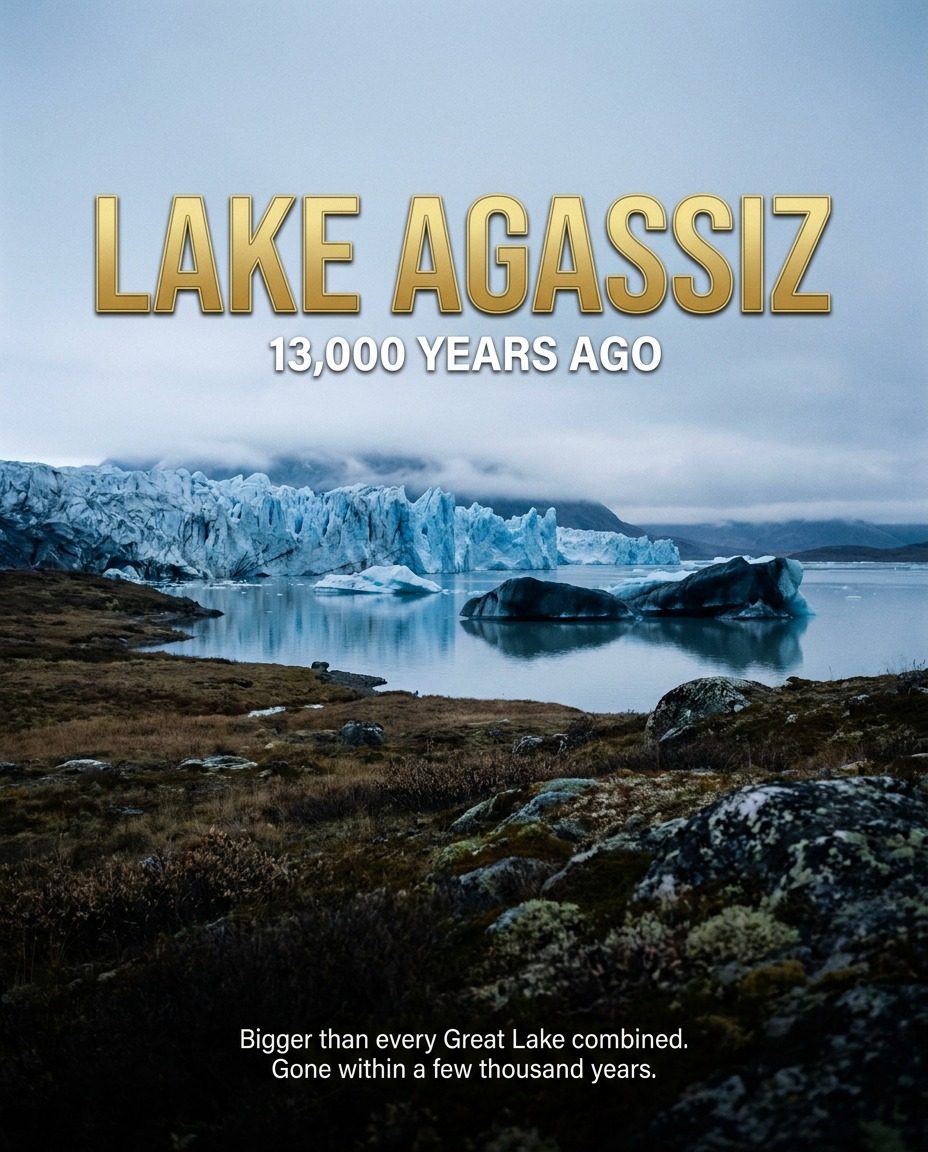
A Glimpse into a Long-Gone Giant
Ancient Lake Agassiz, at its peak, dwarfed some of their largest lakes. Imagine a body of water so vast, it made the Great Lakes — Superior, Michigan, Huron, Erie, and Ontario — look like puddles. Nearly 13,000 years ago, Lake Agassiz stretched across the northern part of North America, forming a massive inland sea. This colossal lake didn't last forever. Although it formed less than 12,000 years ago, within a few millennia, Lake Agassiz had dwindled away. The lake is now a relic of the past, but understanding its existence can provide valuable insights into the geologic history of our continent. Understanding Lake Agassiz is more than a curiosity. It also provides climate lessons.
The Great Lakes' Ancient Predecessor
Lake Agassiz gave us what scientists call a "time machine glimpse" to a colder, wetter world. This lake, which is no longer present, was formed when massive ice sheets began to melt nearly 13,000 years ago. It took thousands of years to dissipate — much like a glacier’s slow melting in the sun. The lake served as a temporary home for countless species of plants and animals. It housed some of the earliest prehistoric humans and changed the terrain across a geographic expanse four times the size of Texas. Lake Agassiz’s most pronounced legacies were geographic changes. As it melted, it carved out the Red River Valley of the North, the land between the Dakotas and the Twin Cities. The lake created a massive network of hybernard channels, wetlands, and shallow ponds. Lake Agassiz was massive, but it had a relatively short life span. Over the centuries, as its waters receded, it left behind a mosaic of ponds, wetlands, and small lakes. As it drained, it carved out the Red River Valley. The lake's remnants are still visible today in the topography of the region. These geographical features tell the story of the lake's existence and eventual disappearance.
Lake Agassiz’s Ancestry
The Great Lakes' Prehistoric Opponents Lake Agassiz did not form overnight.
The lake began forming at the end of the last Ice Age, when massive glaciers covered much of North America. As the climate warmed, these glaciers began to melt, leaving behind a vast expanse of water. Lake Agassiz was a transient resident. It did not last forever, but it acted as a temporary home for countless species of plants and animals, including some of the earliest prehistoric humans. The lake was fed by the melting glaciers and the one-way flow of the glacial drainage. Its waters drained south and west through the Mississippi River. It likely lasted for a much shorter period than any lake we are familiar with. However, Lake Agassiz had an immense influence on the early geological history of North America.
Watch the Reel
Related deep dives
Similar reads based on topic and creator.
Recent articles
Fresh deep dives from the latest Reels we unpacked.


Comments
Be the first to comment.