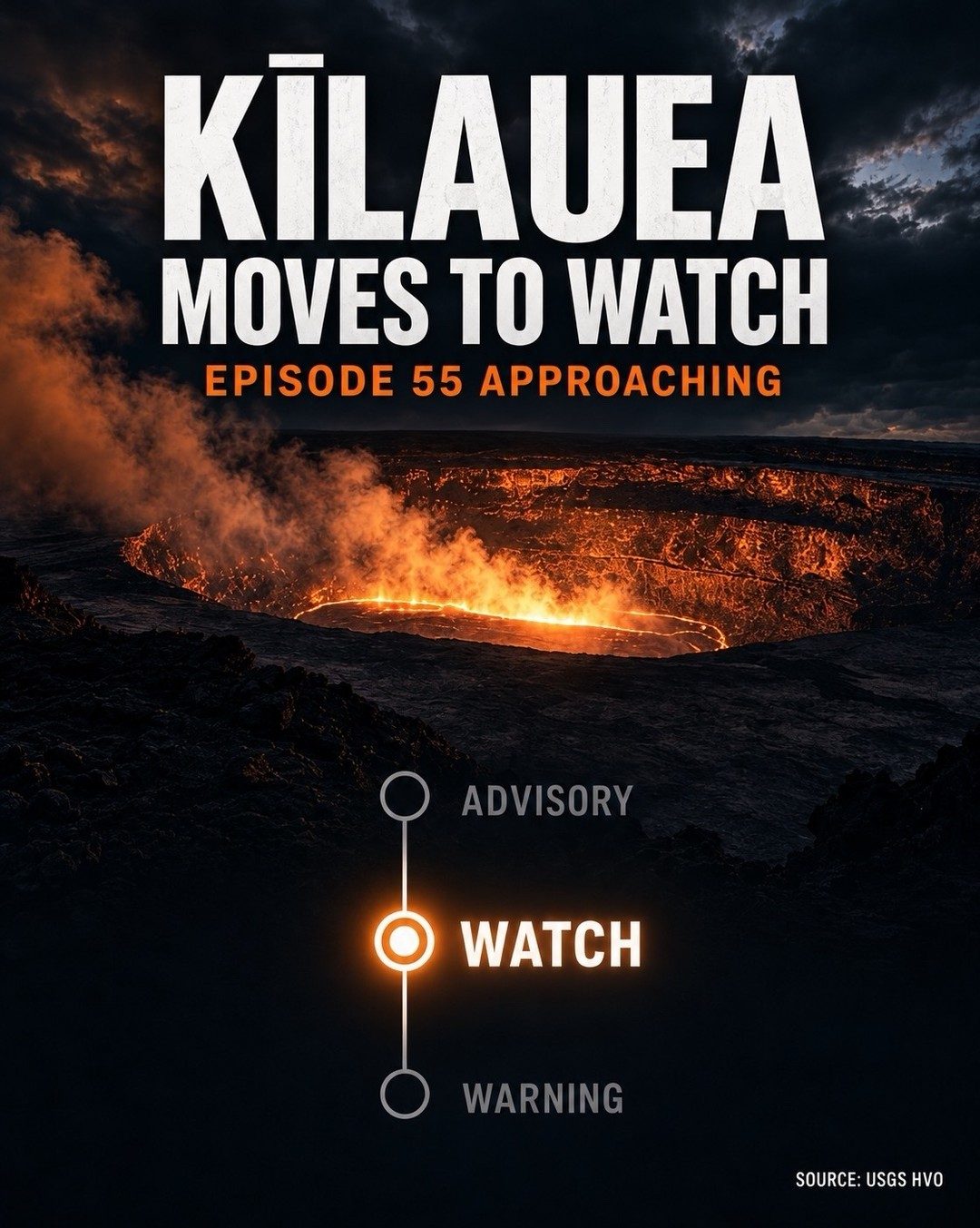
Alert levels climbing at Kīlauea
Geologists track volcanic activity with a series of alert levels, with 'Advisory' being the least concerned level. These milestones — Advisory, Watch, and Warning — are based on observable activity and predictive models. Yet recognition of “Advisory” or “Watch” statuses does not mean the volcano will definitely move to the next level. Kīlauea, lava flows were reported, hinting at escalating geothermal activity. An advisory was issued by the USGS HVO, moving towards a 'Watch' status possibly even a 'Warning' and highlighting an escalation in the volcano's activity levels.
Understanding the alert levels
The USGS HVO issues regular updates on Kīlauea's status. The highest escalation would be 'Warning', when hazardous activity is imminent or underway. However, the transition from 'Advisory' to 'Watch' indicates an increase in activity that should be monitored closely. During this phase, authorities may issue public advisories, and the public should be prepared for possible evacuations. This episode, labeled "Episode 55," indicates a surge in volcanic activity — the sequence number suggests a historical reference to ongoing observations. The progression from ‘Advisory’ to ‘Watch’ suggests a growing concern about potential hazards.
The Role of Observatories
USGS HVO serves as the primary source of information on volcanic activity in Hawaii. Staffed with specialists who monitor seismic activity, gas emissions, and ground deformation, the observatory provides crucial data to assess the volcano's status. The HVO plays a pivotal role in issuing timely alerts and advisories that help authorities manage public safety and prepare for potential evacuations. Volcanologists carefully analyze multiple types of data. Ground deformation, gas emissions, and seismic activity all provide clues about what might happen next.
Public readiness
Public advisories issued by the USGS HVO are a critical part of managing volcanic risks. Did you know that in Hawaii there are public education campaigns. Community education and preparedness training are designed to help residents understand the risks and respond appropriately to volcanic activity. For example, when the HVO issues a 'Watch' advisory, local communities know to prepare for potential evacuations and stay informed about updates. Therefore, it is important to stay alert. Knowing the alert levels and what precautions to take is essential for public safety.
Watch the Reel
Related deep dives
Similar reads based on topic and creator.

Recent articles
Fresh deep dives from the latest Reels we unpacked.

Comments
Be the first to comment.