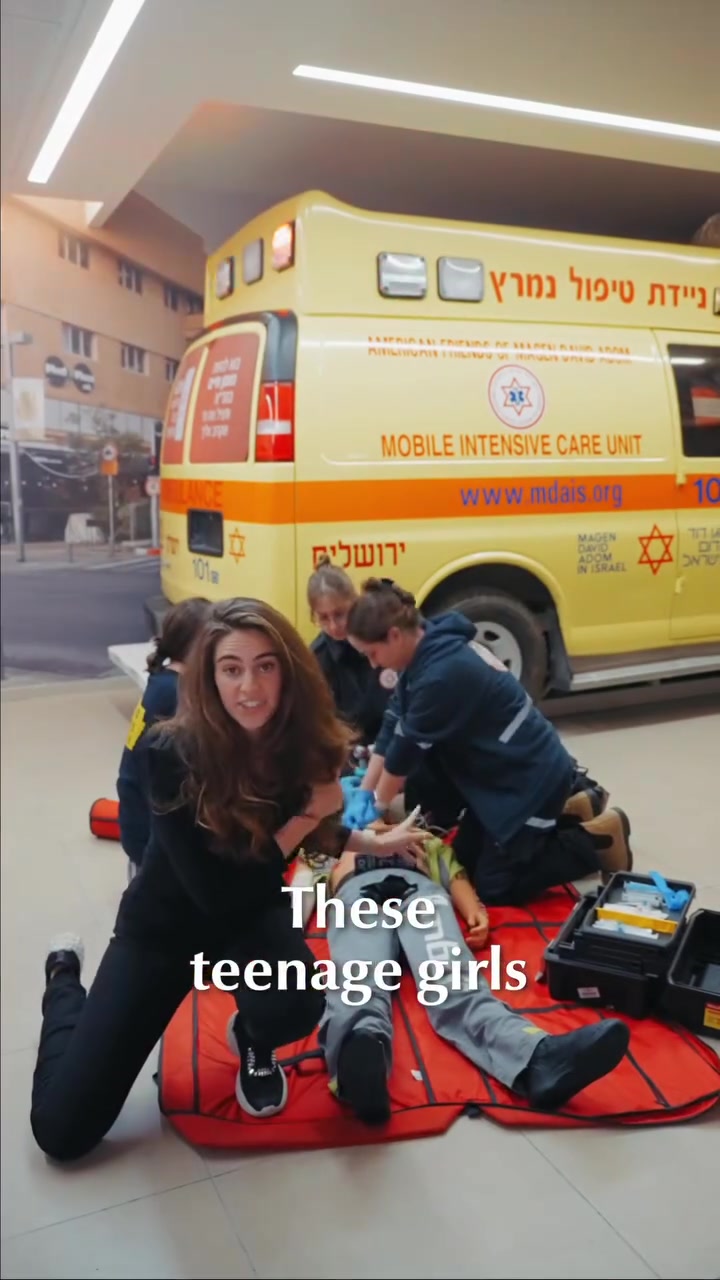
In Israel, teenage girls are more than students — they're potential lifesavers. Before heading to college, they learn to treat gunshot wounds, perform CPR, and respond to terror attacks. This isn't unusual; 500,000 Israelis learn similar skills every year, from parents to bus drivers to soldiers. Israel's emergency services organization, Magan David Adom, is responsible for this extensive training.
Magan David Adom: Israel's Comprehensive Lifesaving Network
Every year, 500,000 Israelis receive training that can be as brief as a four-hour first aid course or as intensive as a two-year paramedic certification. This training is not limited to traditional responders but extends to all sectors of society. Parents, teachers, bus drivers, soldiers, and even doctors are taught how to save lives. This approach ensures that, when tragedy strikes, it isn't just medics who respond. Magan David Adom, Israel's emergency services organization, is unique in its approach. It extends beyond just being the "911" of Israel. The organization operates the national ambulance and blood bank services and is responsible for training people from all walks of life. This is because Israeli residents are not just citizens; many are trained to be emergency responders who act in crises.
From Terror Attacks to Wars: The Synergy of Preparedness
When terror attacks or wars break out, it's not just first responders who act out of training. Between emergencies, the organization trains people. During the conflict, even while in bomb shelters, they would train in basic first aid. In wartime, Magan David Adom trained civilians in first aid, acknowledging that when medical teams could not access everyone, ordinary civilians were helping others. This training is practical but also indispensable. There are several levels of training, depending on time availability and needs. Parents, bus drivers, and soldiers learn basic first aid. Those keen to volunteer more extensively can undertake two-year paramedic courses. The extensive training is extensive and mission-driven. In Israel, no one person is judged for their readiness to respond. Instilled in every group, from teenage girls to professional drivers, is a sense of community and civic duty. There are no official public statistics, but the benefits of being a prepared nation are obvious. This multi-stakeholder training system has kept many Israelis alive and strengthened the country's resilience in the face of violence. This convincing logic is the merging of traditional first responder training with community resilience.
Leveling up Skills
The training is top-notch, not just limited to basic life-saving skills. Volunteers and professionals alike can go through courses. Advanced practitioners get to practice on mannequins. Blood bank training programmes take place, especially for those interested in donor life and healthcare. The organization also operates the national ambulance service, which is a vital part of the health care system.
Testing Skills
The training is hands-on and realistic. Advanced practitioners get to do CPR, apply bandages, and even respond to mock terror scenarios. Training simulators are available for the instructor. Participants, via mobile intensive care units, get to learn about ambulance services as well.
For Doctors
Advanced training is also available, from first aid training, and emergency medical care to managing the entire blood bank. There is even advanced medical course training for doctors and nurses. Each level of training is rigorous, designed to handle any emergency.
Skills for Volunteering
The emergency services organization itself is magnified by volunteers who are trained in first aid. During an emergency, volunteers can help the paramedics. Not just that, volunteers can help the general public navigate a crisis. Services like responding to terror attacks, handling ambulance services, and managing the blood bank are managed by volunteers.
Training an Entire Community
Training isn’t just for medical professionals; it’s for everyone. The society believes that emergencies can be managed if the entire community learns basic first aid. The training introduces everyone to emergency response. The ubiquity of emergency training has integrated rescue preparedness into the nation's standard of civic responsibility.
Practical Paths to Volunteering
- Find Your Local Station: Israel has hundreds of Magan David Adom stations. Find the one closest to you and inquire about volunteering opportunities.
- Start with Basic Training: Begin with a four-hour first aid course. This will give you a solid foundation in basic life-saving skills. It can be a small step but the rewards are immense.
- Advance Your Skills: Depending on your availability and interest, you can move on to more advanced training, such as a two-year paramedic course. The organization also offers specialized training for those interested in ambulance services and blood bank management.
- Stay Updated: Emergency response protocols are continually evolving. Regularly update your skills through refresher courses and workshops. Finally, volunteering with the organization is not just about acquiring skills — it’s about joining a community dedicated to keeping Israel safe. Your efforts can save lives, and you become a vital part of the nation's emergency response network.
Watch the Reel
Questions readers ask
What exactly does the training involve for teenagers in Israel, and how does it prepare them for emergencies?
Teenagers in Israel, including teenage girls, undergo training that includes learning to treat gunshot wounds, perform CPR, and respond to terror attacks. This training ensures they are prepared to act in emergencies, whether it's a terror attack or a natural disaster. The hands-on and realistic nature of the training, which includes practicing on mannequins and responding to mock terror scenarios, makes it highly effective.
How does Magan David Adom ensure that such a large number of Israelis receive emergency training each year?
Magan David Adom achieves this by offering a range of training programs that cater to different time commitments and interest levels. These programs range from brief four-hour first aid courses to intensive two-year paramedic certifications. By making the training accessible to everyone, from parents to bus drivers to soldiers, the organization ensures that a significant portion of the population is prepared to respond in emergencies.
Can non-Israeli citizens participate in the training programs offered by Magan David Adom?
The article does not specify whether non-Israeli citizens can participate in Magan David Adom's training programs. However, given the organization's mission to train as many people as possible, it is worth reaching out directly to Magan David Adom or checking their official resources for more information.
What kind of impact has this widespread training had on Israel's response to terror attacks and wars?
The extensive training has had a significant impact on Israel's resilience in the face of violence. During conflicts, even civilians in bomb shelters receive basic first aid training. This preparedness ensures that when medical teams cannot reach everyone, ordinary citizens are equipped to help others, thereby saving many lives and strengthening the country's overall response to emergencies.
What are the different levels of training available through Magan David Adom, and who are they intended for?
Magan David Adom offers a variety of training levels to cater to different needs and time commitments. Basic first aid courses are available for parents, bus drivers, and soldiers, while those interested in more extensive training can undertake two-year paramedic courses. Additionally, advanced practitioners can engage in hands-on training with mock terror scenarios, CPR, and bandage application, ensuring they are well-prepared for real-life situations.
How does the training extend beyond just traditional first responders, and what does it mean for the community?
The training extends to all sectors of society, including parents, teachers, bus drivers, soldiers, and even doctors. This approach ensures that everyone in the community is prepared to act in emergencies, fostering a sense of civic duty and community resilience. It means that when tragedy strikes, it isn't just medics who respond, but a collective effort from the entire community.
What role do blood bank training programs play in the overall emergency preparedness of the country, and who can participate in them?
Blood bank training programs are a vital part of Magan David Adom's mission. They are designed for those interested in donor life and healthcare, providing them with the skills to manage blood banks effectively. While the article does not specify who can participate, these programs likely cater to a range of volunteers and professionals who want to contribute to the healthcare system in a more specialized way.
Related deep dives
Similar reads based on topic and creator.

Recent articles
Fresh deep dives from the latest Reels we unpacked.




Comments
Be the first to comment.