Floating Gardens in Cambodia
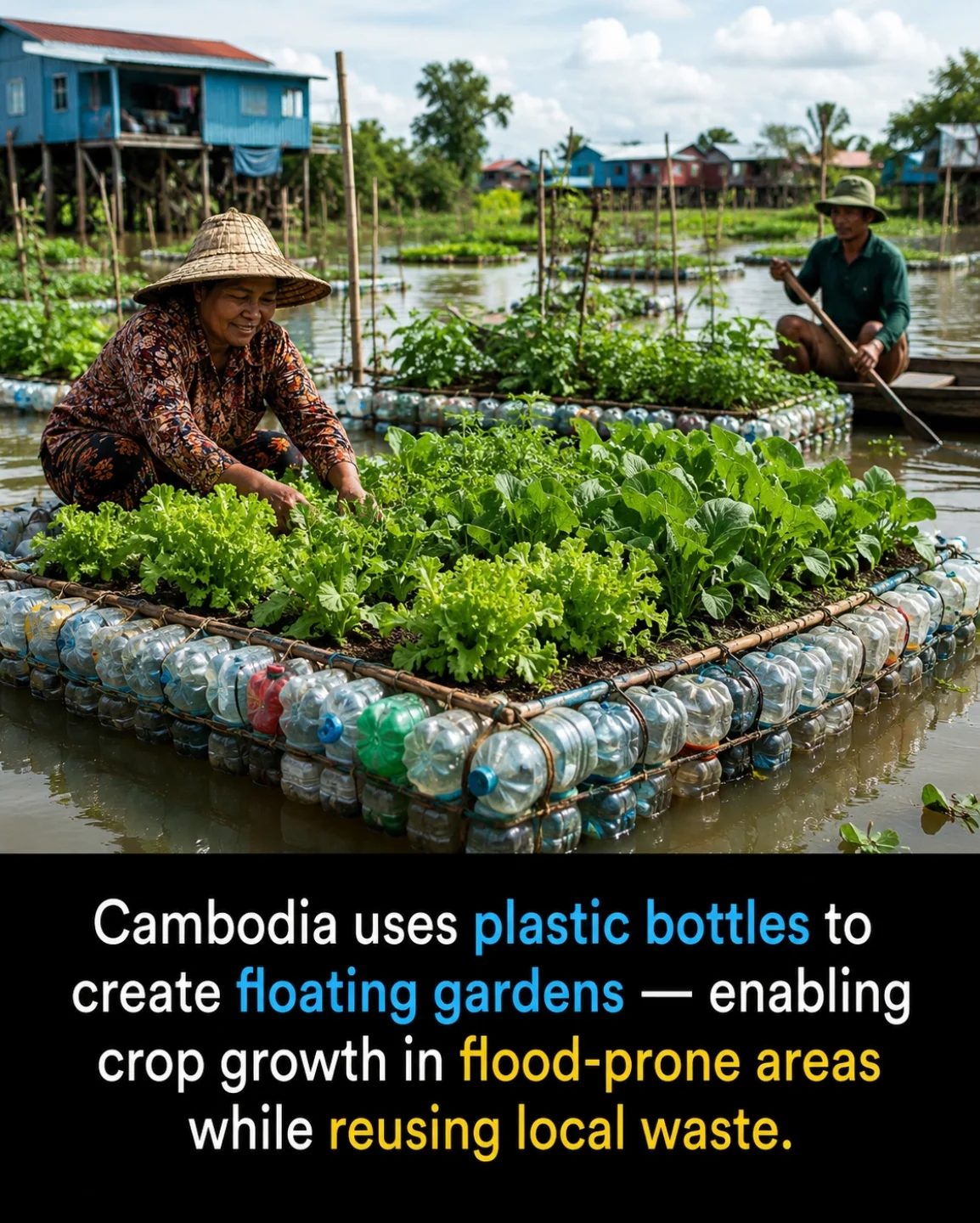
Floating gardens in Cambodia are a testament to human ingenuity and the power of sustainable practices. These innovative agricultural structures are created using recycled plastic bottles, enabling crop growth in areas prone to flooding. This unique method not only addresses the challenges of flood-prone lands but also helps manage local waste, contributing to a cleaner environment.
Why this matters
Cambodia's floating gardens serve multiple purposes that make them significant on both local and global scales. They offer a practical solution to the challenges of agriculture in flood-prone areas, provide a model for sustainable waste management, and inspire innovative approaches to environmental conservation.
Floating Garden Construction and Benefits
Building Floating Gardens
The construction of floating gardens involves several key steps. The primary material used is recycled plastic bottles, which are filled with air and arranged in large rafts. These rafts are then anchored in place and covered with a layer of soil or compost, creating a stable growing medium for crops.
Why Plastic Bottles?
Plastic bottles are an ideal material for floating gardens for several reasons. They are lightweight yet durable, making them perfect for supporting the weight of soil and plants while floating on water. Additionally, using recycled bottles helps reduce plastic waste, which is a significant environmental issue in many regions, including Cambodia.
Crop Cultivation
Floating gardens support a variety of crops, including vegetables, fruits, and even flowers. The nutrient-rich soil and consistent moisture levels provided by the water below make these gardens particularly suitable for growing water-intensive plants. This method also helps in maintaining soil fertility, as the floating gardens can be moved to different locations, allowing the soil to regenerate.
Environmental Sustainability
Waste Management
One of the most significant benefits of floating gardens is their role in waste management. By repurposing plastic bottles, these gardens help reduce the amount of plastic waste that ends up in landfills or pollutes natural waterways. This practice not only keeps the environment cleaner but also provides a sustainable solution for managing waste in regions where waste management infrastructure is limited.
Flood Mitigation
Flood-prone areas often struggle with traditional agricultural methods due to the unpredictable nature of flooding. Floating gardens offer a solution by allowing crops to grow above the water, making them less susceptible to flood damage. This method ensures that farmers can continue their livelihoods even in challenging conditions, providing a stable source of food and income.
Biodiversity and Ecosystem Health
Floating gardens also contribute to the health of local ecosystems. The stable platforms provide habitats for various aquatic animals and plants, enhancing biodiversity. Additionally, the gardens help purify water by absorbing nutrients and pollutants, contributing to cleaner and healthier water bodies.
Practical Tips for Creating Floating Gardens
While the concept of floating gardens is straightforward, there are several practical tips to consider when creating your own. These tips can help you maximize the benefits and ensure the success of your floating garden project.
Choosing the Right Location
Select a location with calm, shallow water that is protected from strong currents and waves. Ensure the area is free from pollutants and has sufficient sunlight for plant growth. Ideally, the location should be near a water source that can be easily accessed for monitoring and maintenance.
Selecting the Right Plants
Choose plants that are well-suited to the local climate and water conditions. Water-loving plants like water spinach, lotus, and watercress thrive in floating gardens. Additionally, consider the depth of the water and the nutrient requirements of the plants when selecting your crops.
Maintaining the Garden
Regular maintenance is crucial for the health and longevity of your floating garden. Monitor the soil moisture and nutrient levels, and prune plants as needed. Periodically check the integrity of the plastic bottles and make repairs or replacements as necessary. Keep the garden clean by removing dead plant material and debris to prevent the buildup of algae and pests.
Using Recycled Materials
Maximize the sustainability of your floating garden by using as many recycled materials as possible. In addition to plastic bottles, consider using recycled fishing nets, ropes, and other waste materials to build and secure your garden. This not only reduces waste but also saves money on construction materials.
Important Takeaways
Floating gardens in Cambodia offer a unique and sustainable approach to agriculture and waste management. By utilizing recycled plastic bottles, these gardens provide a practical solution for growing crops in flood-prone areas while reducing plastic waste. The environmental benefits of floating gardens extend beyond waste reduction to include flood mitigation, enhanced biodiversity, and improved water quality.
Implementing floating gardens in other regions with similar challenges can inspire innovative solutions to agricultural and environmental issues. As the global population continues to grow and resources become scarcer, these innovative practices can play a crucial role in ensuring food security and environmental sustainability.
Conclusion
Floating gardens in Cambodia represent a forward-thinking approach to sustainable agriculture and waste management. By harnessing the power of recycled materials and a practical understanding of local conditions, these gardens provide a model for addressing environmental challenges in a creative and effective manner. As more communities adopt similar practices, the potential for widespread environmental and agricultural benefits becomes increasingly apparent.
Watch the Reel
Questions readers ask
How are floating gardens in Cambodia constructed?
Floating gardens in Cambodia are constructed by filling recycled plastic bottles with a mixture of soil, organic matter, and water, then attaching them to a raft made of bamboo or other locally available materials. This creates a stable platform for growing crops on water surfaces. These gardens are particularly useful in flood-prone areas where traditional farming is challenging.
What types of crops can be grown in Cambodia's floating gardens?
A variety of crops can be grown in Cambodia's floating gardens, including vegetables like cucumbers, beans, and leafy greens, as well as fruits and herbs. The types of crops chosen often depend on local demand and the specific conditions of the water environment.
How do floating gardens in Cambodia help with waste management?
The floating gardens in Cambodia utilize recycled plastic bottles as a key component in their construction. By repurposing plastic waste, these gardens help reduce the amount of plastic litter in the environment, contributing to a cleaner and more sustainable landscape.
Can the techniques used in Cambodia's floating gardens be applied elsewhere?
Yes, the techniques used in Cambodia's floating gardens can be adapted to other regions with similar conditions, such as areas prone to flooding or with limited arable land. This makes floating agriculture a versatile and inspiring model for eco-friendly farming techniques around the world.
What are the main benefits of floating gardens in Cambodia?
The main benefits of floating gardens in Cambodia include sustainable farming practices that reduce waste, provide food security in flood-prone areas, and promote environmental conservation. These gardens also offer a practical solution for communities facing challenges related to land and water management.
How do floating gardens address the issue of flood-prone lands in Cambodia?
Floating gardens address the issue of flood-prone lands by allowing crops to be grown on water surfaces, effectively utilizing areas that would otherwise be unusable for traditional agriculture. This innovative approach helps farmers continue their activities even in regions with frequent flooding, ensuring a steady supply of crops.
What materials are commonly used to build floating gardens in Cambodia?
The primary materials used to build floating gardens in Cambodia are recycled plastic bottles and bamboo. The bottles are filled with a mixture of soil and organic matter, while bamboo is used to create the raft structure that supports the floating garden. These materials are affordable, sustainable, and readily available in the region.
Related deep dives
Similar reads based on topic and creator.



Recent articles
Fresh deep dives from the latest Reels we unpacked.




Comments
Be the first to comment.